We're independent: products are chosen on merit and prices come from the retailers' own sites. We may earn a commission if you buy through our links. Learn more.
Key takeaways
- Smoking is cooking with indirect heat at about 110–135°C for hours, with a little wood adding smoke. The meat never sits over the flames.
- You don't need a dedicated smoker to start: a kettle braai set up for indirect cooking smokes ribs and pork shoulder very well.
- Cook to internal temperature, not the clock. Brisket and pulled pork are ready when a probe slides in easily, usually around 93–96°C.
- Use dry hardwood chunks or chips such as oak, vine stumps or fruitwood, and never pine, treated wood or wood you can't identify.
- Aim for thin, almost invisible blue smoke. Thick white smoke makes meat bitter.
A braai is fast, hot and loud: chops over the coals, done in ten minutes. Smoking is the opposite. The meat sits beside the fire, not over it, at little more than boiling-water temperature, and a few pieces of wood add smoke for hours until a tough brisket or pork shoulder turns soft enough to pull apart with a fork.
You don’t need a R60,000 pit to try it. A kettle braai you already own can smoke ribs this weekend. This guide explains how a smoker works, compares the smokers sold in South Africa, covers which woods to use, and gives the temperatures and timings for a first brisket or rack of ribs.
Quick answer: smoking at a glance
| What | Target |
|---|---|
| Smoker temperature | 107–135°C for most cooks (110–120°C is the sweet spot) |
| Brisket done | About 93–96°C inside, and a probe slides in like soft butter |
| Pulled pork done | About 90–96°C inside |
| Pork ribs done | Bend and crack when lifted; about 95°C inside |
| Chicken done | At least 74°C in the thickest part of the thigh |
| Smoke you want | Thin and pale blue, almost invisible |
| Time | Ribs 5–6 hours; brisket roughly 2–3.5 hours per kg, plus resting |
Cook to temperature, not the clock. Every piece of meat behaves differently, and wind and cold change things too.
How a smoker works
Every smoker, from a home-made drum to a ceramic kamado, does the same three things:
- Keeps the meat away from direct heat. The fire is off to the side (an offset), below a deflector or water pan (a kamado or bullet smoker), or banked to one side (a kettle). Hot air and smoke move around the meat instead of flames searing it.
- Holds a low, steady temperature. You control the heat with air, not by adding or removing fuel. Air comes in through the bottom vent (the intake) and leaves through the top vent or chimney. More air means a hotter fire; less air means a cooler one.
- Adds a little smoke. A few chunks or a handful of chips of dry hardwood smoulder on the coals. Smoke is a seasoning: a little goes a long way.
The low heat matters because the cuts that smoke best (brisket, pork shoulder, ribs) are full of connective tissue. Held hot and moist for hours, that collagen turns to gelatin, which is why smoked brisket is soft at 95°C while a steak at the same temperature would be leather.
Types of smoker you can buy in South Africa
| Smoker | How it works | Good for | Watch for |
|---|---|---|---|
| Kettle braai | Coals banked on one side or in a “snake” around the edge | Ribs, chicken, pork shoulder; trying smoking cheaply | Small space; needs topping up on very long cooks |
| Offset smoker | Firebox on one side, cooking chamber in the middle, chimney at the far end | Briskets, big batches, the full wood-fire experience | Thin steel loses heat in wind; needs feeding every hour or so |
| Vertical (bullet) smoker | Coals at the bottom, water pan, two grids above | Long, steady cooks with little fuss | Limited grid space |
| Kamado | Thick ceramic walls, heat deflector plate, two vents | Overnight briskets, holding temperature in cold weather | Expensive and heavy |
| Electric and pellet | Element or auger-fed pellets with a thermostat | Set-and-forget cooking | Need power, so load shedding is a problem |
| Gas braai with a smoker box | A small box of wood chips over one burner | Adding a smoky edge to a normal cook | Little real smoke flavour on long cooks |
Offset smokers
The classic barbecue smoker is a horizontal drum with a firebox bolted to one end. You burn a small wood or charcoal fire in the firebox, and heat and smoke draw across the meat and out of the chimney at the other end. A reverse-flow offset has a steel plate under the grids that sends heat to the far end first and back over the meat, which evens out the hot spot nearest the firebox.
Locally, Megamaster’s Coalsmith range includes the Delta and the larger Alpha, both charcoal grills with an offset firebox and chimney. South African workshops also build heavy-steel offsets to order if you catch the bug.
Your kettle braai as a smoker
A 57 cm kettle smokes surprisingly well. Weber’s “snake” method for low-and-slow cooking:
- Lay two rows of briquettes around half of the charcoal grate, against the side of the bowl.
- Put two or three chunks of smoking wood on top of the snake, near the start.
- Light 8–10 briquettes in a chimney starter and place them at one end, touching the snake.
- Put a foil drip pan of warm water in the open middle of the grate.
- Close the lid with the top vent over the meat. Once the kettle settles between 110 and 135°C, close the top vent about halfway and fine-tune with the bottom vent.
The coals light one after another along the snake, giving many hours of steady heat; refill the water pan after three or four hours. The Minion method works on the same idea in a bullet smoker or kamado: a basket of unlit charcoal with a few lit coals poured on top.
Kamados
A kamado is the easiest smoker to run once you’ve learned it. A ceramic deflector plate sits between the coals and the grid, the thick walls hold heat in wind and cold, and once the vents are set it can hold 110°C for hours on a small amount of lump charcoal. Brands sold here include Kamado Joe, Weber’s Summit Kamado and Alva’s more affordable Kilimanjaro.
Gas braais, electric smokers and the Cadac smoker box
If you braai on gas, you can still add smoke. Cadac sells a stainless steel smoker box for several of its round gas braais: fill it with wood chips and place it under or on the grid, as the manual for your model says. On other gas braais, a smoker box sits over one burner turned down to medium or low. It gives a pleasant smoky edge to chicken or fish, though not the deep flavour of hours over charcoal.
Electric smokers such as Bradley, sold at Braai Culture, burn compressed wood “bisquettes” that feed in automatically, which makes them close to set-and-forget. Like pellet smokers, they need power, so plan around load shedding.
Building a smoker braai yourself
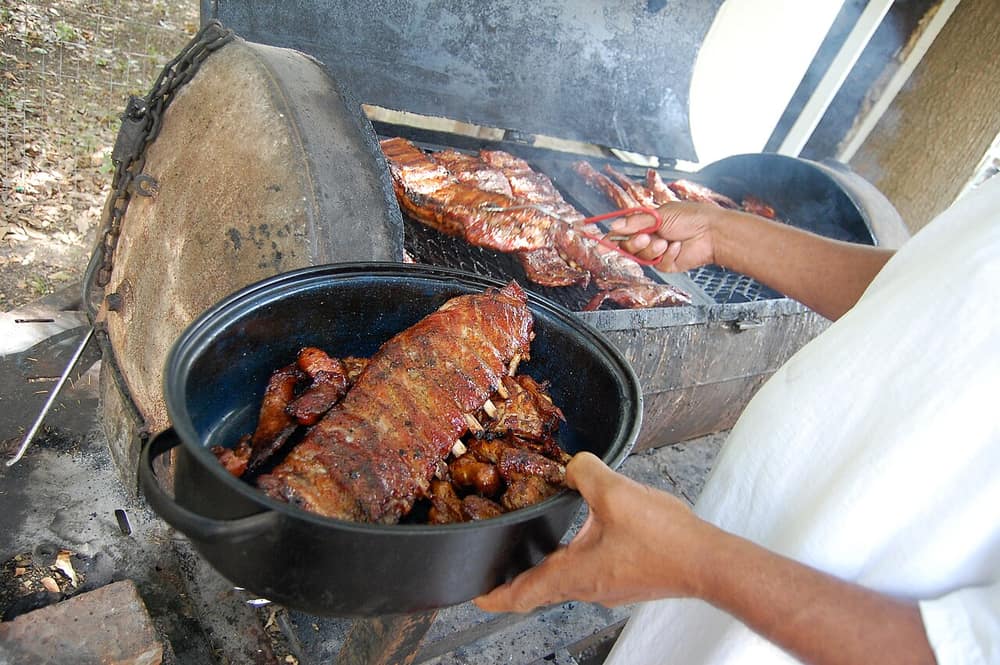
The popular DIY build is an ugly drum smoker (UDS): a 210-litre steel drum with three or four air intakes near the bottom, a charcoal basket inside, a grid near the top and the lid as the exhaust. You control the heat at the intakes, and the exhaust should never be smaller than the intakes or the drum won’t draw. It’s cheap and holds temperature well.
Which wood to smoke with
Use dry hardwood, in chunks for long cooks and chips for short ones. Chunks (fist-sized pieces) smoulder slowly; chips burn out in minutes and need topping up.
| Wood | Smoke | Good with | Where to find it |
|---|---|---|---|
| Oak | Medium | Beef, lamb, pork, game | Megamaster and My Butchers Block chips; whiskey-barrel chips at Checkers |
| Fruitwood (apple, cherry, peach, plum) | Mild, sweet | Pork, chicken, fish | Weber and Megamaster cherry chips; pruned orchard wood |
| Vine stumps (wingerdstompies) | Medium, aromatic | Lamb, beef | Western Cape farm stalls and braai wood sellers |
| Hickory | Strong | Pork ribs, shoulder | Weber hickory chunks and chips from specialist stockists |
| Sekelbos, rooikrans | Medium–strong | Beef, as part of the fire | Any braai wood seller |
Our guide to the best braai wood in South Africa covers local woods in more detail. Whatever you use, start with two or three chunks. Too much smoke is the most common reason a first brisket tastes bitter.
Never smoke with: pine or other softwoods (bitter, sooty smoke), treated timber (green-tinted CCA pine can release arsenic and chromium when burnt), pallets, painted or varnished wood, oleander (its smoke is toxic), or any wood you can’t identify.
Your first smoke: ribs or brisket
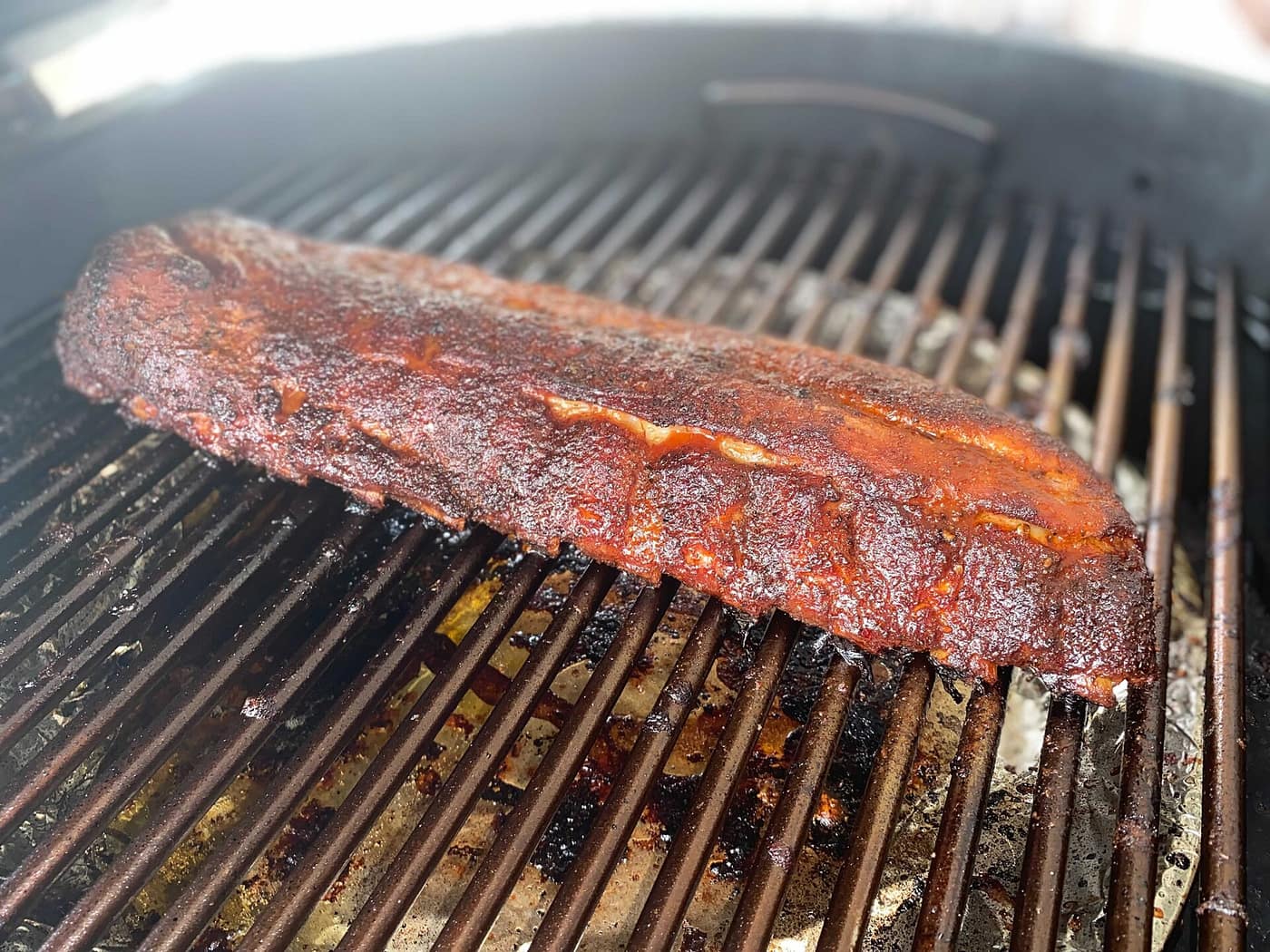
Pork ribs with the 3-2-1 method
Pork spareribs are the most forgiving first cook. The 3-2-1 method, at about 107–110°C:
- 3 hours unwrapped. Rub the ribs with salt, pepper, paprika and a little brown sugar, and smoke them bone side down.
- 2 hours wrapped. Wrap tightly in foil with a little butter and honey. This makes them tender.
- 1 hour unwrapped. Unwrap, brush with sauce and let the glaze set.
Loin (baby back) ribs are smaller, so use 2-2-1. They’re ready when a rack bends and the surface cracks as you lift it from one end.
Brisket
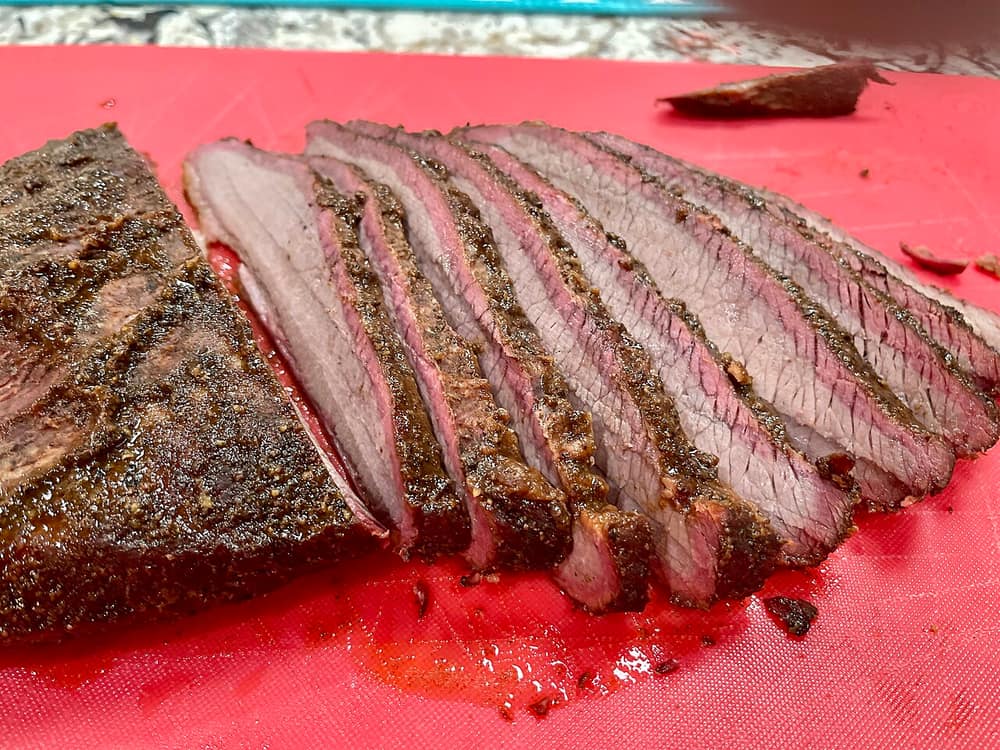
Brisket is the big test. Ask your butcher for a whole brisket with the fat left on; many cut and roll it, so order ahead. Season it simply with coarse salt and black pepper, and smoke it at 110–120°C.
At around 65–75°C inside, the temperature will stop rising, sometimes for hours. This is the stall: moisture evaporating from the surface cools the meat as fast as the smoker heats it. Nothing is wrong. Either wait it out, or wrap the brisket in butcher paper or foil (the “Texas crutch”) once the bark has set. Foil is faster but softens the bark; paper keeps more of it.
It’s done at about 93–96°C, but the real test is feel: a probe should slide into the thickest part with almost no resistance. Rest it wrapped in a towel inside a cooler box for at least an hour before slicing across the grain.
Food safety temperatures
The US Department of Agriculture’s minimums are a sensible reference: 63°C with a three-minute rest for whole cuts of beef, pork and lamb, 71°C for mince and sausages, and 74°C for all poultry. Brisket and pulled pork go far higher, not for safety, but because that’s when the collagen breaks down. The braai timer helps you keep track of when to check the meat on a long cook.
Getting clean smoke
Look at the chimney or top vent. Thin, pale blue smoke that you can barely see means the wood is burning cleanly. Thick white smoke that billows means it’s smouldering without enough heat or air, and it coats the meat in bitter tar.
Some white smoke while a fire gets going is normal. If it’s still billowing after 20 minutes or so:
- open the vents a little to give the fire more air,
- take some wood off (you’ve probably smothered the coals),
- only add new wood onto a hot, established bed of coals.
Lump charcoal or good briquettes make a better base fire than wood alone in a small smoker; our charcoal and briquettes guide explains the difference.
Smokers and kit worth buying
You can start with the kettle you have. If you want a dedicated smoker, these are in stock and run from budget to set-and-forget. A good thermometer matters more than an expensive smoker.

Megamaster
Coalsmith Series Delta Grill & Smoker
A charcoal grill with a proper offset firebox and chimney, so you can braai directly over coals one day and run a low-and-slow smoke the next. A sensible way into offset smoking without a custom-built pit.
- Charcoal
- Offset firebox and chimney
- Direct grilling and indirect smoking
- Real offset layout for briskets and ribs
- Doubles as an everyday charcoal braai
- Thinner steel than a custom pit, so wind and cold affect it more
- Takes practice to hold a steady temperature

Megamaster
Coalsmith Series Charlie Grill & Smoker
A charcoal grill and smoker with an adjustable charcoal grid and a built-in thermometer, which is exactly what you need to learn heat control. Good for ribs, chicken and smaller cuts.
- Charcoal
- Three enamel-coated cooking grids
- Adjustable charcoal grid and tray
- Built-in thermometer
- Low price for a lidded smoker
- Adjustable charcoal height helps control heat
- Smaller cooking area than an offset
- Lid thermometers read the dome, not the grid

ALVA
Kilimanjaro 46cm Ceramic Kamado BBQ + FREE TOOL SET
Thick ceramic walls hold a steady low temperature for hours on very little charcoal, which makes overnight briskets far less stressful. It also sears and bakes pizza, so it isn't a one-trick cooker.
- 46 cm ceramic kamado
- Charcoal
- Comes with a tool set
- Holds temperature in wind and cold
- Uses little charcoal on long cooks
- Heavy, and ceramic can crack if dropped
- A big outlay if you only smoke now and then

Chad-O-Chef
Chad-O-Chef MeatStick X (Wireless Thermometer and Charger)
A wireless probe that stays in the meat and reports to your phone, so you can watch a brisket through the stall without lifting the lid every half hour.
- Wireless Bluetooth probe
- Dual temperature sensors
- Heat resistant to 300°C
- Rechargeable
- No wires through the lid
- Alerts you when the meat hits your target
- Pricier than a wired probe
- Bluetooth range is limited

Megamaster
Megamaster Oak Wood Chips
Oak is a medium smoke that suits beef, lamb and pork without overpowering them. A cheap bag to start with before you experiment with fruitwoods and vine stumps.
- 100% oak wood chips
- Medium smoke flavour
- Cheap and easy to find
- Works with beef, lamb and pork
- Chips burn quickly, so long cooks need topping up
Prices change often; check the retailer for the current price and stock. We may earn a commission if you buy through these links, at no extra cost to you. Star ratings are the store's own customer reviews, shown once a product has at least 3. How we choose products.
FAQ
Can I smoke meat on a normal braai?
Yes, if it has a lid. A kettle braai with the coals banked to one side or set up in a snake works well. An open braai stand can’t hold a steady low temperature or trap the smoke, so it isn’t suited to smoking.
What temperature should a smoker be?
Most smoking happens between 107 and 135°C, with 110–120°C the usual target. Chicken is often smoked hotter, around 120–160°C, so the skin doesn’t go rubbery.
How long does it take to smoke a brisket?
Roughly 2 to 3.5 hours per kilogram at 110–120°C, plus at least an hour of resting. A whole brisket is often an overnight job, so start early and cook to temperature and feel, not to the clock.
Should I soak wood chips before smoking?
There’s no need. Water only soaks into the surface, and wet chips steam and cool the fire before they start to smoke. Use dry chunks for long cooks and dry chips for short ones.
What is the best wood for smoking in South Africa?
Oak is a good all-round start and easy to find as chips. Use fruitwoods like apple or cherry for pork and chicken, and vine stumps for lamb. Never use pine, treated wood or wood you can’t identify.
How does a smoker work?
The fire sits to one side of the meat or under a deflector, so heat and smoke flow around the food instead of searing it. You control the temperature with the vents: more air makes the fire hotter, less air cools it down.

Johan Botha
Braai & outdoor editor
Writes our braai, fire pit and pizza oven guides. Firmly in the wood-fire camp, but owns up to a gas braai for weeknights.
More from Johan →