We're independent: products are chosen on merit and prices come from the retailers' own sites. We may earn a commission if you buy through our links. Learn more.
Key takeaways
- Clean the potjie while it's still warm, not the next morning: scrape out the food, rinse with hot water, then dry it over heat until no moisture is left.
- For burnt-on food, simmer a little water in the pot for a few minutes, let it cool slightly and scrape. Don't soak cast iron overnight.
- Light rust comes off with fine wire wool and hot soapy water. After that the pot needs drying over heat and a fresh coat of seasoning.
- Sticky seasoning means too much oil. Heat the pot again until the surface is dry and hard, and use thinner coats next time.
- Store it bone dry, lid off or propped open, with crumpled newspaper inside. A closed pot in a damp garage is where most potjie rust starts.
The potjie was a hit, the guests have gone home, and there’s a black ring of burnt onion stuck to the bottom of the pot. This is the moment that decides whether your potjie lasts for decades or turns into a rusty doorstop in the garage. Cast iron forgives a lot, but it doesn’t forgive being left wet.
This guide covers the routine clean after cooking, how to get burnt-on food off without wrecking the seasoning, how to remove light and heavy rust, how to fix sticky or flaking seasoning, how to re-season a pot that’s too big for your oven, and how to store it. Most of it works for any bare cast iron: flat pots, skillets and the pot you inherited from your oupa.
Quick answer: what’s wrong with your potjie?
| What you see | What it is | What to do |
|---|---|---|
| Food stuck or burnt on the bottom | Normal after a long cook | Simmer water, cool slightly, scrape (below) |
| Orange or brown patches | Surface rust | Wire wool, hot soapy water, dry, re-season |
| Rough, pitted, deep orange crust | Heavy rust | Repeat scrub and boil cycles, or a short vinegar soak, then re-season |
| Tacky, sticky feel | Too much oil, not heated enough | Heat it again until dry; use thinner coats |
| Black flakes in the food | Loose seasoning or carbon build-up | Scrape the loose bits off, then season the bare patches |
| Musty or rancid smell | Old oil, or damp storage | Wash, dry over heat, season thinly |
| A crack, however small | Damage to the iron | Retire the pot from cooking |
The routine clean after every potjie
The best time to clean a potjie is while it’s still warm. The food comes off more easily, and you can dry it over the last of the coals.
- Empty it and let it cool a little. Warm, not scorching. Never pour cold water into a hot pot: a sudden temperature change can crack cast iron.
- Scrape out the leftovers with a wooden spoon or a plastic pan scraper.
- Rinse with hot water and scrub with a stiff brush or a non-metal scourer. A little dish soap is fine on a seasoned pot. Just don’t leave it to soak.
- Dry it over heat. Put it back on the coals, a gas ring or the stove until every bit of moisture has steamed off. A towel alone leaves water in the pores of the iron.
- Wipe on a thin film of oil while it’s still warm, inside and on the rim, then wipe off the excess with a paper towel.
- Do the lid too. The underside of the lid catches steam all evening and is often the first place rust shows.
Getting burnt-on food off
A long potjie often leaves a burnt layer at the bottom, especially if the coals were too hot or the liquid ran low. Don’t reach for the steel wool first: it takes the seasoning off with the food.
- Add water to cover the burnt area, a few centimetres deep.
- Simmer it for a few minutes. Lodge, the American cast-iron maker, suggests simmering water for 3–5 minutes to loosen stuck food before scrubbing.
- Let it cool slightly and scrape with a wooden spoon, a plastic scraper or a chainmail scrubber.
- Repeat if needed, then rinse, dry over heat and oil as above.
If the scraping exposes bare grey iron, that patch needs seasoning again (see below). Our potjiekos guide covers the heat and liquid levels that stop it burning in the first place.
Removing rust from a potjie
Rust is the most common reason people think a potjie is ruined. It usually isn’t. Cast iron is thick, and surface rust only goes skin-deep.
Light surface rust
Megamaster’s care advice for its potjies is to scrub rust off with fine wire wool and hot soapy water until it’s gone. Then:
- Rinse well and dry it over heat straight away, before new rust can form.
- Season it again (see below). Scrubbing takes the protective layer off along with the rust.
Heavy rust
For a pot that has stood outside for a season, the same scrub may need a few rounds. Megamaster suggests scrubbing, boiling water in the pot until it evaporates, then drying and oiling it and leaving it overnight, repeating this a few times.
Another common method is a short soak in equal parts white vinegar and water. Vinegar dissolves rust, but it also attacks bare iron, so check the pot after 30 minutes and don’t leave it for hours. Advice on soak times varies widely; most guides say about an hour at most. Afterwards, rinse thoroughly, dry over heat straight away and season the pot several times.
When a potjie can’t be saved
Rust, burnt food and patchy seasoning can all be fixed. A crack can’t. Check the bottom and around the legs carefully: a hairline crack can leak, and the pot can split under heat. A cracked pot should retire to the garden as a planter.
Fixing sticky, flaking or smelly seasoning
Sticky or tacky
A tacky surface means the oil went on too thick or wasn’t heated long enough to harden. Lodge’s advice for skillets is to bake the pan upside down at 230–260 °C for about an hour, and repeat if it’s still tacky. For a potjie that won’t fit in the oven, heat it on the coals or a gas burner until the surface stops smoking and feels dry and hard. Next time, wipe off far more oil.
Black flakes
Flakes are loose seasoning or old, carbonised food. Scrape off anything loose with a scraper or brush, wash and dry the pot, then season the bare patches. The surrounding seasoning will blend in after a few cooks.
A musty or rancid smell
This usually means old oil has gone off, or the pot was stored closed and damp. Wash it with hot soapy water, dry it over heat, and apply one thin new coat of seasoning. Store it with the lid off from now on.
How to re-season a potjie
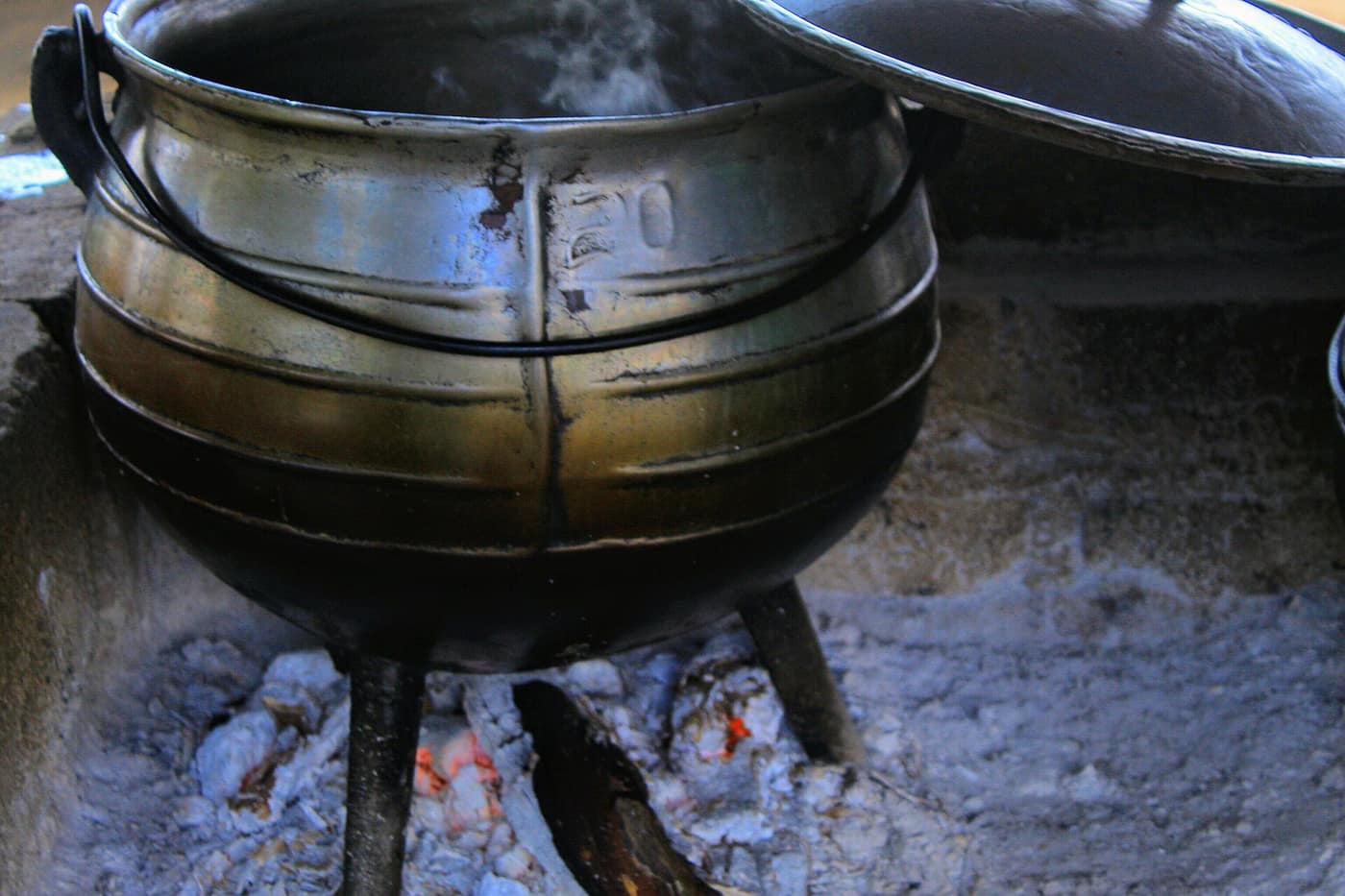
A No. 3 or bigger potjie, legs and all, often won’t fit in a home oven. You can season it outdoors instead, which is better anyway: seasoning smokes, and the smell hangs around a kitchen.
Megamaster’s method for its potjies is to oil the inside, heat the pot until the oil smokes, then let it cool, wipe it out and repeat until the paper towel comes away clean. In practice:
- Start with a clean, dry pot. Scrub, rinse and dry it over heat.
- Oil it very thinly. Use sunflower or canola oil on a paper towel, inside, on the rim and on the lid. Then wipe it all off again, so it looks almost dry.
- Heat it on the coals or a gas burner until the oil smokes and the surface darkens. A potjie burner or skottel-style gas ring gives steady, even heat.
- Let it cool, wipe it out and check the paper towel.
- Repeat two or three times for a stripped or rusted pot.
Your first few cooks finish the job. Fatty dishes, such as a lamb potjie or onions fried in plenty of oil, build up the seasoning faster than anything you do with a paper towel. Long-simmered acidic sauces with lots of tomato or wine are best kept for a pot that’s already well seasoned.
Enamel potjies are different
Enamel-coated pots don’t need seasoning and shouldn’t get it. Wash them like an ordinary pot with warm soapy water and a soft sponge, avoid steel wool and metal scrapers, and don’t heat an empty enamel pot hard. Enamel can chip or crack under fierce, uneven heat, and some makers warn against using their standard enamelled cookware over open fires at all, so read your pot’s instructions. If the enamel has chipped, keep an eye on the exposed iron underneath, because that patch can rust.
Storing a potjie between braais
Most potjies only come out a few times a year, so storage matters as much as cleaning.
- Bone dry, lightly oiled. Never pack it away still warm and steaming in a closed bag.
- Lid off, or propped open with a folded paper towel, so air can move and damp can’t collect inside.
- Crumpled newspaper inside, as Megamaster suggests, to soak up moisture.
- Somewhere dry, off a concrete garage floor if you can. A shelf beats the floor.
- Check it before the season starts. A quick look in October saves a panic on the day of a big potjie.
Kit that makes it easier
You don’t need much: a wooden spoon, a stiff brush, fine wire wool for rust, paper towels, sunflower oil and something to protect your hands when the pot is hot. If the pot is past saving, or you’d rather skip seasoning altogether, there are two good options below.

Arbor Safety Co
Red Heat Resistant Elbow length Gloves
Drying and seasoning a potjie means picking up hot cast iron. Long leather gloves with a cuff keep your wrists clear of the rim and the handle.
- Chrome leather, cotton lined
- Elbow length with 20cm cuff
- Rated for heat applications up to 120°C
- Cheap enough to keep one pair with the potjie
- Cuff protects your forearms over the coals
- Not made for holding a pot that has been sitting on the coals for long
- Leather gets stiff if it's left wet

Megamaster
Megamaster No 3 Potjie
If your old pot turns out to be cracked, this is the standard three-legged No. 3: bare cast iron, so everything in this guide applies to it.
- Cast iron
- Three legs
- Fitted lid
- The family-size pot most potjie recipes are written for
- Bare iron copes with direct coals
- Needs seasoning before its first meal
- Heavy to clean and carry

Megamaster
Megamaster No3 Enamel Pot
An enamel-coated No. 3 that washes up like a normal pot and doesn't need oiling. Treat the enamel gently and keep the heat moderate.
- Enamel-coated cast iron
- No. 3 size
- Matching lid
- No seasoning to maintain
- Easy to wash with ordinary dish soap
- Enamel can chip if it's knocked or overheated
- Costs nearly double the bare pot
Prices change often; check the retailer for the current price and stock. We may earn a commission if you buy through these links, at no extra cost to you. Star ratings are the store's own customer reviews, shown once a product has at least 3. How we choose products.
Use our potjie size calculator before you buy a replacement, and our guide to cast iron cooking on the fire for how a potjie compares with a flat pot and a skillet. The braai itself needs cleaning too: see how to clean a braai.
FAQ
Can you use soap on a potjie?
Yes, a little dish soap won’t hurt a seasoned potjie. What damages it is soaking, the dishwasher and leaving it wet. Always dry it over heat and oil it lightly afterwards.
How do I get rust out of a potjie?
Scrub the rust off with fine wire wool and hot soapy water, rinse, dry the pot over heat straight away, then season it again with thin coats of oil. Heavy rust may need several rounds.
Why is my potjie sticky after seasoning?
Too much oil, or not enough heat to harden it. Heat the pot again until the surface is dry and no longer smoking, and wipe on much thinner coats next time.
Is a rusty potjie safe to cook in?
Remove the rust and re-season the pot before you cook in it. Rust flakes in food are unpleasant, and a rusty surface makes food stick and burn.
How often should I season a potjie?
Wipe on a thin film of oil after every clean. Do a full re-season only when you’ve scrubbed back to bare iron, removed rust or the surface turns dull, grey or sticky.
What oil is best for seasoning a potjie?
A neutral cooking oil with a high smoke point, such as sunflower or canola. Apply it very thinly and wipe off the excess before heating.

Johan Botha
Braai & outdoor editor
Writes our braai, fire pit and pizza oven guides. Firmly in the wood-fire camp, but owns up to a gas braai for weeknights.
More from Johan →