We're independent: products are chosen on merit and prices come from the retailers' own sites. We may earn a commission if you buy through our links. Learn more.
In an emergency, get everyone out first and call 112 from a cellphone, or your local fire brigade. This guide is general information; always follow the manufacturer's instructions and local regulations.
Key takeaways
- LPG is heavier than air, so a leak pools at floor level and in drains. Store spare cylinders upright, outdoors and away from drains and anything that sparks.
- Leak test with soapy water every time you connect a cylinder. Growing bubbles mean a leak. Never use a flame.
- In the car, keep the cylinder upright and wedged so it can't fall, keep a window open, and drive straight home. Never leave it in a hot car.
- Close the valve on the cylinder itself, not just the appliance, before bed, before you go away and whenever you smell gas.
- If you smell gas: no switches, no flames, close the cylinder valve if it's safe, open up, get out and call for help from outside.
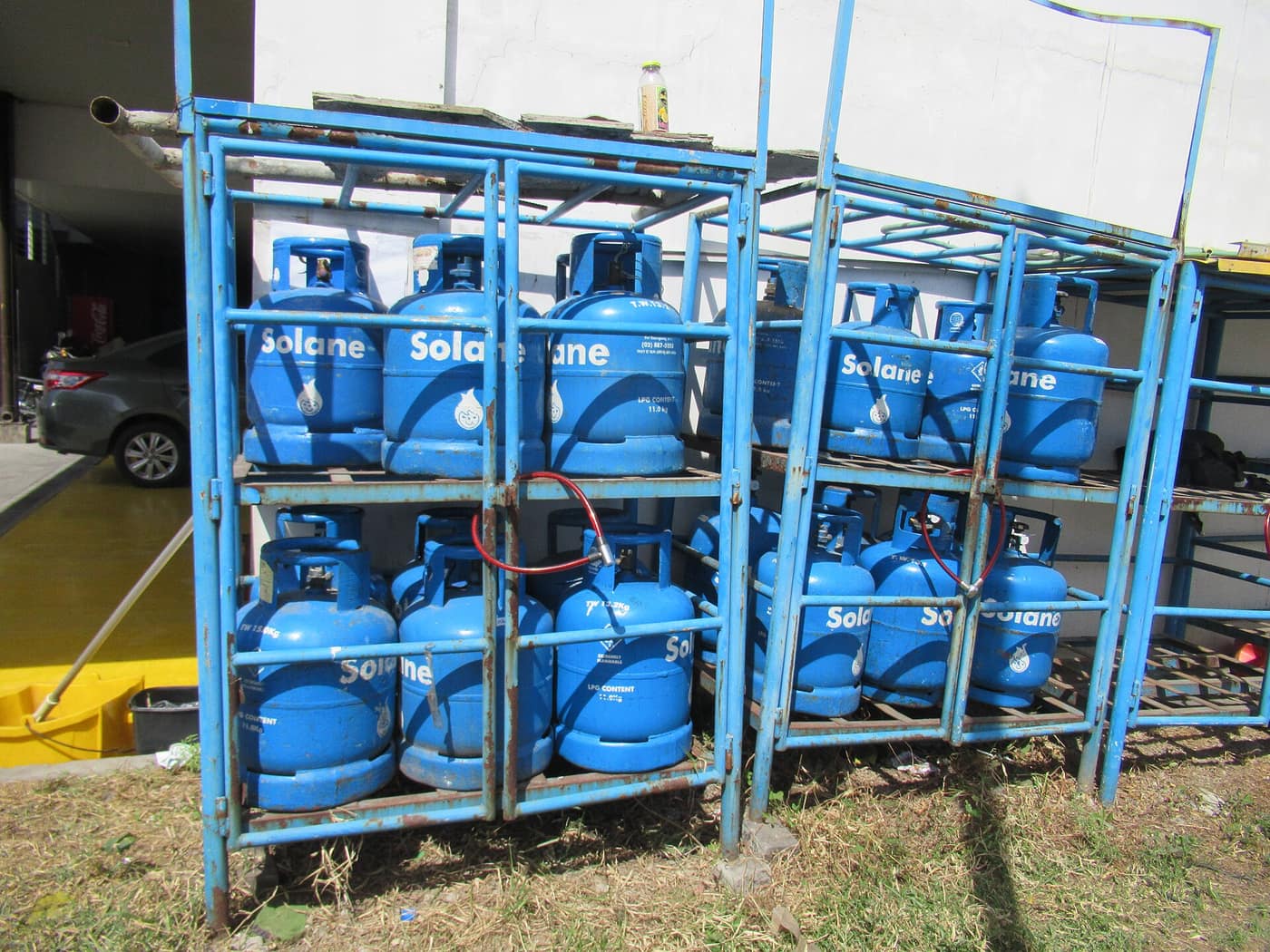
Most South African homes have a gas cylinder somewhere: under the skottel, inside the mobile heater or in a cage outside the kitchen. We handle them so often that it’s easy to forget what’s inside, and cylinder trouble usually starts with something small: a perished hose, a cylinder on its side in a hot boot, a leak test done with a lighter.
This guide covers the everyday handling: storing, carrying and changing cylinders, leak tests, hoses and regulators, caravans and holidays, and exactly what to do if you smell gas.
Quick answer: the cylinder rules
| Situation | Do this | Never do this |
|---|---|---|
| Storing spares | Upright, outdoors, shaded and well ventilated | Store in a cellar, near a drain or next to a geyser or plug point |
| In the car | Upright, wedged or strapped in, window open, straight home | Lay it down, or leave it in a parked car in the sun |
| Changing a cylinder | Appliance off, valve closed, no flames nearby, leak test after | Change it next to a lit braai, heater or cigarette |
| Leak testing | Soapy water on every connection, every time | Use a match or lighter to “check” |
| Going away | Close the valve on the cylinder itself | Rely on the appliance knob alone |
| Smell gas | Close the valve if safe, open up, get out, call from outside | Touch light switches, start a car or light anything |
What LPG is, and why it sinks
LPG (liquefied petroleum gas) is stored as a liquid under pressure. When you open the valve, it boils off as a gas. Two things about it shape almost every safety rule:
- It’s heavier than air. Leaked LPG doesn’t float away like natural gas would. It flows downwards and collects at floor level, in drains, pits, cellars, low cupboards and car footwells, where it can sit until something sparks.
- The smell is added. LPG has almost no smell of its own, so suppliers add a strong “rotten cabbage” odorant. If you smell it, believe it.
Cylinder sizes you’ll see in South Africa
SA cylinders are sold by the mass of gas they hold. Ranges differ by supplier, but these are the common sizes:
| Size | Typical use |
|---|---|
| 3 kg and 5 kg | Skottels, camping stoves, small lamps and cookers |
| 9 kg | Mobile indoor heaters, gas braais, patio heaters; the everyday home cylinder |
| 19 kg | Gas stoves and geysers on an outside installation, bigger braais |
| 48 kg | Fixed installations for hobs, geysers and fireplaces, usually in a cage outside |
Some brands also sell 12 kg and 14 kg cylinders. Our gas cylinder calculator works out hours of use for heaters, skottels, gas braais and patio heaters.
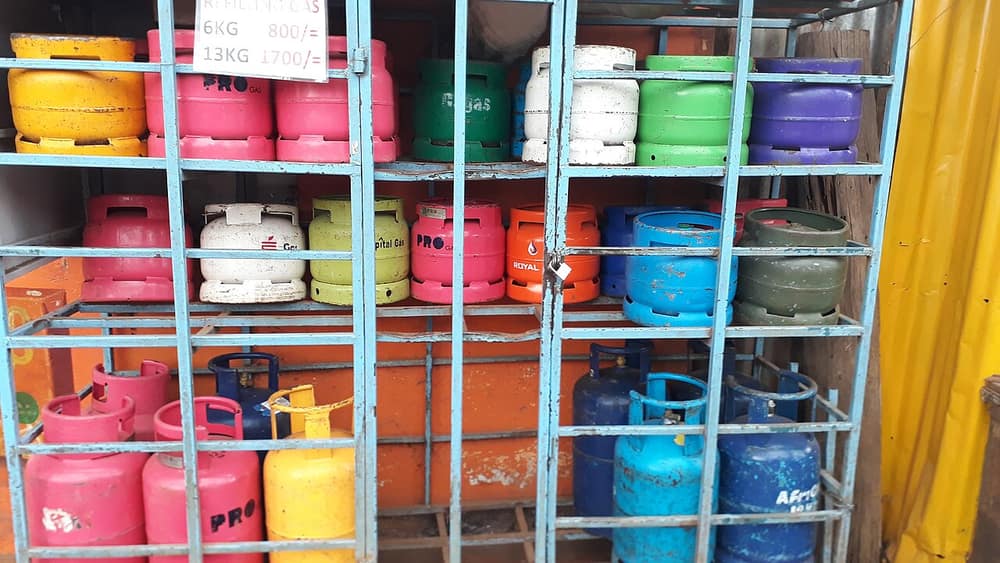
Storing cylinders at home
The safest place for a spare cylinder is outside. Pick a spot that is:
- Upright and stable, on a firm, level surface where it can’t be knocked over.
- Outdoors and well ventilated, not in a sealed shed, cupboard or garage.
- Away from drains, pits, manholes and cellars, where heavy gas can collect.
- Away from ignition sources: plug points, light switches, geysers, braais, pool pumps and gate motors.
- Shaded, away from anything that burns and out of reach of children, with the valve closed.
Indoors, keep only what’s connected and in use. A 9 kg cylinder inside its mobile heater is normal; a stack of spares in the scullery isn’t. The detailed rules on where cylinders may stand and how much gas may be kept indoors come from the SANS 10087 series and local fire by-laws, and they differ between installations and municipalities. If you want a cylinder anywhere other than inside a portable appliance or outdoors, ask a registered installer before you set it up.
Transporting a cylinder in the car
Afrox’s consumer guidance says to keep the cylinder upright, and to put it inside the cabin behind the passenger seat, pressed against the back seat, if it can’t stand securely in the boot.
- Close the valve and fit the seal or cap before you lift it.
- Keep it upright and wedge or strap it so it can’t fall over when you brake.
- Open a window a little, so any small leak has somewhere to go.
- Drive straight home. Don’t do the rest of your errands with a cylinder in the car.
- Never leave it in a parked car, especially in summer. Heat raises the pressure inside.
- No smoking in the car while the cylinder is in it.
How to change a cylinder, step by step
Most SA home cylinders (9 kg and up) use the bullnose valve with a regulator that screws on with a left-hand thread, so it tightens anticlockwise. Check your regulator if you’re not sure.
- Switch the appliance off and let it cool. Make sure there are no flames, cigarettes or sparks nearby.
- Close the valve on the empty cylinder (turn the handwheel clockwise).
- Undo the regulator, turning clockwise for a left-hand thread.
- Check the new cylinder: seal intact, no dents, deep rust or damage to the valve.
- Remove the seal, check the washer or O-ring on the regulator is in place and not cracked, and fit the regulator. Hand-tight plus a firm nip with a spanner if the fitting needs it; don’t force it.
- Open the cylinder valve slowly.
- Leak test before you light anything (next section).
- Light the appliance following its manual.
The soapy-water leak test
Do this every time you connect a cylinder, whenever you replace a hose or regulator, and any time you smell gas.
- Mix dishwashing liquid with water.
- With the cylinder valve open and the appliance off, brush or spray it over the valve, the regulator, both hose ends and every joint.
- Watch for a minute. Growing bubbles mean a leak.
- If you find one, close the cylinder valve, tighten or replace the part, and test again.
- If it still bubbles, don’t use it. Take the cylinder back to the dealer, or have the appliance checked.
Never test for leaks with a flame. Not a match, not a lighter, not “just quickly”.
Hoses, regulators and washers
Most leaks happen at the fittings, not in the cylinder itself.
- Use the right regulator for your cylinder valve and appliance. Low-pressure regulators for household appliances should carry a SANS approval mark.
- Use proper LPG hose with clamps at both ends. Never garden hose or makeshift fittings.
- Check the hose every time: replace it if it’s cracked, stiff, kinked, swollen or chewed.
- Check the date. Many hoses have a manufacture or replace-by date printed on them. Go by that date and the manufacturer’s advice, and replace sooner if the hose shows wear. If there’s no date and the hose is several years old, replace it.
- Replace a perished washer or O-ring. It costs a few rand and is a common cause of a leak at the valve.
Cylinder condition and where to refill
Cylinders are pressure vessels, and they’re periodically inspected and retested by the filling companies. A test or inspection date is usually stamped on the collar or shroud. You can’t check a cylinder’s insides at home, which is why it matters where your gas comes from.
- Exchange or refill at reputable dealers and branded gas outlets.
- Reject cylinders that are badly rusted, dented, bulging, fire-damaged or have a bent or damaged valve or collar.
- Avoid backyard refills. Unofficial decanting from one cylinder into another is illegal and risky: cylinders can be overfilled, and nobody is checking their condition.
If the stamped date on your cylinder looks long past, ask the dealer whether it’s due for testing before you refill it.
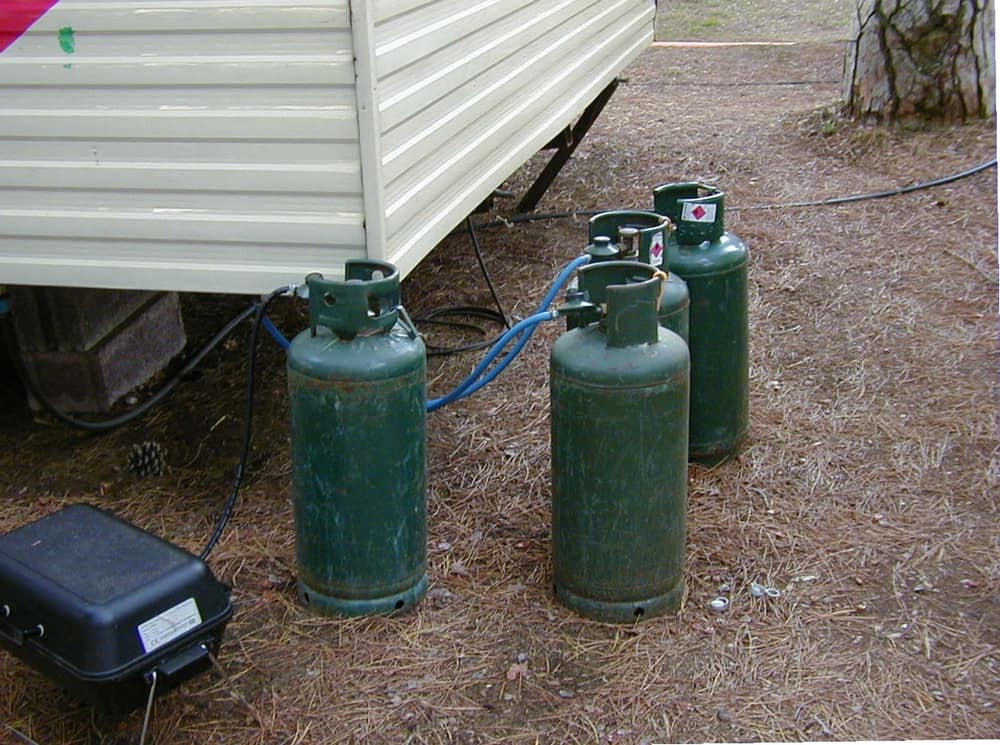
Caravans, camping and holidays
Caravans and camping
- Cylinders travel and stand outside the living space. Use the caravan’s purpose-built gas locker or a bracket on the drawbar, upright and secured.
- Turn the cylinder off while you’re on the road unless your caravan’s manual says otherwise.
- Leak test after setting up at every stop, once everything is connected.
- Ventilate. Never block the caravan’s vents, and never use a skottel, gas braai or outdoor heater inside a tent, caravan or closed awning.
- Carry a fire extinguisher near the door, and a CO alarm if you cook or heat with gas inside.
If your caravan has a built-in gas system, have it checked by a qualified gas technician before a long trip, especially if it’s been standing for a season. For cooking on the road, see our skottel guide and camping braai guide.
Going away from home
Before a holiday, close the valve on every cylinder, not just the appliance controls. Disconnect portable cylinders and store them upright outside, and leak test when you reconnect.
If you smell gas
- Don’t touch switches. No lights, appliances, gate motors or doorbells, on or off. Don’t use your phone in the area where you smell gas.
- No flames. Put out cigarettes, candles and the braai if you can do it safely.
- Close the cylinder valve if you can reach it safely.
- Open doors and windows to let the gas out. Remember it collects low down.
- Get everyone out, pets included, and stay well away.
- Call for help from outside: your gas supplier or installer, or emergency services. 112 works from any cellphone. 10177 is still listed for ambulances in many places, but fire services are run by municipalities, so keep your local fire number saved as well.
- Don’t go back in or relight anything until the leak is found and fixed.
Where the gas CoC comes in
A portable appliance on its own cylinder, like a mobile heater or a skottel, is generally not treated as a fixed installation. Once gas is piped from a cylinder outside to a hob, geyser, fireplace or built-in braai, it’s an installation that needs a Certificate of Conformity from an installer registered with SAQCC Gas. Changing regulators, moving the cylinder cage or adding an appliance on a fixed installation is a job for that installer, not a DIY cylinder swap. Our gas CoC guide explains the rules, and you can get quotes from registered gas installers.
Heating indoors with gas? Ventilation and carbon monoxide matter as much as the cylinder: see gas heater safety and our guide to smoke and CO detectors.
Kit worth having near your gas

ALVA
Bullnose Gas Regulator & 1.2m Hose Kit
If your hose is cracked, stiff or past the date printed on it, this replaces the regulator, hose and clamps in one go. Check it matches your cylinder valve and your appliance's manual first.
- Low-pressure regulator, 1.2 m hose, 2 clamps
- For 9–48 kg cylinders with a 5/8" BSP bullnose valve
- SANS 1237 & SANS 1156 approved
- Replaces the most common leak points at once
- Inexpensive
- Only fits bullnose valves

ALVA
Bullnose Gas Regulator with Pressure Gauge
A single-stage bullnose regulator with a gauge on top. LPG pressure stays fairly steady until the cylinder is nearly empty, so treat the gauge as an early warning to swap rather than a precise fuel level.
- Single-stage regulator
- Built-in pressure gauge
- For 9–48 kg cylinders
- SANS 1237 approved
- Fewer surprise empty cylinders mid-braai
- Standard SA bullnose fitting
- Regulator only: you may still need a new hose
- A gauge is not a leak detector

Arbor Safety Co
2.5kg DCP Fire Extinguisher (Firemate)
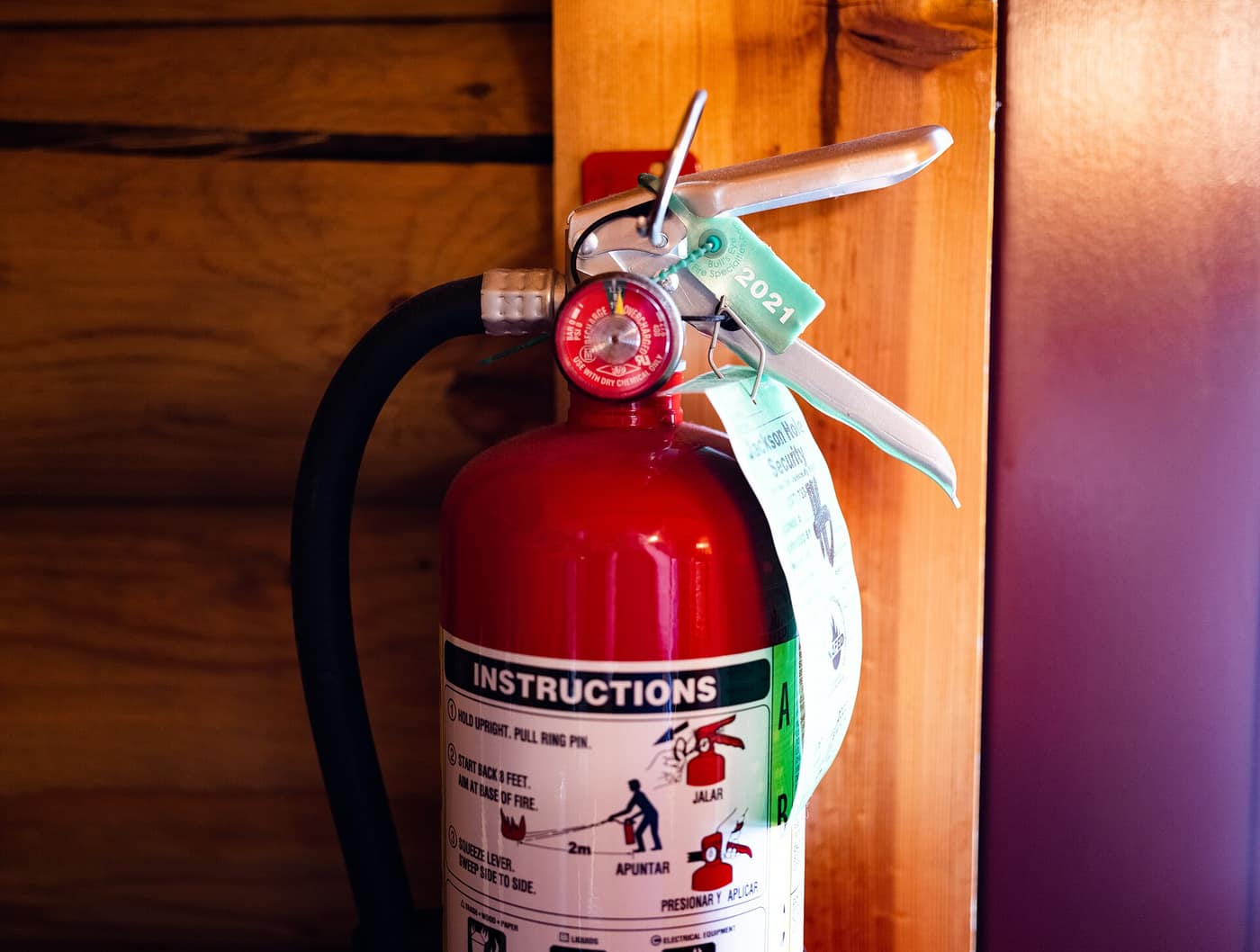
A dry chemical powder extinguisher rated for Class A, B and C fires. With a gas-fed fire, close the cylinder valve first if you safely can; keep the extinguisher near your exit so you never have to reach past the fire for it.
- 2.5 kg dry chemical powder
- Class A, B and C fires
- Conforms to SANS 1910 minimum ratings
- Covers the common household fire classes
- Big enough to matter, small enough to grab
- Powder makes a mess
- For small fires only: get out if it spreads
Prices change often; check the retailer for the current price and stock. We may earn a commission if you buy through these links, at no extra cost to you. Star ratings are the store's own customer reviews, shown once a product has at least 3. How we choose products.
FAQ
Can I store a gas cylinder inside the house?
Indoors, keep only a cylinder that is connected to a portable appliance, such as the one inside a mobile heater. Store spares upright outdoors, away from drains. For anything else, ask a registered installer.
Can I lay a gas cylinder down in my car?
No. Keep it upright and secured so it can’t fall over, keep a window open and drive straight to where you’re going. Lying down, liquid gas can reach the valve.
How do I know if my gas cylinder is leaking?
You may smell the odorant or hear a hiss. Brush soapy water over the valve, regulator and hose connections: growing bubbles show the leak. Never test with a flame.
How often should I replace my gas hose?
Replace it straight away if it’s cracked, stiff, kinked or damaged. Otherwise, check the date printed on the hose and follow the manufacturer’s advice; if there’s no date and the hose is several years old, replace it.
Should I turn off the gas cylinder at night?
Yes. Close the valve on the cylinder itself when you’re finished, at night and before you go away. The appliance knob alone isn’t enough if a hose or fitting starts to leak.
What number do I call for a gas leak in South Africa?
Get outside first, then call your gas supplier or installer, or emergency services on 112 from a cellphone. Keep your local fire department’s number saved too.

Nadia Pillay
Home fire safety writer
Writes our home fire safety guides, built on SANS standards, SAQCC rules and fire service advice.
More from Nadia →