We're independent: products are chosen on merit and prices come from the retailers' own sites. We may earn a commission if you buy through our links. Learn more.
Key takeaways
- A boma is an open-air circle around a central fire. Plan it around the number of people, not the size of the fire.
- Leave 1 to 1.5 metres between the edge of the fire and the front of the seats, so people stay warm without scorching their shins.
- Line the fire pit itself with fire bricks or a steel insert. Hollow concrete blocks and wet river stones can crack or burst in the heat.
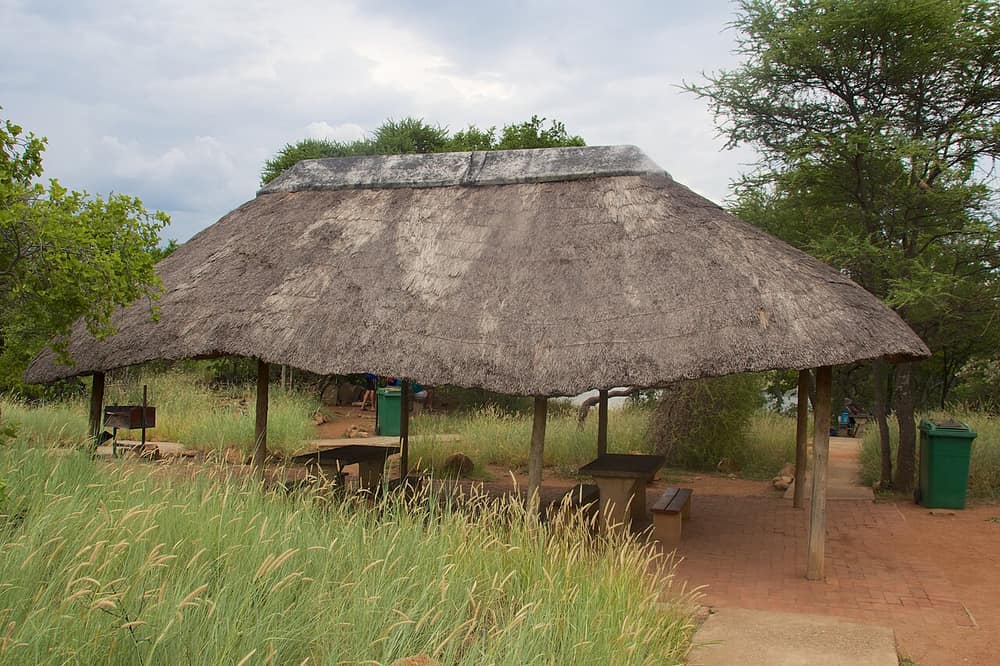
- Never put an open fire under thatch. Keep the boma well away from any lapa, and check the boundary rules for thatched roofs with your municipality.
- A gravel circle with loose seating is a weekend DIY job. Sunken bomas, retaining walls, roofs and gas lines are builder territory.
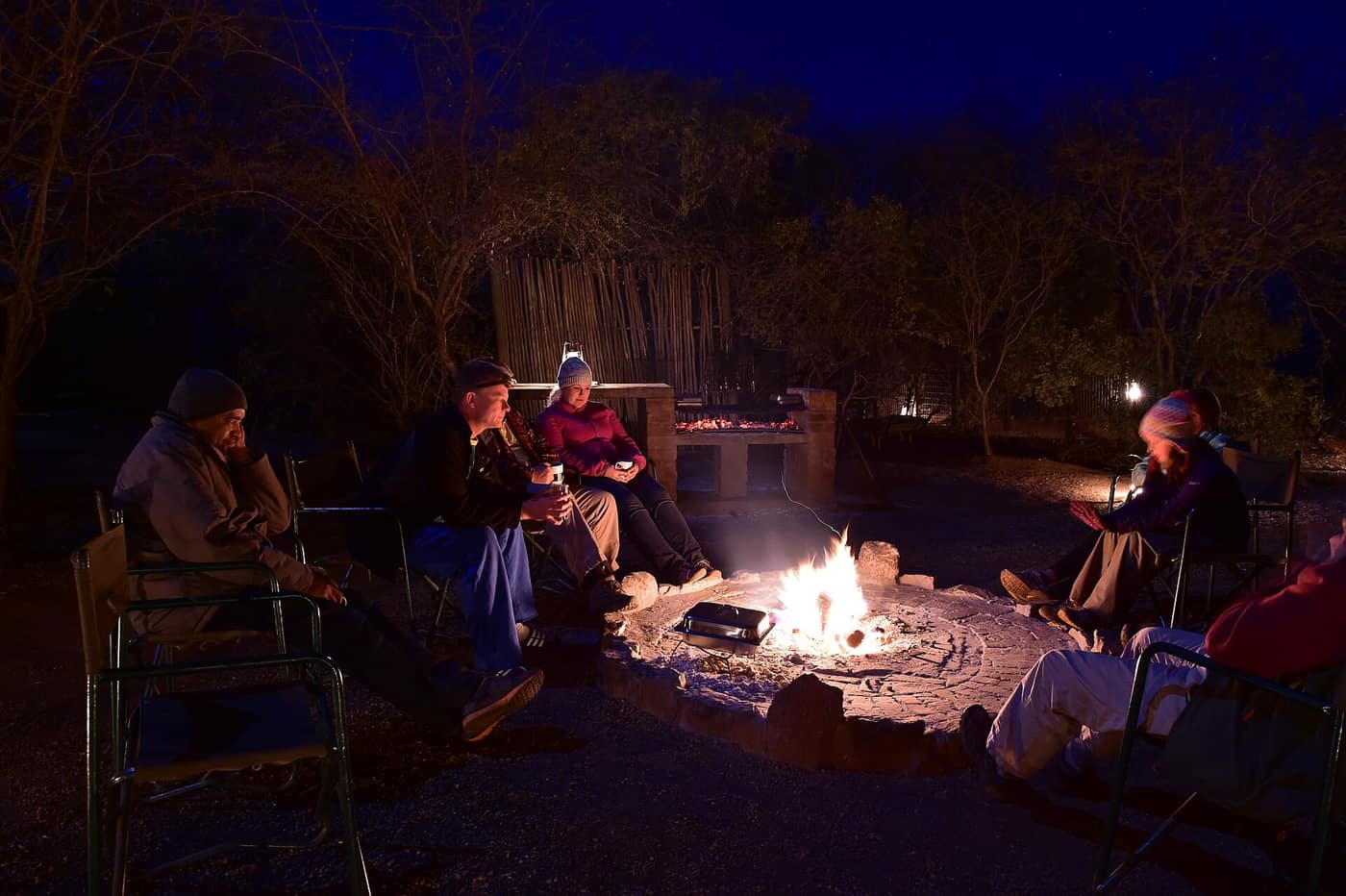
A boma is the most South African of garden projects: a ring of seats, a fire in the middle and nowhere else anyone would rather be on a cold night. It is also easy to get wrong. Build it too small and people sit with their knees in the flames; too big and the fire warms nobody. Put it in the wrong spot and the smoke follows you round the circle all evening.
This guide is for planning one properly before you dig: what a boma actually is, how big to make it for your group, which materials work around fire, seating, drainage, thatch and fire safety, the paperwork, and when to call a builder.
Quick answer: planning a boma at a glance
| Decision | Rule of thumb |
|---|---|
| Fire pit size | 70–90 cm across for a family, 1–1.2 m for big groups |
| Fire to seat gap | 1–1.5 m from the fire’s edge to the front of the seats |
| Overall size | About 3.5–5 m across, seats included |
| Distance from buildings | At least 3 m from the house, fences, decks and sheds; much further from thatch |
| Fire pit lining | Fire bricks, solid clay bricks or a steel insert, never hollow concrete blocks |
| Floor | Gravel or paving, sloped or drained so rain doesn’t pool |
| DIY or builder | Gravel ring with loose seats: DIY. Sunken, walled, roofed or gas: builder |
What is a boma?
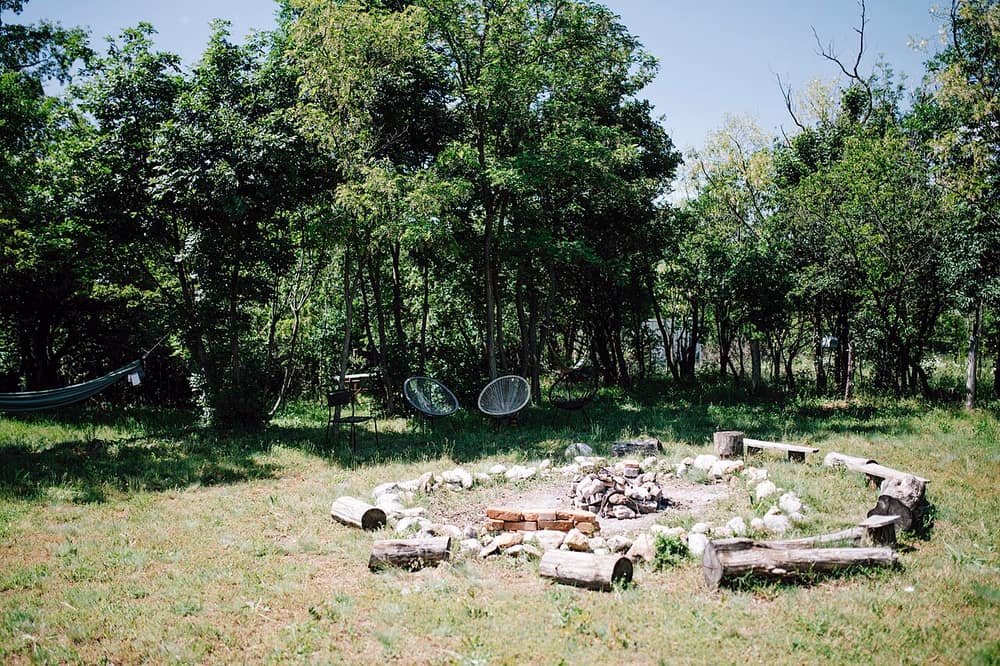
The word comes from Swahili, where it meant an enclosure, usually a kraal for livestock. In South Africa it has come to mean an open-air gathering place built around a fire, the kind you sit in at a game lodge before dinner. Most have a low wall or a ring of built-in benches, a paved or gravel floor and a fire pit in the middle.
A boma is not the same as a lapa. A lapa is usually a roofed, often thatched, entertainment area. A boma is open to the sky, which is exactly why you can have a proper wood fire in the middle of it.
Choose your layout
Full circle
Seats all the way round, with a gap for an entrance. It’s the classic look and holds the most people, but someone always ends up sitting in the smoke. Works best in a sheltered spot where the wind doesn’t blow from one direction.
Horseshoe or three-quarter circle
The most practical layout for a garden. Leave the open side facing the direction your wind usually comes from, so the smoke blows away from the seats. The open side is also where you carry wood in and, if you braai in the boma, where the braai or the coal fire goes.
Sunken boma
The seating area is dug 40–80 cm into the ground, with the walls doubling as backrests. It looks superb and shelters you from wind, but it is the hardest to build. You need retaining walls, steps and, above all, drainage, or it turns into a pond after the first summer storm. On a sloping site, a raised, level platform with a low retaining wall is often easier than digging in.
How big should a boma be?
Plan it around the people, not the fire. Each person needs about 60 cm of bench to sit comfortably. The fire needs a clear gap of 1 to 1.5 metres in front of the seats: closer and shins scorch, further and the fire stops warming anyone. Add 45 cm for the depth of the seat.
These figures are worked out from those rules, so treat them as a starting point and adjust to your space:
| Boma size | Fire pit | Fire to seats | Overall diameter (to the back of the seats) | Seats in a half circle | Seats in a full circle |
|---|---|---|---|---|---|
| Small | 70 cm | 1.0 m | about 3.6 m | 8 | 16 |
| Medium | 90 cm | 1.2 m | about 4.2 m | 9–10 | 19 |
| Large | 1.2 m | 1.5 m | about 5.1 m | 12 | 24 |
Add another metre or so all round if you want space to walk behind the seats, and remember the minimum clearances from buildings on top of that.
Materials that work around fire
The fire pit itself
The pit takes the heat, so it needs the toughest materials:
- Fire bricks laid with refractory mortar: the best option for a permanent built pit.
- Solid clay bricks are a good, cheaper alternative for the walls of an outdoor pit.
- A steel fire pit insert or bowl set into the ring: easy, neat and replaceable.
Walls and seating
Further from the fire you have more choice:
- Natural stone: the bush-lodge look, durable and low-maintenance.
- Face brick: neat, easy to build with, and matches many South African houses.
- Gabions: wire baskets packed with rock. Quick to build, good on slopes, and they drain freely.
- Plastered brick: clean and modern, but expect touch-ups where soot reaches it.
- Timber benches or sleepers: warm to sit on, but keep them well back from sparks.
Built-in benches work best at chair height, around 45 cm, with wide, flat tops rather than rough stone. Loose cushions that go inside after the fire make them far more comfortable.
The floor
Use something that won’t burn and that drains. Gravel is cheap, drains well and tolerates the odd stray coal. Paving and flagstones look smarter and are easier to sweep, but they need a fall (a slight slope) so water runs off. Lawn right up to the fire pit doesn’t work: it scorches and eventually dies.
Step by step: a simple DIY boma
This is the gravel-and-loose-seating version that most homeowners can build over a weekend or two. Check your estate rules and municipal by-laws before you start.
- Pick the spot. At least 3 metres from the house, fences, decks, sheds and trees, with nothing overhanging. Note the prevailing wind and your neighbours’ windows.
- Mark the circle with string and a peg: the fire pit in the centre, the seat line around it.
- Clear and level the whole area, removing grass and roots.
- Dig the fire pit about 20–30 cm deep and lay a gravel base for drainage.
- Build the pit wall with fire bricks or solid clay bricks, two or three courses high, or set a steel insert in place.
- Lay weed-guard fabric over the rest of the circle and spread 5–8 cm of gravel. An edge of bricks or pavers keeps the gravel in place.
- Add seating: heavy benches, sleepers or chairs at the 1–1.5 m distance from the fire.
- Let any mortar cure as the manufacturer says before the first fire, and start with a small one.
Our fire pit guide has more on simple brick rings and the different kinds of fire pit you can buy.
Fire safety and thatch
Keep a hose or a bucket of water and sand within reach, and ideally a fire extinguisher. Never leave the fire unattended, keep small children back from the edge, and never use petrol or paraffin to light or revive it.
Thatch deserves special care. Many bomas sit next to a thatched lapa, and embers from a wood fire can land on a roof without anyone noticing.
- Never build an open fire under thatch. A boma fire belongs in the open, well away from the lapa.
- Keep sparks downwind of the thatch, not blowing towards it, and don’t light up in strong wind.
- Know the boundary rules. Thatching guidance in South Africa cites the National Building Regulations as requiring a thatched roof larger than 20 m² to be built at least 4.5 metres from any boundary. If you’re adding a lapa to your boma, confirm the current rules with your municipality and a reputable thatcher before you build.
On farms and smallholdings a boma fire is also a veld fire risk in the dry season. Check fire danger warnings before you light up, and read our guide to veld fires and firebreaks for your duties as a landowner.
Plans, rules and neighbours
A simple boma with a fire pit and benches is usually treated as minor building work, but minor doesn’t mean no permission. Many municipalities still want to be told in writing, and some ask for a sketch plan. Anything with a roof, high retaining walls or a gas line is more likely to need plans. Rules differ between municipalities, so ask your local building control office before you start.
Estates and sectional-title complexes often have their own conduct rules on open fires, and some ban wood fires outright. A built-in gas burner may be allowed where wood isn’t: less warmth and ritual, but no smoke drifting into the neighbours’ bedroom window. A fixed gas installation must be done by a registered LP gas installer, who issues a certificate of compliance. That is never a DIY job.
What a boma costs
We haven’t found reliable published rates for boma building in South Africa, and prices vary widely by region and finish, so get at least three quotes. What drives the cost:
| Build | Relative cost | What you pay for |
|---|---|---|
| Gravel circle, steel fire bowl, loose seats | Lowest | Gravel, edging, a fire bowl and your own weekend |
| Built brick or stone fire pit with paved floor | Moderate | Fire bricks, paving, a builder for a few days |
| Built-in bench seating in stone, brick or gabions | Higher | Materials and labour for the walls and seat tops |
| Sunken boma with retaining walls and drainage | High | Excavation, retaining walls, steps, drainage |
| Gas burner or lapa roof added | Highest | Registered gas installer and CoC, or a thatcher and plans |
When you’re ready for a builder or landscaper, you can get quotes from local installers. If you also want a permanent braai alongside the boma, our built-in braai guide covers placement and chimneys.
Fire pits for your boma
You don’t have to build the fire pit from scratch. A good freestanding pit or a built-in burner can be the centre of a boma from day one. Prices were checked in November 2026 and change often.

Megamaster
Sekel Boma
A steel fire bowl you can drop into the middle of a gravel boma on day one, before you've built anything permanent. The ventilation holes help it light easily and burn cleaner.
- 360 ventilation holes
- Rust-painted finish
- No assembly required
- Poker included
- Cheapest way to test your boma layout with a real fire
- Easy to move if the smoke drifts the wrong way
- Smaller than a built pit, so it suits a tight circle
- Painted steel needs a cover to last outdoors

Chad-O-Chef
Chad-O-Chef Fire Blade Fire Pit (Wood Burning)
A sculptural wood-burning fire pit that looks deliberate in a modern paved boma. A good middle ground between a basic bowl and a built pit.
- Wood burning
- Freestanding
- Strong design statement for a modern garden
- No building work needed
- Pricier than a plain steel bowl
- No cooking grid, so the braai stays separate

Jetmaster
Moremi Boma Braai Fire Pit – wood burning
A stainless steel boma braai with a swivel grill you can raise or lower over the coals, then lift off to turn it back into a fire pit. One fire for the meat and the late-night chat.
- Stainless steel body
- Adjustable swivel grill
- Grill removes for fire-pit use
- Installation manual included
- Cooks and warms in one spot
- Stainless steel suits a permanent outdoor centrepiece
- A big investment next to a built brick pit
- You still need a separate place to make coals for a long braai

Chad-O-Chef
Chad-O-Chef Firepit Burner (Gas Burning)
A gas burner made to be built into a fire pit, for a boma that lights at the turn of a knob with no smoke or ash. Suits complexes and estates where wood fires are restricted.
- Gas burning
- Built-in fire pit burner
- No smoke drifting into the neighbours' windows
- Instant flame, nothing to clean up
- Fixed gas lines need a registered installer and a CoC
- Less warmth and atmosphere than a wood fire
Prices change often; check the retailer for the current price and stock. We may earn a commission if you buy through these links, at no extra cost to you. Star ratings are the store's own customer reviews, shown once a product has at least 3. How we choose products.
Whatever sits in the middle, burn dry hardwood: sekelbos and rooikrans give good heat with less smoke, and our braai wood guide compares the options. Keep the wood store outside the circle so nobody trips over logs in the dark, and check our braai calendar for the long weekends worth planning the first fire around.
FAQ
What is a boma in South Africa?
A boma is an open-air gathering place built around a central fire, usually with a low wall or built-in seating around it. The word comes from Swahili, where it meant an enclosure for livestock.
What is the difference between a boma and a lapa?
A boma is open to the sky with a fire in the middle. A lapa is usually a roofed, often thatched, entertainment area. You should never have an open fire under a thatched lapa.
How big should a boma be?
For a family, a fire pit of about 70–90 cm with seats 1–1.5 m from the fire gives an overall circle of roughly 3.5–4.5 metres. For big groups, plan on about 5 metres or more, plus space to walk behind the seats.
Do I need plans to build a boma?
A simple boma is often treated as minor building work, but many municipalities still want written notice or a sketch plan, and roofed structures or gas installations are more likely to need plans. Check with your local building control office and your estate or body corporate first.
How far should a boma be from the house?
Keep the fire at least 3 metres from the house, fences, decks, sheds and trees, with nothing overhead, and much further from any thatch. Follow the fire pit manufacturer’s clearances if they are larger.

Johan Botha
Braai & outdoor editor
Writes our braai, fire pit and pizza oven guides. Firmly in the wood-fire camp, but owns up to a gas braai for weeknights.
More from Johan →