We're independent: products are chosen on merit and prices come from the retailers' own sites. We may earn a commission if you buy through our links. Learn more.
In an emergency, get everyone out first and call 112 from a cellphone, or your local fire brigade. This guide is general information; always follow the manufacturer's instructions and local regulations.
Key takeaways
- A fire blanket is the simplest, safest first response to a pan of burning oil, and it can wrap a person whose clothes are on fire.
- Never throw water on burning oil, and never carry a burning pan outside.
- Lay the blanket away from you with your hands shielded, cover the pan completely and leave it for at least 30 minutes.
- Mount it near the kitchen exit at shoulder height, not above or beside the stove.
- Most household blankets are single use: replace it after any fire.
It starts with a pan of oil for chips or vetkoek, a knock at the gate, and two minutes too long. By the time you’re back, there are flames coming off the pan, and every instinct says grab it, run it to the sink, or throw water on it. All three can turn a small fire into a disaster.
A fire blanket is a sheet of fire-resistant fabric, usually woven glass fibre, that smothers a small fire by cutting off its air. It’s the simplest, safest first response to a burning pan of oil, and it can also wrap a person whose clothes have caught alight. This guide covers what a blanket can and can’t handle, how to use one step by step, sizes, where to mount it and when to replace it. The golden rule throughout: never throw water on burning oil.
Quick answer: what a fire blanket is for
| Use | Suitable? | Notes |
|---|---|---|
| Pan, pot or wok of burning oil or fat | Yes, the main use | Cover the pan completely and leave it covered |
| Clothing on fire | Yes, if the blanket is large enough | Wrap the person, then lay them down and roll them |
| Small bin or waste-paper fire | Yes | Cover it completely |
| Small fire on a gas braai, skottel or stove top | Sometimes | Turn off the gas at the cylinder first if it’s safe to reach |
| Deep-fryer fire | Small domestic fryers only | Switch off at the wall if safe. Commercial fryers need a wet chemical system |
| Lithium or solar battery fire | No (household blankets) | Get out and call for help. Specialised battery blankets exist for trained users |
| Anything larger than the blanket, or spreading | No | Get out, close the door, call for help |
Why water on burning oil is so dangerous
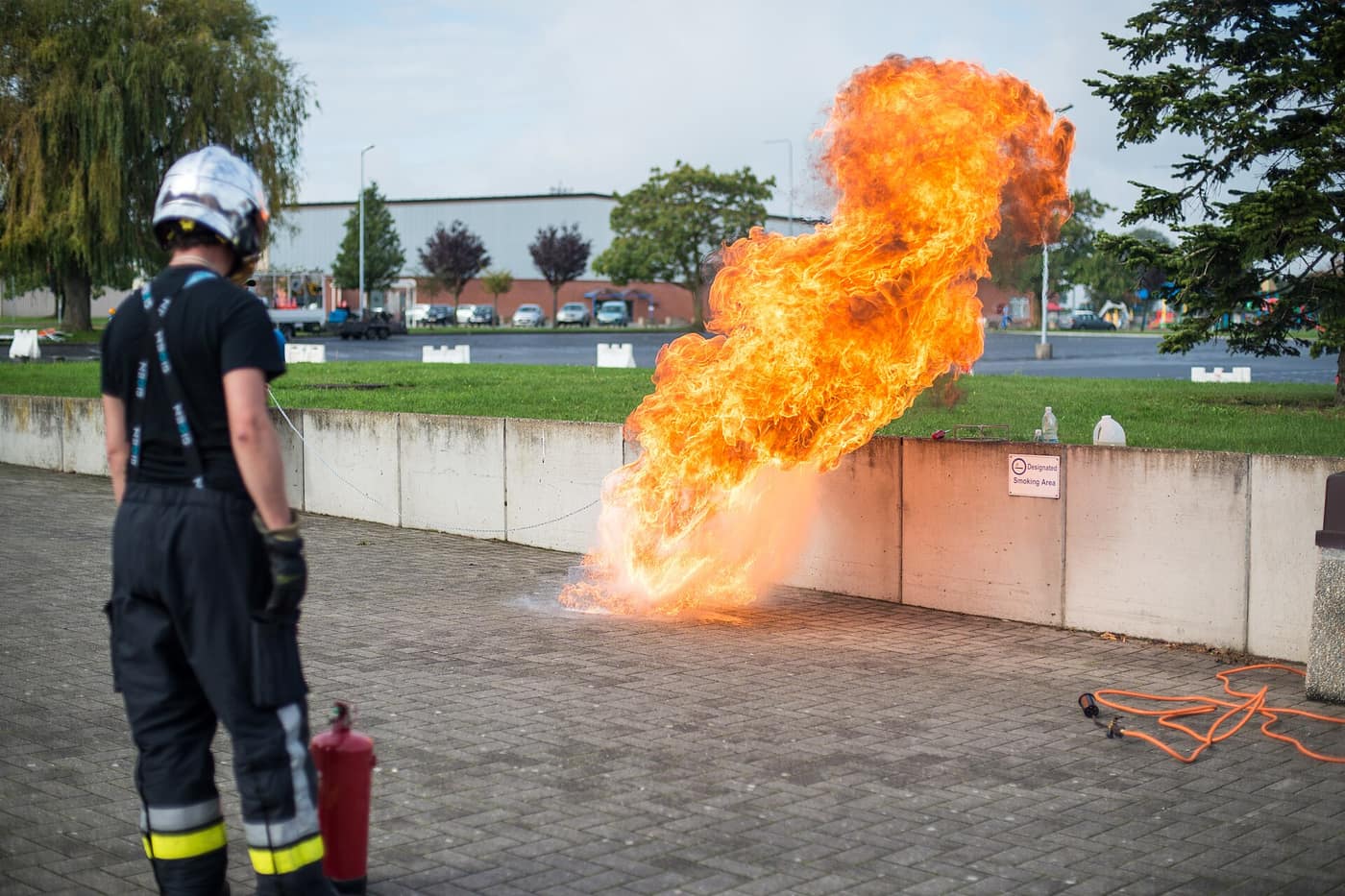
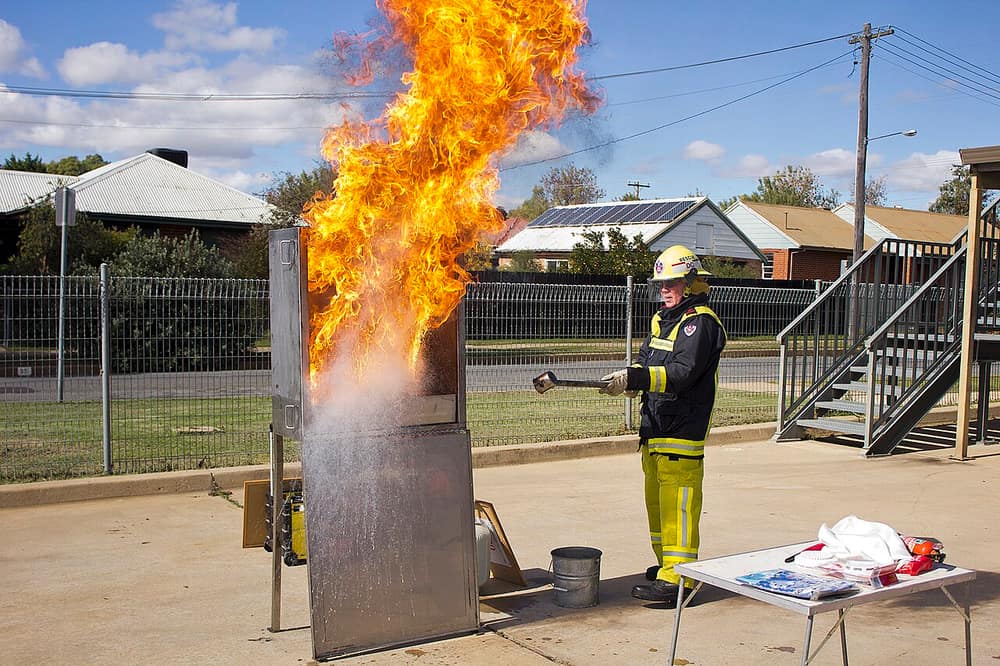
When water hits oil that’s hot enough to burn, it sinks, turns to steam instantly and expands violently. That steam throws burning oil up and out of the pan in a fireball that can reach the ceiling and anyone nearby. Fire services consistently warn: never pour water on a burning pan, and don’t try to carry it outside. A blanket is the right tool because it smothers the fire without disturbing the oil.
How to use a fire blanket on a pan fire
- Stay calm and don’t move the pan. Carrying a burning pan spreads the fire and burns hands, arms and faces.
- Turn off the heat, only if you can do it safely. Don’t lean over the flames to reach the controls. For a gas hob or skottel, close the cylinder valve if you can reach it.
- Pull the blanket out of its holder by the tapes. Most quick-release containers have two tapes hanging down: pull both firmly and sharply.
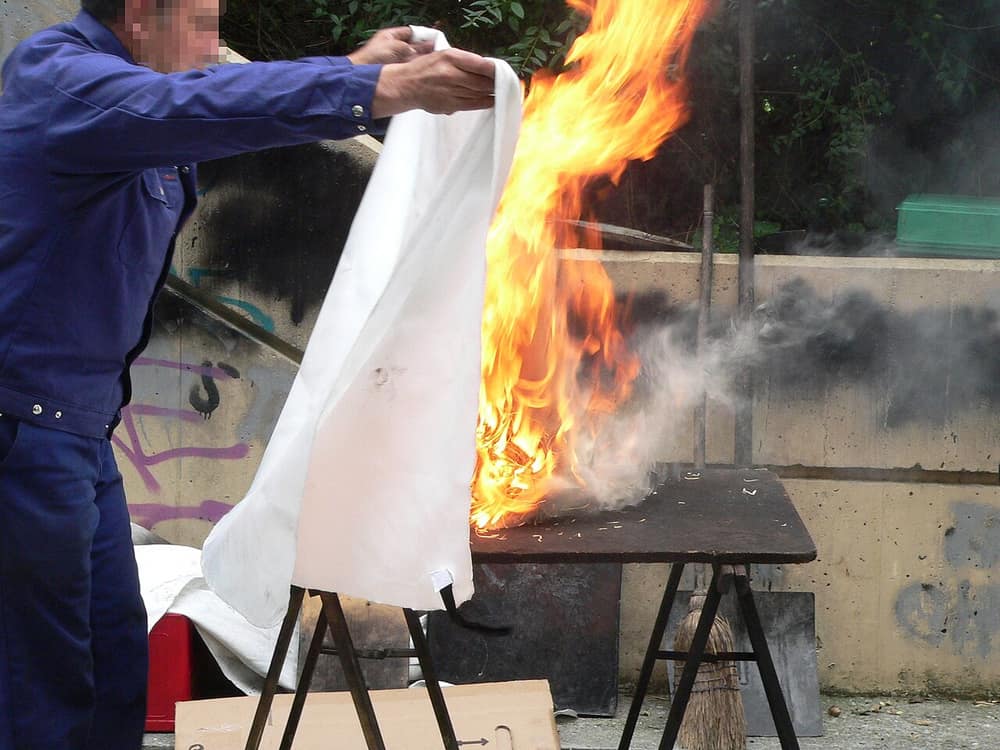
- Protect your hands. Wrap the top edge of the blanket around your hands so the blanket forms a shield between you and the fire.
- Lay it over the pan, away from you. Hold it up in front of your face and body, then place it over the pan, moving it away from you so the flames are pushed away, not towards you. Cover the pan completely.
- Leave it there. Don’t lift the blanket to check. UK fire service advice is to leave it in place for at least 30 minutes, until the pan has fully cooled; oil can re-ignite if air gets back in while it’s still hot.
- Get out if it doesn’t work. If the fire isn’t out, or it’s spread beyond the pan, leave, close the door behind you and call for help: 112 from a cellphone, or your saved local municipal fire number.
Even if the fire goes out, the room may be full of smoke. Open windows once it’s safe, and call the fire brigade if there’s any chance the fire got into the extractor hood, cupboards or ceiling.
How to use a fire blanket on burning clothing
The rule for a person on fire is stop, drop and roll:
- Stop the person running, which fans the flames.
- Wrap them in the blanket, working from the head downwards, to smother the flames and protect their face.
- Lay them down and roll them gently until the flames are out.
- Cool the burn with cool running water once the fire is out, remove jewellery near the burn if it isn’t stuck, and get medical help (dial 112). Don’t remove clothing that’s stuck to the skin.
If you’re alone and your clothes catch fire, cover your face with your hands, drop to the ground and roll.
Sizes and what to look for
| Size | Best for | Notes |
|---|---|---|
| About 1 m × 1 m | Most domestic pans | Common household size; compact to mount |
| About 1.2 m × 1.2 m | Big pans, woks, wrapping a person | Easier to cover a large pan fully |
| 1.2 m × 1.8 m and larger | Workplaces, labs, wrapping a person | Some local blankets are sold at 2 m × 2 m |
Bigger blankets cover large pans and woks more easily and are better for clothing fires.
- Standard: look for compliance with a recognised fire blanket standard such as EN 1869 (the European standard for single-use fire blankets), or a South African certification mark where the product carries one.
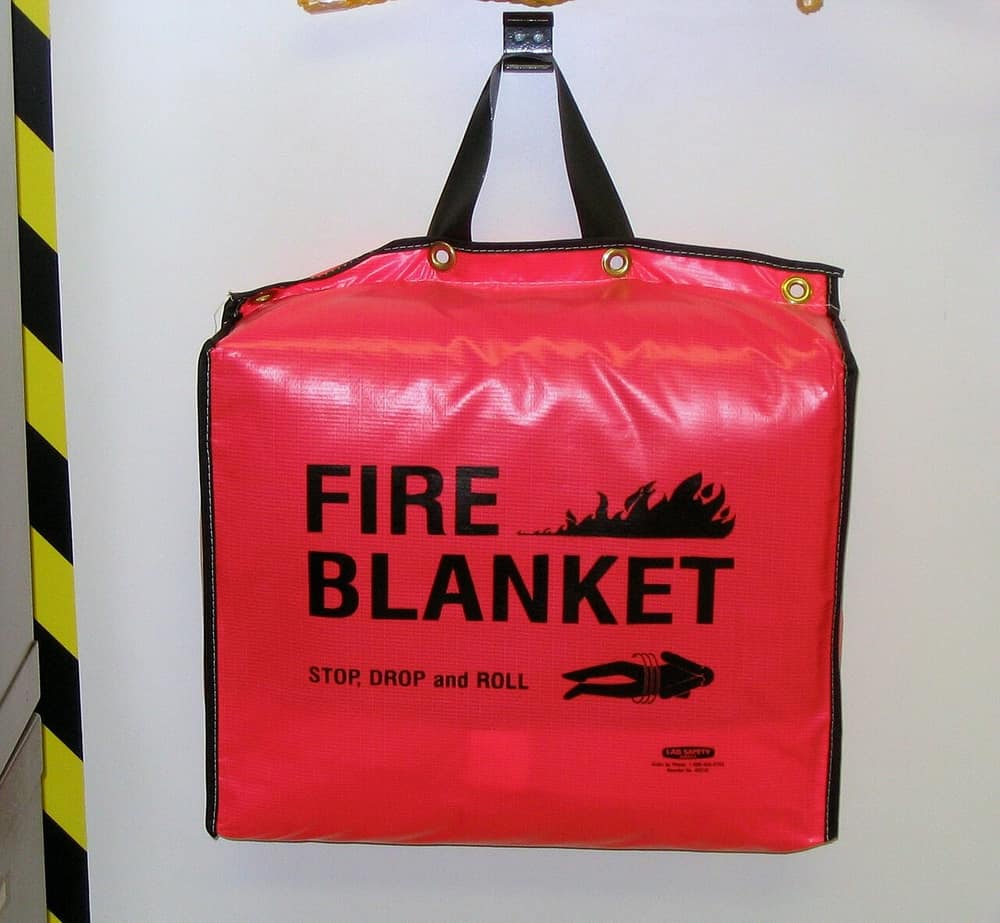
- Quick-release container with pull tapes, or a clearly marked bag you can open in one movement.
- Single use. Most household blankets are designed to be used once and then replaced.
- Material: woven glass fibre is common in household blankets.
Prices: at Arbor Safety (Nov 2026), a 2 m × 2 m glass fibre blanket that meets EN 1869 costs around R339, and a heavier ceramic fibre blanket for industrial use around R866. Specialised blankets for lithium batteries or vehicles sit at the premium end.
What to buy
A blanket for the stove, an ABC extinguisher for everything else, and wet chemical only if you deep-fry a lot. All are in stock at a South African supplier.

Arbor Safety Co
Glass Fibre Fire Blanket
A light-duty glass fibre blanket that meets EN 1869, in a clearly marked red bag you hang near the kitchen door. At 2 m × 2 m it's big enough to wrap a person, not just a pan.
- 100% glass fibre
- 2 m × 2 m
- Complies with EN 1869:1997
- Withstands temperatures up to 550°C
- Meets the European fire blanket standard
- Large enough for clothing fires
- Single use only
- Bag rather than a quick-release hard case

Arbor Safety Co
Ceramic Fibre Fire Blanket
A heavier ceramic fibre cloth aimed at warehouses, mining and construction. Consider it for a serious workshop or farm store rather than the kitchen.
- Ceramic fibre cloth
- Rated to 1,200°C
- 2 m × 2 m
- Much higher temperature rating
- Built for industrial use
- Overkill and pricier for a home kitchen
- No household blanket standard listed

Arbor Safety Co
2.5kg DCP Fire Extinguisher (Firemate)
The blanket handles the stove; this handles almost everything else. Mount it by the kitchen door, but don't use it at close range on a pan of oil.
- 2.5 kg ABC dry chemical powder
- Class A, B and C
- Supplier says it conforms to SANS 1910:2009 fire ratings
- Covers most other household fires
- Light enough for most adults
- Powder at close range can spread burning oil

Arbor Safety Co
6l Wet Chemical Fire Extinguisher
If you deep-fry often or run a busy outdoor kitchen, a class F wet chemical extinguisher is designed for burning cooking oil. For most homes the blanket is enough.
- 6 litres wet chemical
- Class F (cooking oils and fats)
- Designed for deep-fryer fires
- Purpose-built for oil fires
- Covers fires too big for a blanket
- Four times the price of a blanket
Prices change often; check the retailer for the current price and stock. We may earn a commission if you buy through these links, at no extra cost to you. Star ratings are the store's own customer reviews, shown once a product has at least 3. How we choose products.
Where to mount it
- In the kitchen, near the exit, not directly above or beside the stove. You need to reach it without leaning over the fire.
- About shoulder height for the adults in the house, so you can pull the tapes straight down.
- Visible and unobstructed, not behind a door or inside a cupboard.
- Outdoor kitchens, lapas and braai areas benefit from a second blanket, especially if you cook with oil on a skottel or gas braai. See our skottel braai guide and built-in braai guide.
- Caravans and camping kits. A small blanket packs easily.
Care and replacement
- Check it every few months: the container is intact, the tapes hang free, and the blanket isn’t damaged, damp or contaminated with grease.
- Don’t wash it. Follow the manufacturer’s care instructions; many say to clean only with a dry cloth.
- Replace it after any use, or if it’s torn or worn. A used blanket may have hidden damage and grease, and could fail next time.
- Follow the manufacturer’s guidance on shelf life.
Fire blanket or fire extinguisher?
You want both. A blanket is best for pan fires and clothing fires, and it’s easy for anyone to use. A fire extinguisher handles a wider range of small fires elsewhere in the house. Powder extinguishers used too close to a pan can blast burning oil out of it, which is why a blanket is the first choice on the stove. For kitchens that deep-fry often, a wet chemical extinguisher rated for class F is designed for cooking oil; see our extinguisher types guide.
Prevent pan fires
- Never leave hot oil unattended, not even to answer the door or check the braai.
- Fill pans no more than a third full of oil.
- Watch for smoke. Smoking oil is too hot. Turn the heat down or off.
- Use a thermostat-controlled fryer rather than a pot for deep-frying.
- Keep tea towels, oven gloves and paper away from the stove.
- Don’t cook after drinking or when you’re very tired.
- Fit smoke alarms near (not in) the kitchen. See our smoke and CO detector guide.
For the rest of the kitchen, from gas hobs and paraffin stoves to candles during load shedding, see our kitchen fire safety guide.
FAQ
How do you use a fire blanket?
Turn off the heat if it’s safe, pull the blanket out by its tapes, wrap the edge around your hands, and lay it over the pan away from you so the pan is fully covered. Leave it in place until the pan has cooled completely, at least 30 minutes.
Can you reuse a fire blanket?
Most household fire blankets are designed for single use. Replace it after it’s been used on a fire, or if it’s damaged, dirty or greasy.
What size fire blanket do I need for a kitchen?
A 1 m x 1 m blanket covers most domestic pans. A 1.2 m x 1.2 m or larger blanket covers big pans and woks more easily and is better for wrapping a person.
Where should a fire blanket be mounted?
On a kitchen wall near the exit, at about shoulder height, and away from the stove so you can reach it without leaning over a fire.
Can I throw water on a pan fire?
Never. Water hitting burning oil turns instantly to steam and throws burning oil out of the pan. Smother it with a fire blanket instead, and get out if it doesn’t work.

Nadia Pillay
Home fire safety writer
Writes our home fire safety guides, built on SANS standards, SAQCC rules and fire service advice.
More from Nadia →