We're independent: products are chosen on merit and prices come from the retailers' own sites. We may earn a commission if you buy through our links. Learn more.
Key takeaways
- Mushroom gas heaters give the most heat and work in load shedding; wall-mounted electric infrared heaters are neater and cope better with a breeze.
- Every patio heater is outdoors only. If a patio has been closed in with blinds, glass or walls, treat it as indoors and keep gas heaters out.
- Big gas patio heaters are thirsty: a 13 kW heater on full can empty a 9 kg cylinder in roughly nine hours.
- For a long table, two smaller heaters at either end usually beat one big heater in the middle.
The braai’s done, the conversation is just getting good, and then the temperature drops and everyone drifts inside. A patio heater is what keeps the stoep, braai area or outdoor table usable for another couple of hours on a cool evening.
Gas patio heaters (mushroom and pyramid flame styles) are portable and work in load shedding; wall-mounted electric infrared heaters are neat and simple but need power. This guide covers the types, how far the heat actually reaches, wind and roof clearances, and the safety rules that matter. One rule first: a patio heater is for outdoor use only. Never use one indoors, in a garage or in an enclosed room.
Patio heater types compared
| Type | Fuel | Heat pattern | Best for | Wind | Load shedding |
|---|---|---|---|---|---|
| Mushroom (umbrella) gas heater | LPG cylinder in the base | Radiates down and outward in a circle | Open patios, gardens, restaurant terraces | Affected by strong wind | Works |
| Pyramid / flame tower gas heater | LPG cylinder in the base | Radiates outward from a glass flame tube | Ambience plus moderate heat | Affected; some have wind guards | Works |
| Tabletop gas heater | Small cylinder or cartridge | Small radius | Small tables, balconies where allowed | Easily affected | Works |
| Portable outdoor panel heater | LPG cylinder | Directional, like an indoor cabinet heater | Covered stoeps with open sides | Moderate | Works |
| Wall- or ceiling-mounted electric infrared | Electricity | Directional radiant heat | Covered patios and braai areas | Less affected than warm air | Doesn’t work (unless on backup power) |
| Freestanding electric infrared | Electricity | Directional | Small patios, balconies | Less affected | Doesn’t work |
Quick pick
- Big open patio or garden table: a mushroom gas heater.
- You want a showpiece: a pyramid or glass-tube flame heater.
- Covered braai area with a power point: a wall-mounted electric infrared heater.
- Windy coastal stoep: electric infrared, or a gas heater with flame-failure protection and a wind guard, placed on the sheltered side.
Gas patio heaters
Mushroom heaters
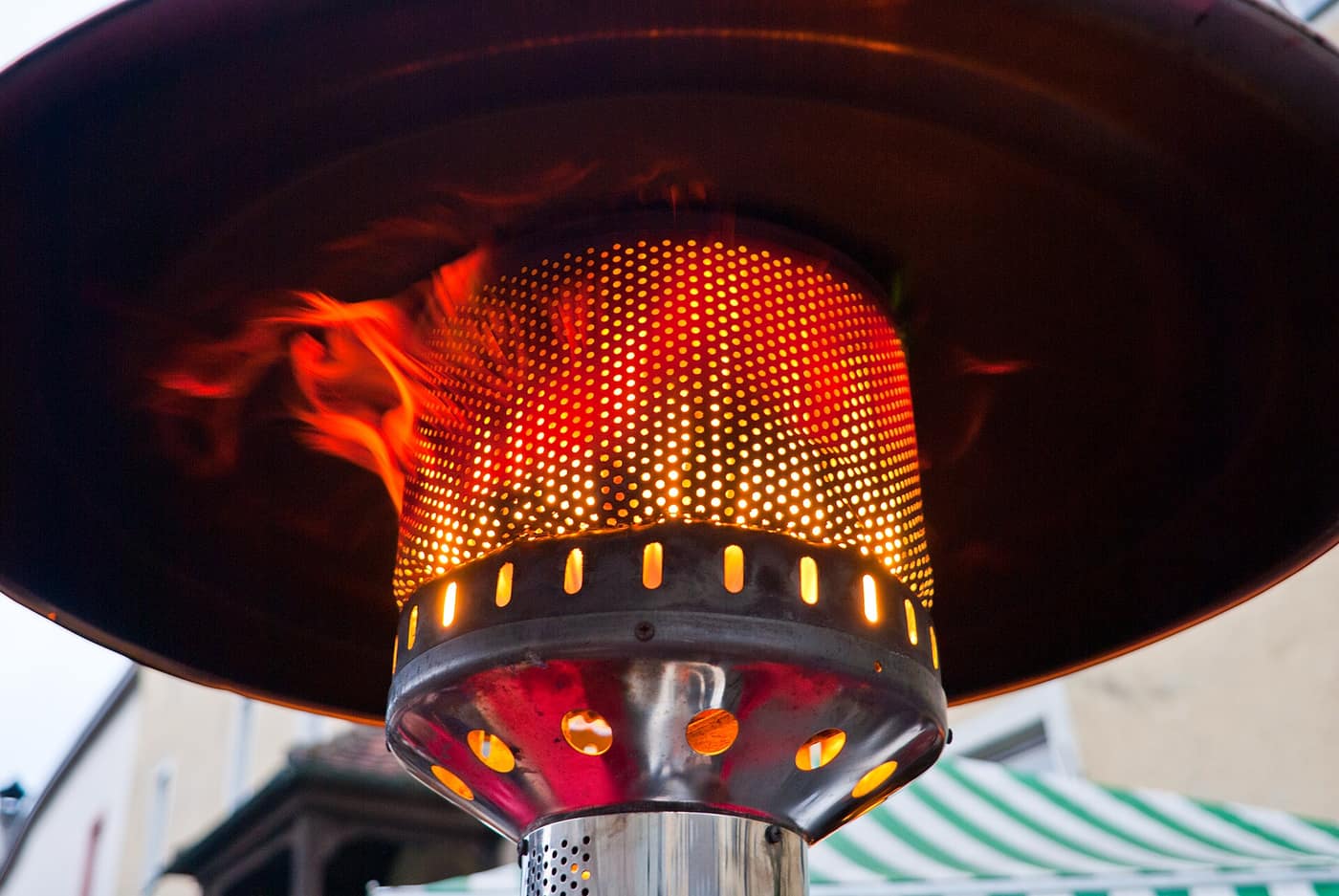
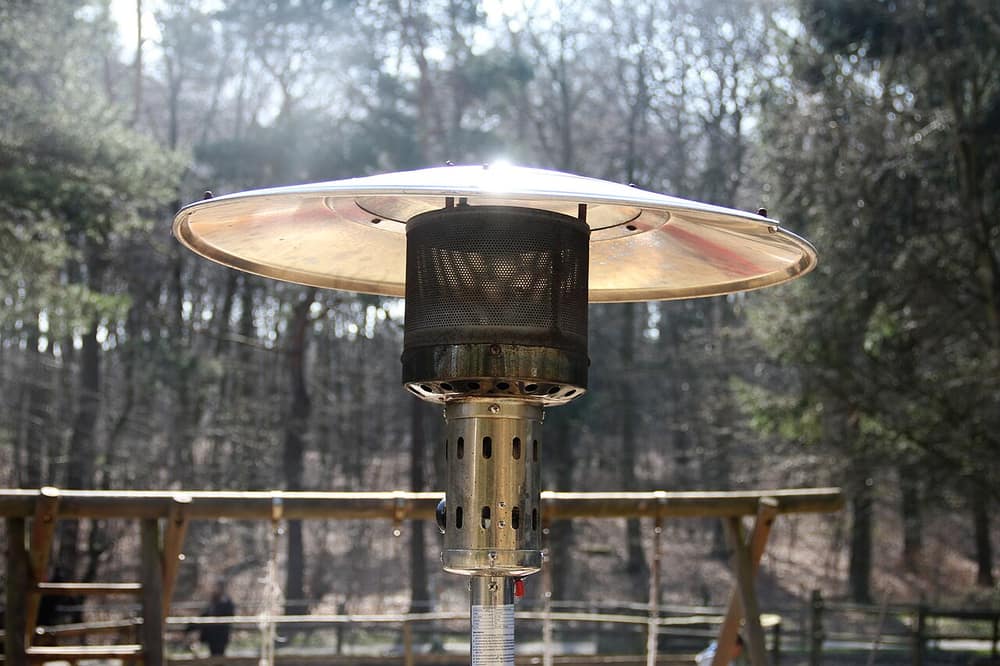
The tall stainless steel or powder-coated heater with a reflector on top. The burner heats an emitter under the reflector, which bounces radiant heat down onto the people beneath it. The cylinder sits in the base, which also gives the heater stability. They’re the most common choice for restaurants and big patios, and they work anywhere you can safely put a cylinder.
Pyramid and flame tower heaters
These have a visible flame dancing in a glass tube, which makes them as much about atmosphere as warmth. Heat output varies widely between models, so check the kW rating rather than assuming a tall flame means lots of heat.
Tabletop and portable heaters
Smaller units that run from small cylinders or cartridges. They’re handy for a small table or camping, but the warmth stays close to the heater.
Electric patio heaters
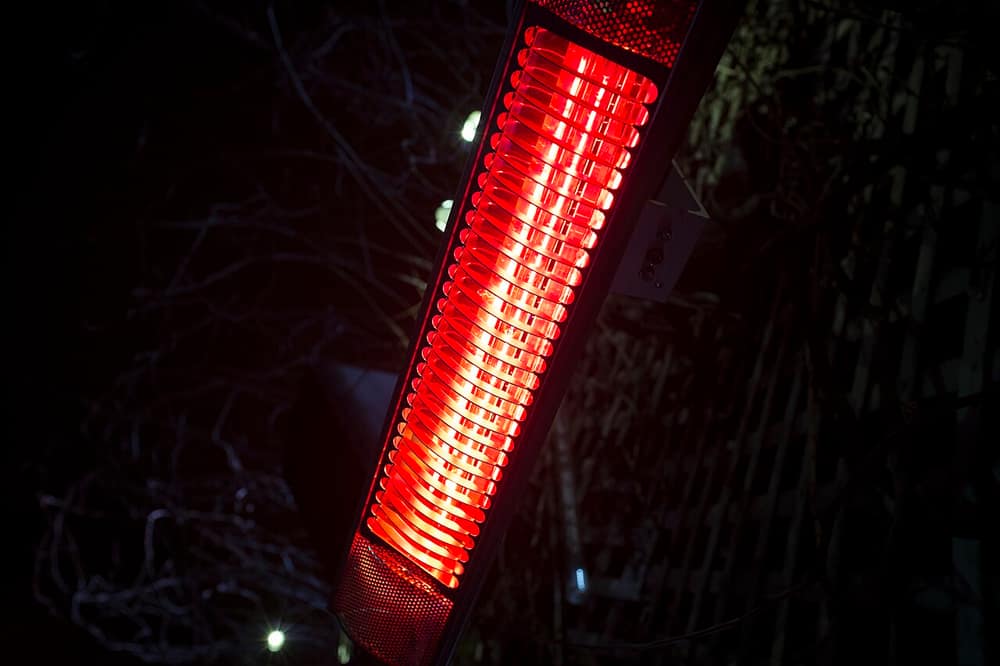
Electric infrared heaters (often halogen or carbon element types) mount on a wall or ceiling, or stand on a tripod. They heat people and surfaces directly, which works well outdoors because there’s no warm air to blow away. They’re tidy, have no cylinder to swap and suit covered braai areas.
The downsides: they need a suitable outdoor-rated power point (fixed wiring should be done by an electrician and covered by your electrical certificate of compliance), and they won’t work in load shedding unless you have backup power that can handle their load. To work out running cost, use: cost per hour = kW × your tariff in rand per kWh.
How much area will it heat?
Manufacturers usually quote a heating radius or area. In practice, coverage depends on:
- kW output: higher output reaches further.
- Mounting height: too high and the heat spreads thin; too low and it’s uncomfortable directly underneath.
- Wind: even a light breeze carries heat away from gas heaters.
- Shelter: a patio with a roof and one or two walls holds heat far better than an open lawn.
- Air temperature: a Highveld winter night needs more heat than a mild coastal evening.
Wind and placement
- Shelter the flame. Place gas heaters out of the strongest wind, or on the sheltered side of the patio. In windy coastal areas, look for heaters with flame-failure protection and a wind guard.
- Firm, level ground. Stand heaters on a solid surface. A heavy base, and in some cases anchoring, helps stop a tall heater blowing over.
- Clear above and around. Umbrellas, awnings, shade cloth, thatch, tree branches and curtains must be well outside the manufacturer’s stated clearances.
- Covered patios need care. The space must remain open enough for combustion gases to escape, and the roof must be at least the manufacturer’s minimum height above the heater.
Safety features and rules
- Never use a patio heater indoors, in a garage, in an enclosed braai room or in a closed-in patio.
- Look for a tip-over switch and a flame-failure device (also called a thermocouple safety valve), which cut the gas if the heater falls or the flame blows out.
- Leak test with soapy water every time you connect a cylinder, and never test with a flame.
- Close the cylinder valve when you’re finished.
- Keep children and pets away from the hot emitter and glass tube.
- Don’t hang anything on a heater or use it to dry towels.
- Don’t move a gas heater while it’s lit.
- Store cylinders upright and outdoors in a ventilated, shaded place.
For indoor heating, see our gas heater guide and the gas heater safety guide.
Cylinders and running costs
Most mushroom and pyramid heaters are designed to take a 9 kg LPG cylinder in the base; check the manual for the cylinder size and regulator your model needs. Larger cylinders won’t fit inside most bases and shouldn’t be connected to a portable heater unless the manufacturer allows it.
To estimate running cost, find the gas consumption in kg per hour in the manual and multiply by your price per kg (refill price ÷ cylinder size). If you only have the kW rating, LPG holds roughly 13 to 14 kWh per kg, so divide the kW by about 13.5. Using Alva’s 9 kg refill voucher at R380 (Gauteng only, Nov 2026), or about R42 per kg:
| Heater on full | Approx. gas use | Approx. cost per hour | Approx. hours per 9 kg |
|---|---|---|---|
| 11 kW (glass tube style) | 0.8 kg/h | R34 | 11 hours |
| 13 kW (mushroom) | 1 kg/h | R41 | 9 hours |
These are estimates from the kW rating; your manual’s consumption figure is more accurate, and running on a lower setting stretches the cylinder further. For a quick comparison of LPG and electric running costs, try our heater size calculator.
Patio heaters worth buying
Three gas heaters from budget to showpiece, and an electric option for covered braai areas. Prices change often, so check the live price before you buy.

ALVA
Gas Patio Heater - Stainless Steel | 13kW | Segmented Pole | LPGSA Approved
The classic stainless steel mushroom heater, with plenty of output for an open patio or a table of friends after the braai. LPGSA approved.
- 13 kW output
- Stainless steel
- Segmented pole
- LPGSA approved
- Lots of heat for open spaces
- Stainless steel suits outdoor use
- Uses gas quickly on full
- Tall: needs generous roof clearance

ALVA
Gas Patio Heater - Powder Coated
A full-size mushroom heater for less, designed to sit beside a table or seating area. A good starting point if you only use the patio on the odd cold evening.
- Mushroom style
- Powder-coated finish
- Segmented hood
- Lowest price for a full-size gas heater here
- Even heat from the segmented hood
- Powder coating needs a cover at the coast

ALVA
Gas Patio Heater - Circular Glass Tube Style - 1.83m
A flame dancing in a glass tube makes this as much a centrepiece as a heater. Still a serious 11 kW, with heat going out all the way round.
- 11 kW output
- 1.83 m glass flame tube
- 360° radiant heat
- Aluminium hood
- Looks spectacular after dark
- Heats in a full circle
- Glass tube needs care when moving or cleaning
- Pricier than a mushroom heater

ALVA
Electric Infrared Short Patio Heater | Adjustable Directional Head
No cylinder to swap: a compact infrared heater with a head that tilts and rotates, so you can aim the warmth at the table in a covered braai area. Needs power, so not for load-shedding nights.
- Electric infrared
- Adjustable head tilts and rotates
- Indoor or covered outdoor use
- Directional heat that copes with a breeze
- Small enough to move between stoep and lounge
- Doesn't work during power outages
- Short unit heats a small area, not a whole patio
Prices change often; check the retailer for the current price and stock. We may earn a commission if you buy through these links, at no extra cost to you. Star ratings are the store's own customer reviews, shown once a product has at least 3. How we choose products.
Brands and where to buy
Gas patio heaters from brands including Alva and Cadac are sold in South Africa, along with many house-brand models. You’ll find them at hardware and home improvement chains, big-box and outdoor stores, gas dealers and online. Price bands:
- Entry: tabletop and basic mushroom heaters. Alva’s powder-coated mushroom heater was around R2,799 (Nov 2026).
- Mid: full-size mushroom and pyramid heaters with tip-over and flame-failure protection, and freestanding electric infrared heaters, such as Alva’s 13 kW stainless steel heater at around R3,499 or its short electric infrared patio heater with an adjustable head at around R1,199 (Nov 2026).
- Premium: glass-tube showpieces, commercial-grade gas heaters and fixed electric infrared systems.
Care
- Clean the reflector and housing with a damp cloth; stainless steel cleaner keeps it looking good.
- Check hoses and the regulator for cracks before each season.
- Cover the heater when it’s not in use, especially at the coast where salty air causes corrosion.
- Look out for spiders and insects in the burner and venturi tubes if the heater has stood unused; blockages can cause poor burning. Have it serviced if the flame looks irregular.
If you’d rather gather round real flames, see our fire pit guide; for flame without the smoke, our guide to smokeless and gas fire pits compares the options. If you’re planning a covered entertainment area from scratch, our built-in braai guide is a good place to start.
FAQ
Can I use a gas patio heater under a covered patio?
Only if the patio is open enough for combustion gases to escape and the roof is higher than the manufacturer’s minimum clearance above the heater. If the space is closed in with blinds, glass or walls, don’t use a gas patio heater there.
Are electric patio heaters better than gas?
They suit different situations. Electric infrared heaters are neat, need no cylinders and handle a breeze better, but they need power and won’t work during load shedding. Gas heaters are portable and work off-grid, but need open air and cylinder swaps.
How long does a 9 kg cylinder last in a patio heater?
Divide 9 kg by the heater’s consumption in kg per hour, which you’ll find in the manual. A 13 kW heater on full uses roughly 1 kg an hour, so about nine hours; lower settings make the cylinder last longer.
Why does my patio heater keep going out?
The most common causes are wind, a low or empty cylinder, a faulty regulator or a blocked burner. If it keeps happening in still conditions with a full cylinder, have it serviced.
Can I use a patio heater on a balcony?
Check your building’s rules and the heater’s manual first. Tabletop gas heaters suit some balconies where allowed; on an enclosed or glassed-in balcony, don’t use gas at all.

Lize van Wyk
Heating & fireplaces writer
Covers gas heaters, fireplaces and keeping a South African home warm through winter and load shedding.
More from Lize →