We're independent: products are chosen on merit and prices come from the retailers' own sites. We may earn a commission if you buy through our links. Learn more.
Key takeaways
- A potjie is for slow stews, a flat-bottomed pot (Dutch oven) is for baking with coals on the lid, and a skillet is for frying and searing.
- Cast iron holds heat for a long time, so use fewer coals than you think, especially underneath.
- Seasoning is a thin layer of oil baked onto the iron. Keep it thin, and add a little after every wash.
- Never pour cold water into a hot pot. Let it cool, wash it, then dry it over heat straight away.
- Light rust isn't the end: scrub it off with fine wire wool, dry the pot and season it again.
Cast iron is the one kind of cookware that is happiest in a fire. It doesn’t mind coals, smoke or a wobbly grid, it holds heat long after the flames have died down, and a well-kept pot outlives the person who bought it. In plenty of South African homes there’s already one in the garage: a potjie that comes out twice a year.
The trick is knowing which piece suits which job, how much heat cast iron really needs (less than you think), and how to keep it from rusting between braais. This guide compares the potjie, the flat pot or Dutch oven, the skillet and the griddle, then covers heat control, seasoning, rust and a few easy recipes to start with.
Quick comparison: which cast iron for which job?
| Piece | Shape | Best for | Heat | Watch out for |
|---|---|---|---|---|
| Potjie (three-legged) | Round belly, legs, fitted lid | Potjiekos, stews, curries, samp | A few coals underneath | Burning the bottom layer |
| Flat pot / Dutch oven | Flat base, often a lid that holds coals | Potbrood, bakes, roasts, stews | Coals underneath and on the lid | Too much heat underneath |
| Skillet / round pan | Shallow, one handle | Breakfast, searing, onions, pan bread | Hot coals or a grid over the fire | Hot handle, fat flare-ups |
| Griddle / plancha / steak plate | Flat plate, sometimes ribbed | Burgers, eggs, veg, smash patties | Even, hot coals or gas | Fat running off into the fire |
| Enamelled pot | Coated inside and out | Stews and sauces; easy to clean | Gentle, steady heat | Chipping, and some makers rule out open fires |
The pots, one by one
The potjie
The round, three-legged potjie is built for slow cooking over a small bed of coals. The legs hold it just above the heat, and the round belly lets steam circulate under the lid, which is why potjiekos is layered rather than stirred. Our potjiekos guide covers the method and three full recipes.
Potjies come in numbered sizes, but the numbers aren’t standard between brands. Megamaster’s care guide lists its No. 3 at 7.8 litres, while its No. 3 Pro is listed at 10.8 litres. Check the litre capacity on the label, or use our potjie size calculator to work out what you need for the number of people you feed.
The flat pot, or Dutch oven
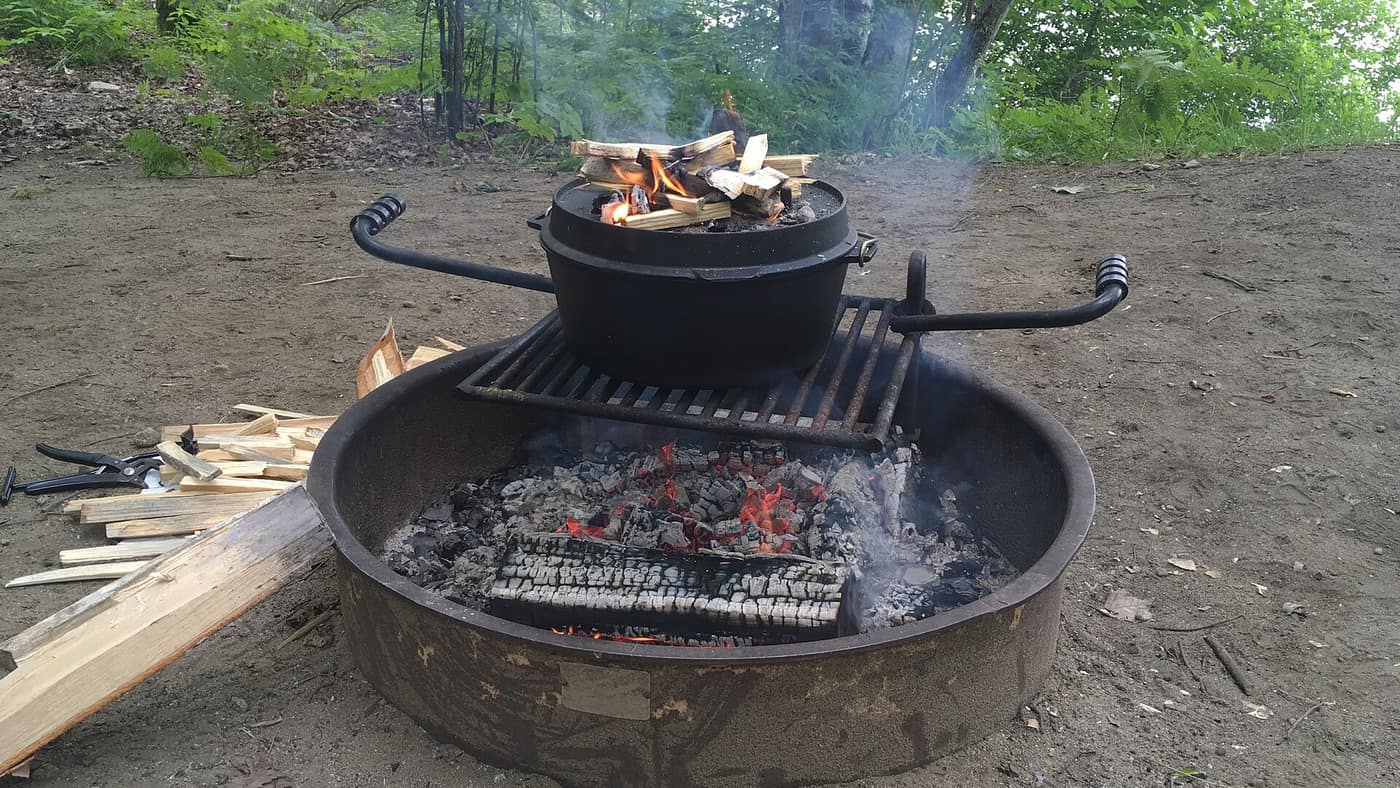
A Dutch oven is a heavy, lidded cast-iron pot. The outdoor version, sometimes sold as a camp oven, has short legs and a lid with a raised rim so coals sit on top without sliding off. In South Africa the same job is usually done by a flat-bottomed pot or bread pot, which is what potbrood is baked in.
Because heat comes from above as well as below, a flat pot works like a small oven. That makes it the pot for bread, cobblers, roast chicken and anything that needs to brown on top.
The skillet
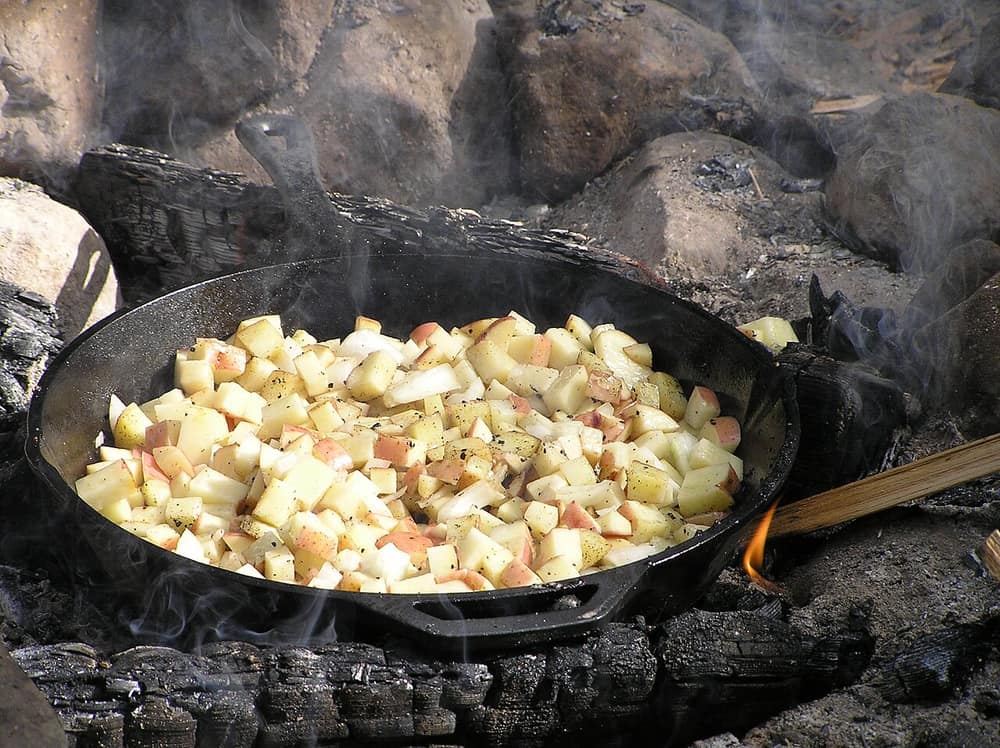
A cast-iron skillet (or round pan) is the most useful piece for everyday braais: eggs and bacon, fried onions or mushrooms on the grid while the meat cooks. The thick base doesn’t lose much heat when cold food goes in, so it sears well.
Griddles, planchas and steak plates
A flat cast-iron plate turns a braai or gas braai into a cooktop for burgers, eggs and anything small that would fall through the grid. If you buy one made for a gas braai, check it fits your model.
Bare or enamelled cast iron?
Bare (seasoned) cast iron is the traditional choice. It copes with direct coals and flames, and the seasoning gets better the more you use it. The downside is that it rusts if you leave it wet.
Enamelled cast iron has a glassy coating that doesn’t need seasoning and is easy to wash. But enamel can chip or crack under fierce, uneven heat. Some makers, Le Creuset among them, tell you not to use their standard enamelled pots over open fires or on braais, and sell a separate outdoor range for that. Read the instructions that came with your pot before it goes near coals.
Heat control: fewer coals than you think
Cast iron is slow to heat up and slow to cool down, which is why most outdoor cast-iron meals go wrong by burning at the bottom, not by being undercooked. The fixes:
- Cook over coals, not flames. Wait until the coals have a grey skin. Flames give you hot spots and soot.
- Start with less heat underneath. You can always add a coal. You can’t unburn a potjie.
- Heat from above for baking. In a flat pot, put more coals on the lid than underneath.
- Keep a side fire going. Feed a small fire to one side and rake fresh coals across as the old ones fade. Our charcoal and briquettes guide explains why briquettes give a steadier heat for long cooks.
- Turn the pot. Most fires have a hot side. A quarter turn of the pot (and the lid) every 15 minutes or so evens it out.
How many coals on a Dutch oven?
American camp-cooking charts are built around briquettes and inch sizes. A common rule for a 12-inch (about 30 cm) oven is roughly 24 to 25 briquettes for a moderate oven of about 175 °C, with about twice as many on the lid as underneath (16 or 17 on top, 8 below). Treat that as a starting point only: wind, cold weather, wood coals instead of briquettes and the depth of your pot all change it.
Can you use cast iron on gas?
Yes. Skillets and griddles work on a gas braai or gas ring, and potjies with screw-in legs can stand on a stove or potjie burner. Bring them up to heat gradually, not at full flame.
Seasoning cast iron
A new potjie needs to be burnt in and seasoned before its first meal, because many come with a protective factory coating. For potjies, Megamaster says to scrub the pot with hot soapy water and steel wool, dry it, oil the inside, heat it until the oil smokes, then cool it and wipe it out, repeating until the paper towel comes away clean.
Many skillets are sold pre-seasoned and can be used straight away. To re-season a skillet or anything else that fits in your oven, Lodge, the American cast-iron maker, recommends this:
- Wash the pan in warm, soapy water and dry it completely.
- Rub a very thin layer of oil all over, inside and out. Lodge suggests vegetable oil, canola or melted shortening; sunflower oil is the everyday South African equivalent.
- Wipe off as much as you can. It should look almost dry, with no drips or pooling.
- Bake it upside down on the middle rack at 230–260 °C (450–500 °F) for an hour, with foil on the rack below to catch drips.
- Switch off the oven and let it cool inside.
Cleaning and rust care
Daily care is about one thing: getting the pot dry.
- Let it cool down before it goes near water.
- Wash it with hot water and a brush or scourer. A little soap is fine.
- Dry it over heat, on the coals, gas or stove, until every bit of moisture has gone.
- Wipe on a thin layer of oil while it’s still warm.
- Store it dry, lid off or propped open, with crumpled newspaper inside to absorb damp.
No dishwasher, no soaking and no drip-drying. For the braai itself, see how to clean a braai.
Removing rust
Light surface rust looks bad but is easy to fix:
- Scrub the rusty patches with fine wire wool or steel wool and hot soapy water until you’re back to bare iron.
- Rinse and dry it over heat straight away.
- Oil it thinly and season it again, using one of the methods above.
For heavy rust, Megamaster suggests scrubbing, boiling water in the pot until it evaporates, then drying and oiling it overnight, repeated a few times. A cracked pot can’t be saved.
Recipes to start with
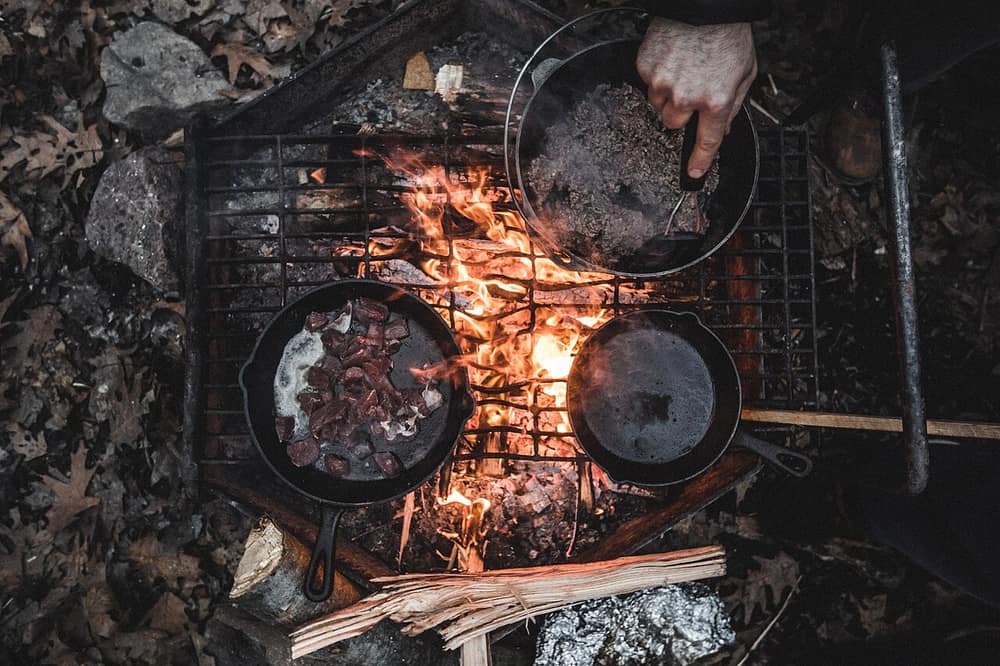
Start with dishes that are hard to ruin. Each one teaches you something about how your pot handles heat.
Skillet breakfast hash (serves 4)
- 30 ml oil, 6 medium potatoes (diced small), 1 onion (chopped), 250 g bacon or boerewors (sliced), 4 eggs, salt and pepper.
Heat the oil in the skillet on a grid over medium coals. Fry the potatoes for about 15 minutes, turning now and then, until golden and soft. Add the onion and bacon or wors and fry until cooked. Make four hollows, crack in the eggs, cover with a lid or a sheet of foil and cook until the whites set.
Flat-pot peach cobbler (serves 6)
- 2 tins (410 g each) sliced peaches in syrup, 1 cup self-raising flour, 1 cup sugar, 1 cup milk, 125 g melted butter.
Pour the peaches and their syrup into a greased flat pot. Mix the flour, sugar, milk and melted butter into a batter and pour it over the fruit. Lid on, a few coals underneath and more on the lid, and bake for about 40 to 50 minutes, until the top is golden and springs back. It teaches you the top-and-bottom heat balance before you try bread.
Next steps
- A first potjie: the classic lamb potjie in our potjiekos guide.
- Bread: potbrood in a flat pot, or roosterkoek on the grid while the skillet does the sides.
What to buy
A No. 3 potjie covers most families. Add a flat pot for baking, a skillet for every braai and long gloves for all of them.

Megamaster
Megamaster No 3 Potjie
The classic three-legged No. 3: big enough for a family potjie, and the pot most South African cast-iron cooking starts with.
- No. 3
- Cast iron
- Three cast-iron legs
- Fitted lid
- Stands straight over a bed of coals
- Handles potjies, stews and even bread
- Heavy, especially when full
- Fixed legs make it awkward on a stove top

Megamaster
Megamaster No 10 Flat Pot
The South African answer to a Dutch oven: a flat-bottomed cast-iron pot for bread, stews and anything you want to bake with heat from above and below.
- No. 10
- Cast iron
- Flat bottom
- Flat base is forgiving for bread and bakes
- Also sits flat on a gas burner or stove
- Small for a big crowd
- Needs drying and oiling after every use

Megamaster
Megamaster 260 Cast Iron Round Pan
A cheap way into cast iron: a round pan for breakfast on the grid, a sauce next to the meat or onions while the chops cook.
- 260 mm
- Cast iron
- Use on braai, gas, stove or oven
- Low price for a pan that lasts years
- Works on almost any heat source
- Listed as slightly box damaged, so check it when it arrives
- The handle gets as hot as the pan: use a glove

Arbor Safety Co
Red Heat Resistant Elbow length Gloves
Long leather gloves with a 20 cm cuff for lifting hot lids, handles and pots off the coals. A kitchen oven glove is too short for a pot sitting in a fire.
- Chrome leather
- Cotton lined
- 20 cm cuff
- Covers your forearms
- Cheap
- Listed for 120 °C heat applications: grip hot iron briefly, don't hold glowing coals
Prices change often; check the retailer for the current price and stock. We may earn a commission if you buy through these links, at no extra cost to you. Star ratings are the store's own customer reviews, shown once a product has at least 3. How we choose products.
FAQ
What is the difference between a potjie and a Dutch oven?
A potjie is round-bellied with three legs, made for slow, layered stews over a few coals. A Dutch oven (or flat pot) has a flat base and usually a lid that holds coals, so it can bake bread and bakes with heat from above as well as below.
Can you put cast iron directly on coals?
Bare cast iron can, but a grid above the coals (or a potjie’s legs) gives you more control. Check the instructions before enamelled cast iron goes near a fire.
What oil should I use to season cast iron?
A neutral cooking oil with a high smoke point, such as sunflower or canola, applied very thinly with the excess wiped off.
How do I get rust off a cast-iron pot?
Scrub it off with fine wire wool and hot soapy water, dry the pot over heat straight away, then oil it thinly and season it again.
Can I wash cast iron with soap?
A little dish soap is fine. Just don’t soak it, and always dry it over heat and oil it lightly afterwards.
Why does my cast iron food burn at the bottom?
Too much heat underneath. Cast iron stores heat, so use fewer, older coals below, cook on a grid if you can, and in a flat pot put more of the heat on the lid.

Johan Botha
Braai & outdoor editor
Writes our braai, fire pit and pizza oven guides. Firmly in the wood-fire camp, but owns up to a gas braai for weeknights.
More from Johan →