We're independent: products are chosen on merit and prices come from the retailers' own sites. We may earn a commission if you buy through our links. Learn more.
Key takeaways
- Never leave a gas heater on while you sleep, and never use one in a bedroom, bathroom or other small closed room.
- Keep a window or door slightly open whenever the heater runs. Ventilation is what keeps oxygen up and carbon monoxide down.
- An ODS is not a carbon monoxide detector. Fit a separate CO alarm in every room where you use gas; smoke alarms don't detect CO.
- Leak test with soapy water every time you connect a cylinder, and never test with a flame.
- A yellow, lazy flame, soot marks or an ODS that keeps tripping means: switch off and have the heater checked.
Indoor gas heaters are safe to use when the heater is rated for indoor use, the room is ventilated and you follow a few firm rules. The situations to guard against are ordinary ones: a heater left on in a closed bedroom, a perished hose, a window shut tight against a Highveld frost.
The real dangers are carbon monoxide (CO), oxygen depletion, gas leaks and fire. This guide explains each one, how to spot the warning signs and exactly what to do, with checklists you can work through before the first cold night.
At a glance: the risks and what protects you
| Risk | What causes it | What protects you |
|---|---|---|
| Carbon monoxide | Gas burning without enough oxygen, or a faulty or dirty heater | Ventilation, a CO alarm, servicing, never using it while asleep |
| Oxygen depletion | A heater burning in a closed or too-small room | Ventilation, an ODS, respecting the minimum room size |
| Gas leak | Damaged hose or regulator, loose connection, bad cylinder | Leak test at every cylinder change, closing the cylinder valve |
| Fire | Curtains, furniture or washing too close; heater knocked over | A metre’s clearance, tip-over switch, guard, extinguisher or fire blanket |
The rules you never break
- Never leave a gas heater on while you sleep, and never use one in a bedroom, bathroom or other small closed room.
- Always ventilate. Keep a window or door slightly open whenever the heater is running.
- Never use an outdoor or patio heater indoors, in a garage or in an enclosed braai room.
- Never leave a heater running when you leave the house or the room for a long time.
- Leak test every time you connect a cylinder.
- Keep flammable things away: curtains, furniture, clothes, bedding and drying washing.
- Follow the manufacturer’s instructions for clearances, minimum room size and use.
Carbon monoxide: the hidden risk
Carbon monoxide is a colourless, odourless gas produced when fuel burns without enough oxygen, or when an appliance is faulty or dirty. You can’t see it or smell it, and it can make you seriously ill or kill you, especially while you’re asleep and can’t notice the symptoms.
Warning signs in people
- Headache, dizziness or nausea that improves when you go outside
- Unusual tiredness, confusion or drowsiness
- Shortness of breath
- Several people (or pets) in the same room feeling unwell at the same time
Warning signs on the heater
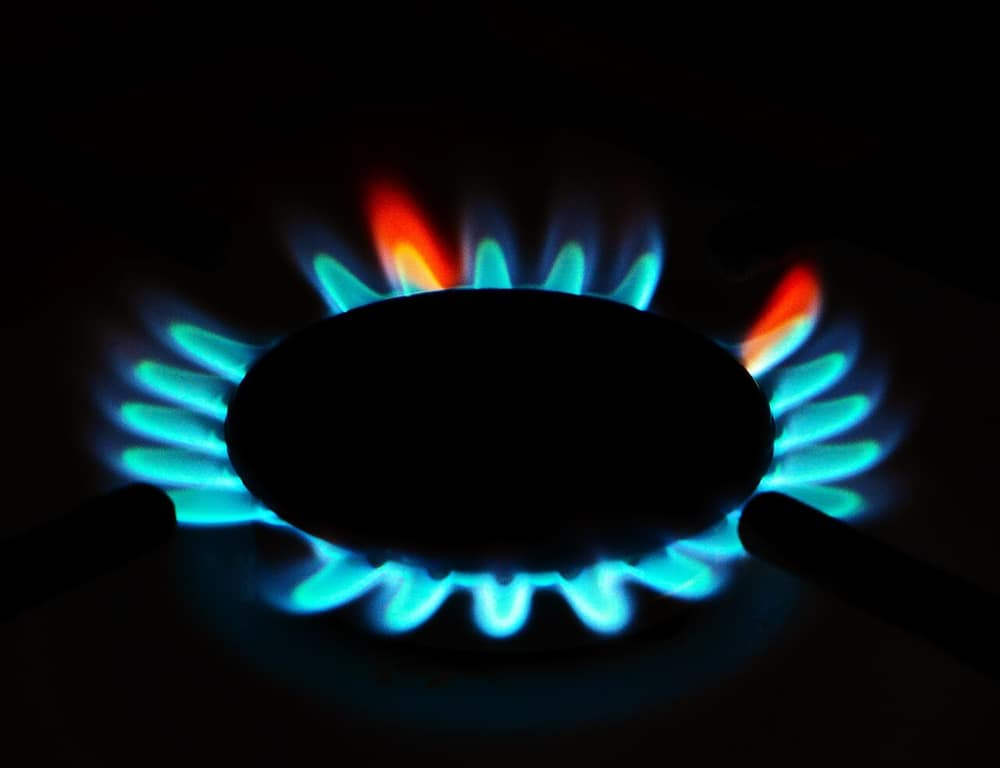
- A yellow, orange, lazy or flickering flame instead of a mostly blue one
- Soot or black marks on or above the heater
- Unusual condensation on windows
- The ODS shutting the heater off repeatedly
If you suspect CO poisoning
- Turn the heater off at the cylinder, if it’s safe to do so.
- Open doors and windows.
- Get everyone, pets included, outside into fresh air.
- Seek medical help immediately.
- Don’t use the heater again until it’s been checked.
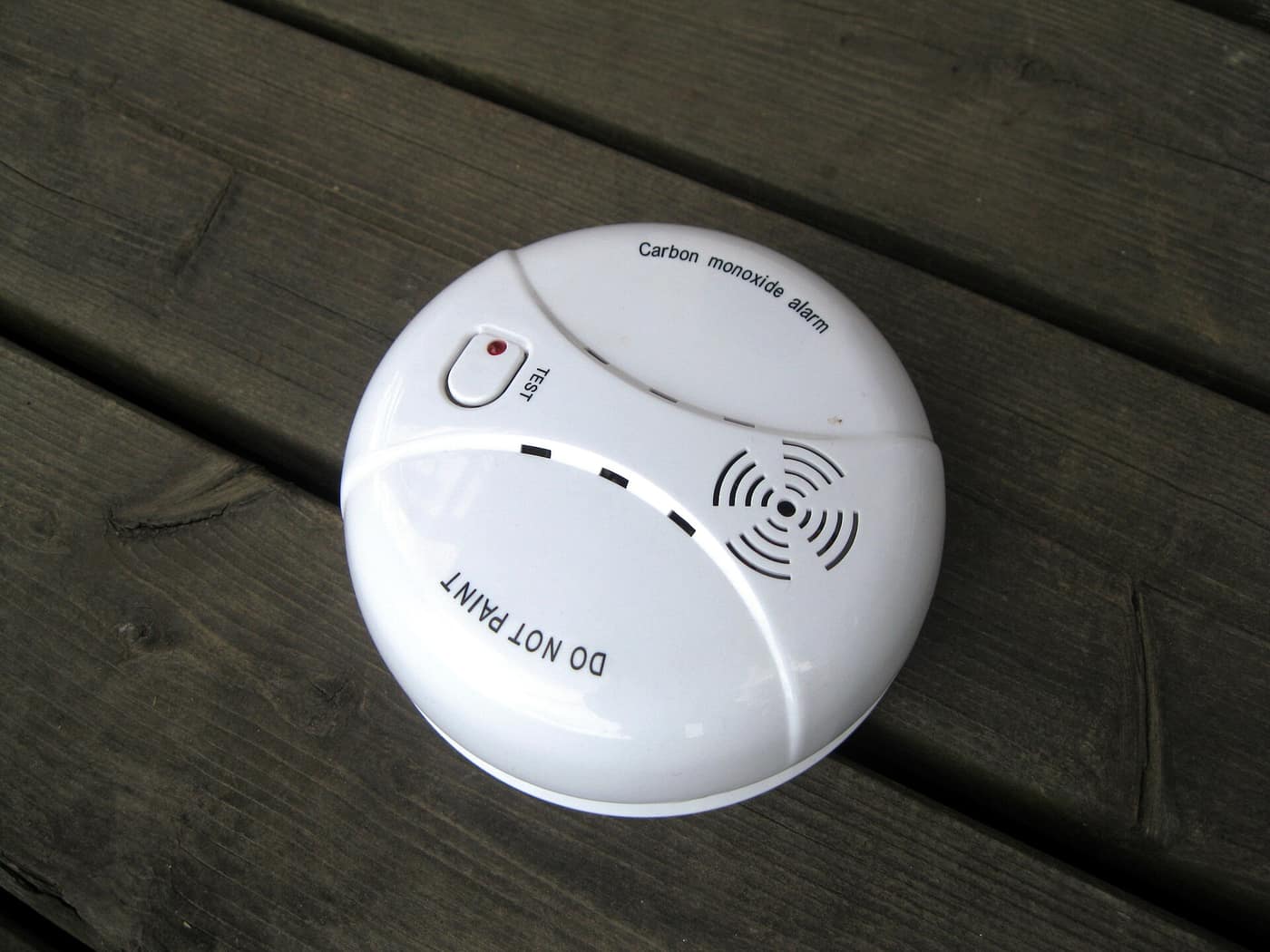
The best protection is a carbon monoxide alarm in every room where you use gas. See our smoke and CO detector guide for types and placement.
Ventilation: why a “slightly open window” matters
A gas heater uses oxygen from the room and releases combustion gases and water vapour into it. Without fresh air coming in, oxygen levels fall and the flame burns less cleanly, which raises CO production. Ventilation fixes both problems.
- Keep a window or door open a little. You’ll lose a small amount of heat, but that’s the price of using an unflued heater safely.
- Never block air vents to keep the room warmer.
- Respect the minimum room size in the manual. A heater that’s safe in a big lounge may not be safe in a small study.
- Damp, misty windows are a sign the room needs more air.
On the cold Highveld it’s tempting to seal everything up. That’s exactly when the risk rises.
Safety features: what they do (and don’t do)
| Feature | What it does | What it doesn’t do |
|---|---|---|
| Oxygen depletion sensor (ODS) | Shuts off the gas if oxygen in the room drops | Doesn’t measure CO directly; doesn’t replace ventilation or a CO alarm |
| Flame-failure device | Cuts the gas if the flame or pilot goes out | Doesn’t detect a leak at the hose or regulator |
| Tip-over (anti-tilt) switch | Shuts the heater off if it’s knocked over | Not fitted to every model; check before you buy |
| Guard | Keeps hands, pets and fabrics off the hot panels | Doesn’t make clearances unnecessary |
| CO alarm (separate device) | Sounds when CO builds up in the room | Needs testing and battery checks |
If the ODS keeps tripping, don’t try to bypass it. It’s telling you the room needs more air or the heater needs servicing. Our gas heater guide covers which features to look for when you buy.
Handling LPG cylinders safely
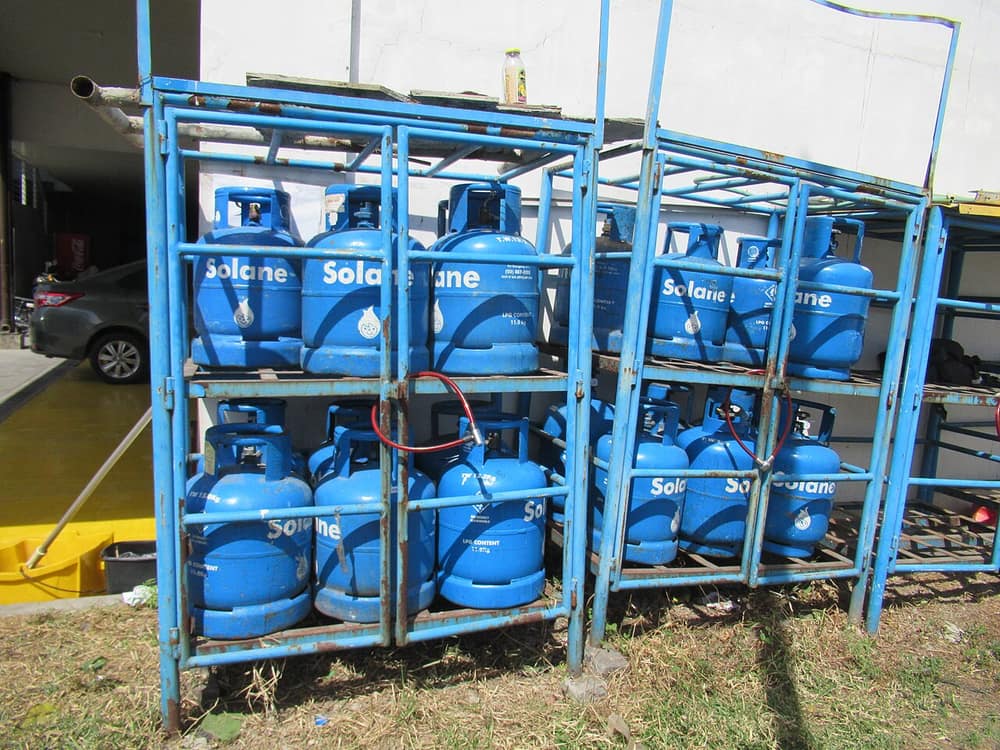
- Keep cylinders upright, in use and in storage.
- Store spares outside in a shaded, ventilated place, away from drains, cellars and low-lying spots. LPG is heavier than air and collects at floor level.
- Use the correct regulator and hose for your heater and cylinder. Don’t use adaptors or makeshift fittings.
- Replace hoses that are cracked, stiff, kinked or past their marked date.
- Never connect or disconnect a cylinder near a flame or while the heater is hot.
- Close the cylinder valve when you’re done, not just the heater controls.
- Buy refills and exchanges from reputable dealers, and reject cylinders that are rusted, dented or damaged.
- Don’t keep more gas indoors than you need. Cylinders for fixed installations (19 kg and 48 kg) usually stand outside, with gas piped in by a registered installer.
For carrying cylinders in the car, changing them step by step and taking gas on holiday, see our full gas cylinder safety guide.
How to do a soapy-water leak test
Do this every time you connect a cylinder, and whenever you smell gas.
- Make sure the heater is off and there are no flames, cigarettes or sparks nearby.
- Mix dishwashing liquid with water.
- Connect the regulator and open the cylinder valve.
- Brush or spray the soapy water over the cylinder valve, regulator, hose ends and connections.
- Watch for growing bubbles. Bubbles mean a leak.
- If you find one, close the cylinder valve, tighten or replace the faulty part and test again. If it still leaks, don’t use the heater.
Never test for leaks with a flame.
If you smell gas
- Don’t switch lights or appliances on or off, and don’t light anything.
- Close the cylinder valve if you can do so safely.
- Open doors and windows.
- Get everyone outside.
- If the smell persists, call your gas supplier or the fire department from outside.
Fire safety around heaters
- Keep at least a metre between the heater and anything that can burn, unless the manual specifies more.
- Don’t dry clothes on or near a heater.
- Keep children and pets away, and never leave them alone with a heater on.
- Keep a fire extinguisher or fire blanket in the home and know how to use it.
Safety kit worth having
There’s no CO alarm in our product catalogue right now, so start with our CO detector guide for that. These cover the other two weak points: the hose and a small fire.

ALVA
Bullnose Gas Regulator & 1.2m Hose Kit
If your hose is cracked, stiff or past its date, replace it before winter. Make sure the regulator matches your cylinder valve and your heater's manual.
- For 9 kg cylinders with bullnose valve
- Low-pressure regulator, 1.2 m hose, 2 clamps
- SANS 1237 & SANS 1156 approved
- Fixes one of the most common leak points
- Inexpensive
- Only fits bullnose (5/8" BSP) valves

Arbor Safety Co
1.0kg DCP Fire Extinguisher (Firemate)
A small dry chemical powder extinguisher to keep near the room where the heater lives. Small enough to grab quickly, for a fire that is still small.
- 1.0 kg dry chemical powder
- Class A, B and C fires
- Fire rating 5A/21B
- Compact and affordable
- Covers the common household fire classes
- Short discharge time: for small fires only
- Powder makes a mess indoors

Arbor Safety Co
Glass Fibre Fire Blanket
A fire blanket smothers a small fire in fabric or clothing without the powder mess. Hang it where you can reach it in a hurry.
- 2 m × 2 m glass fibre
- Wall-hanging red bag
- EN 1869:1997
- Simple to use under pressure
- No powder mess to clean up
- Single use only
- Light duty: for small fires
Prices change often; check the retailer for the current price and stock. We may earn a commission if you buy through these links, at no extra cost to you. Star ratings are the store's own customer reviews, shown once a product has at least 3. How we choose products.
Your before-winter checklist
Work through this once, before the first cold night, and again whenever you take the heater out of storage.
- Hose and regulator: no cracks, stiffness or kinks, and within their marked date
- Leak test done with soapy water after connecting the cylinder
- Flame checked: mostly blue, steady, no soot marks above the heater
- Heater lights cleanly and the ODS isn’t tripping without reason
- CO alarm fitted in the room, tested and with fresh batteries
- A metre of clear space around the heater, with curtains and couches out of reach
- Spare cylinders stored upright, outdoors, in a ventilated spot
- Everyone at home knows the rules: no bedrooms, no sleeping with it on, window open
If anything on the list fails, fix it or have the heater serviced before you use it.
Fixed gas heaters and fireplaces
Gas heaters and gas fireplaces that are piped from cylinders outside are fixed installations. They must be installed by a gas installer registered with SAQCC Gas, who issues a Certificate of Conformity (CoC). The installer also assesses ventilation for the room. See our gas CoC guide, or get quotes from registered installers.
FAQ
Can I sleep with a gas heater on?
No. Never leave a gas heater running while you sleep. If CO builds up or oxygen drops, you won’t notice the warning signs. Warm the room before bed, then switch the heater off at the cylinder.
Is it safe to use a gas heater in a bedroom?
No. Bedrooms are usually small, often closed up at night and are where people sleep, which is the riskiest combination. Use an electric heater with safety cut-outs instead, following its instructions.
Does an ODS protect me from carbon monoxide?
Only partly. An ODS shuts the heater off when oxygen drops, which helps, but it isn’t a CO detector. Ventilation and a separate CO alarm are still essential.
Why does my gas heater keep switching off?
Usually because the ODS is detecting low oxygen: the room needs more fresh air, or the heater needs servicing. Never bypass it. If it keeps happening with a window open, have the heater checked.
How often should I service my gas heater?
Check the hose, regulator and flame before every winter and leak test at every cylinder change. Have it serviced by a qualified technician if the flame looks wrong, you see soot, you smell gas or the ODS trips repeatedly, and follow the manufacturer’s service recommendations.

Lize van Wyk
Heating & fireplaces writer
Covers gas heaters, fireplaces and keeping a South African home warm through winter and load shedding.
More from Lize →