We're independent: products are chosen on merit and prices come from the retailers' own sites. We may earn a commission if you buy through our links. Learn more.
Key takeaways
- Flued gas fireplaces send combustion gases outside; vent-free models release them into the room and need a minimum room size and permanent ventilation.
- Vent-free gas fireplaces aren't suitable for bedrooms, bathrooms or small rooms. If your room doesn't qualify, go flued.
- A gas installer registered with SAQCC Gas must install it and issue a Certificate of Conformity (CoC). Keep it for your insurer and for when you sell.
- Running cost per hour is simply gas use (kg/h) times your price per kg of LPG.
- Most gas fireplaces work in load shedding, but check whether ignition, fans or remotes need power.
There’s a reason gas fireplaces are popular in townhouses and busy family homes: you get a real flame and instant heat at the turn of a knob, with no wood to haul, no smoke and no ash. And because they burn gas, most of them keep going straight through load shedding.
The big decision is between a flued gas fireplace, which vents combustion gases outside, and a vent-free (flueless) model, which releases them into the room and depends on strict room-size and ventilation rules. Either way, a registered gas installer must install it and issue a Certificate of Conformity. This guide covers both types, installation, the CoC, cylinders and how to work out what it will cost to run.
Flued vs vent-free at a glance
| Flued (conventional or balanced flue) | Vent-free (flueless) | |
|---|---|---|
| Where combustion gases go | Outside, through a chimney or flue pipe | Into the room |
| Needs a chimney or flue | Yes (existing chimney, flue pipe or wall vent) | No |
| Ventilation requirements | Set by the manufacturer and installer | Strict: minimum room size and permanent vents |
| Heat into the room | Good; some heat lost up the flue | High, as no heat goes up a flue |
| Moisture and odour | Vented outside | Added to the room |
| Bedrooms and bathrooms | Check the manufacturer’s rules | Not suitable |
| Flame appearance | Often taller, more realistic | Often smaller, cleaner-burning flame |
| Installation | Registered gas installer, plus flue work | Registered gas installer |
| Price band | Mid to premium | Mid to premium |
Quick answer: if you have a chimney or can run a flue, a flued fireplace is the safer choice for indoor air. If you can’t, a vent-free model can work, but only in a room that meets the manufacturer’s size and ventilation requirements.
Flued gas fireplaces
A conventional flued gas fireplace uses an existing chimney or a dedicated flue pipe. Gas grates and gas log sets that go into an existing open fireplace usually work this way.
A balanced flue (sometimes called direct vent) unit is sealed behind glass. It draws combustion air from outside and vents gases outside, often through a short pipe in an external wall. That makes it the safest choice for indoor air quality and gives you more freedom on where to put the fireplace.
Vent-free (flueless) gas fireplaces
Flueless fireplaces burn very cleanly but still release water vapour, carbon dioxide and other combustion products into the room. They’re designed for rooms above a minimum size, with permanent ventilation openings, and manufacturers’ manuals typically rule them out for bedrooms and bathrooms.
Your installer must check the room against the manufacturer’s requirements and the installation code, SANS 10087-1. If your room is too small or can’t be ventilated, choose a flued model.
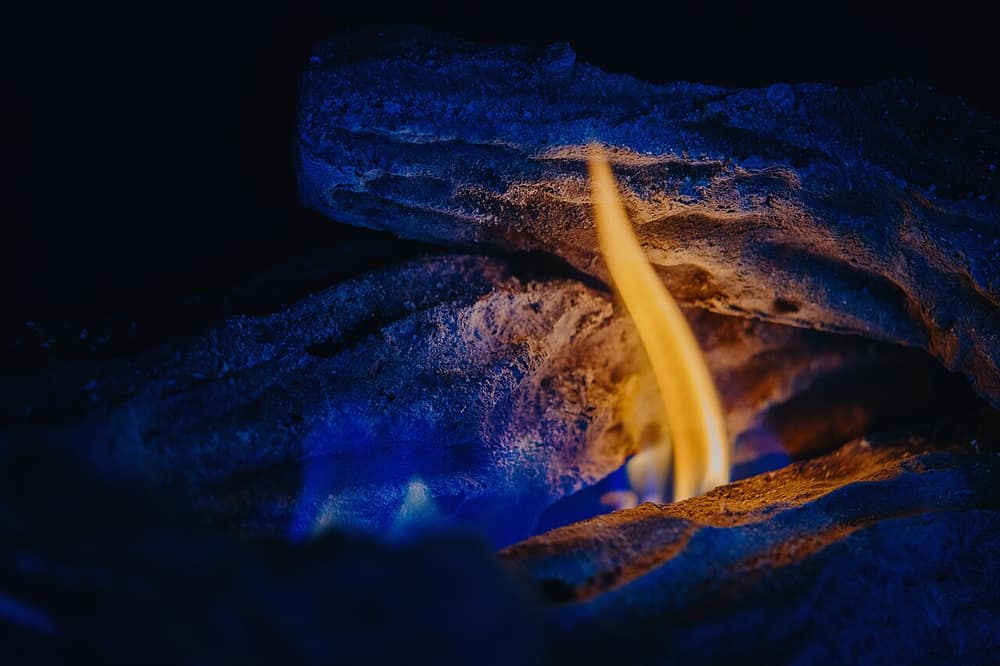
Gas fireplace styles
- Gas inserts that fit into an existing fireplace opening.
- Gas grates and log sets that convert an open fireplace to gas.
- Built-in units for new walls or cladding, including wide “letterbox” designs.
- Freestanding gas stoves and fireplaces that look like wood stoves or traditional fireplaces.
- Double-sided and corner units.
Installation and the gas CoC
Gas fireplaces are fixed gas installations. In most South African homes the gas comes from 19 kg or 48 kg LPG cylinders standing outside, connected by a regulator and copper or approved piping into the house.
- The installer, registered with SAQCC Gas, follows SANS 10087-1 and the manufacturer’s instructions.
- They assess the cylinder position, pipe route, ventilation and, for flued models, the flue.
- When the work is complete, they issue a Certificate of Conformity (CoC).
- Any later changes to the installation must also be done and certified by a registered installer.
Keep that CoC. Insurers can refuse claims for gas installations without one, and you’ll need a valid CoC when you sell the property. Our gas compliance certificate guide explains the details.
Check whether your municipality requires plans for a new flue or chimney: fireplaces and chimneys fall under Part V of the National Building Regulations, with SANS 10400-V as the deemed-to-satisfy standard. Estates and body corporates may have their own rules on cylinders and flues. When you’re ready, get quotes from registered gas installers.
Cylinder placement basics
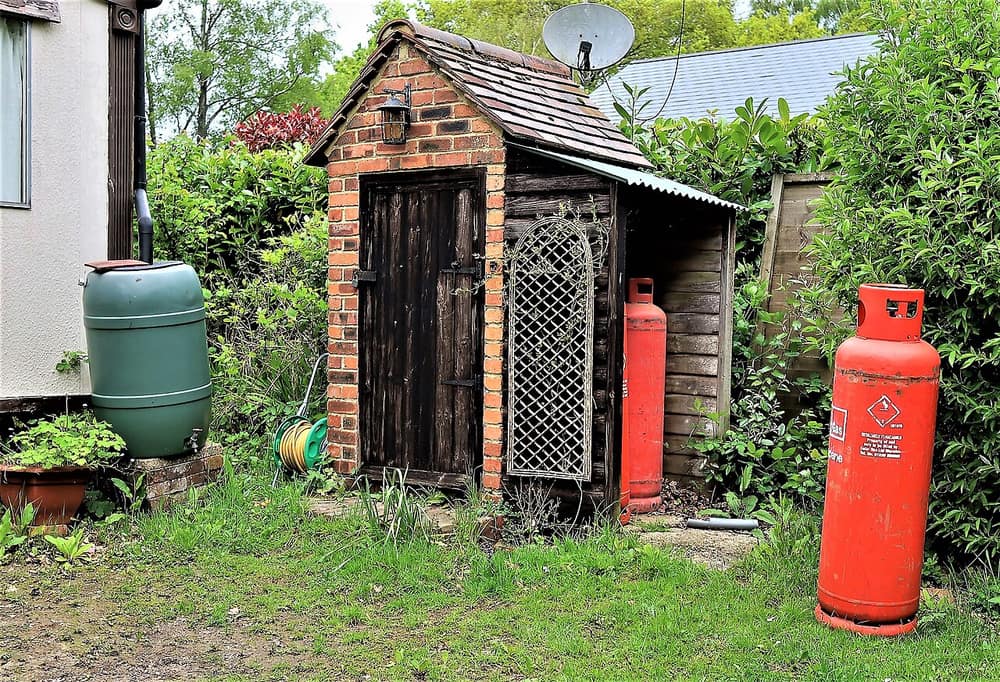
- Cylinders stand outside, upright, on a firm level base, away from drains, windows, doors and sources of ignition, at the distances your installer specifies.
- Many homes use two cylinders with a changeover valve, so you can swap one while the other keeps the fire going.
- A lockable cage helps prevent theft.
Running costs: do the maths with your numbers
There’s no single running cost, because LPG prices and usage vary. Work it out like this:
Cost per hour = gas consumption (kg/h) × your price per kg
- Consumption: find it in the manual or on the rating plate. If you only have the kW input rating, LPG contains roughly 13 to 14 kWh of energy per kg, so divide the kW by about 13.5 for an approximate kg/h on full.
- Price per kg: the refill price ÷ the cylinder size (19 or 48).
- Real use: most gas fireplaces have a high and low setting, and you’ll often run on low once the room is warm.
Worked example (illustrative only): a fireplace with a 4 kW input uses about 4 ÷ 13.5 ≈ 0.3 kg/h on full. A 19 kg cylinder would last roughly 19 ÷ 0.3 ≈ 63 hours on full, and a 48 kg cylinder about 160 hours. Running on low stretches that further. Multiply 0.3 by your own price per kg for the hourly cost.
Weighing up gas against electric heating? Our oil heater vs gas heater guide compares the two, and the heater size calculator helps you check the output you need.
Brands sold in South Africa
Gas fireplaces, gas inserts and gas grates are sold locally by brands including Jetmaster, HomeFires, Megamaster and Chad-O-Chef, as well as importers and specialist fireplace showrooms. Many showrooms work with registered gas installers or can recommend one. When comparing models, check:
- Flued or flueless, and the minimum room size
- kW input and heat output
- Ignition (manual, piezo or electronic) and whether it needs electricity
- Safety devices: flame failure and, on flueless models, an oxygen depletion sensor (ODS)
- Whether installation, cylinders and piping are included in the quote
Gas fireplaces worth a look
From a gas grate for your existing fireplace to a complete flued unit. Prices were checked in November 2026 and exclude installation.

HomeFires
Homefires GAS GRATE 600 Vent free
A coal-effect vent-free gas grate that drops into an existing fireplace. The simplest way to stop carrying wood without rebuilding the lounge.
- Vent free, coal finish
- LPG (natural gas on request)
- Multiple sizes to fit existing fireplaces
- Uses your existing fireplace opening
- No flue needed for gas operation
- Room must meet vent-free size and ventilation rules
- Registered gas installer and CoC still required

Chad-O-Chef
Chad-O-Chef Focus Fireplace (VFGS-700) NEW!
A freestanding flueless gas fireplace designed to stand against an open wall, so you skip most of the building work of adding a fireplace.
- Flueless (vent-free) gas
- Freestanding, retrofits against a wall
- Manual or remote-control options
- Minimal building work
- Looks like a traditional fireplace
- Vent-free rules limit which rooms qualify
- Remote versions need batteries or power

HomeFires
HomeFires Built-in 740 Firebox Vent Free Fireplace
A vent-free firebox made to be built into or against a wall, with a coal-effect gas grate and a flame failure device that cuts the gas if the flame goes out.
- Vent free, built-in
- Coal-effect gas grate included
- Automatic flame failure device
- Available in three sizes
- Clean built-in look without a chimney
- Flame failure safety device
- Building work for the surround
- Vent-free room rules apply

Jetmaster
Jetmaster Hex 800 with Gas Grate 600 Bundle – Save!
A freestanding fireplace with its own flue pipes and rotating cowl, fitted with an LPG gas grate. The flue takes combustion gases outside, so the vent-free room rules don't apply in the same way.
- Freestanding, flued
- 1.8 m + 2.4 m hex flue pipe
- Rotating cowl
- Gas Grate 600 (LPG)
- Gases vented outside
- Flue, cowl and gas grate in one bundle
- Most expensive option here
- Needs a flue route through the roof
Prices change often; check the retailer for the current price and stock. We may earn a commission if you buy through these links, at no extra cost to you. Star ratings are the store's own customer reviews, shown once a product has at least 3. How we choose products.
Safety and care
- Have the fireplace serviced as the manufacturer recommends, typically before winter.
- Do a soapy-water leak test on the cylinder connections when you change cylinders, and call your installer if you smell gas.
- A yellow, sooty flame or soot marks on the glass or wall mean it needs attention.
- Keep the glass guard on; the glass gets very hot. Use a safety screen if you have small children.
- Fit a carbon monoxide alarm in the room (see smoke and CO detectors).
- Don’t place decorations or anything flammable on or near the fireplace beyond the manufacturer’s clearances.
FAQ
Are vent-free gas fireplaces safe?
They can be when installed by a registered gas installer in a room that meets the manufacturer’s minimum size and ventilation requirements. They’re not suitable for bedrooms, bathrooms or small rooms, and a CO alarm is a sensible extra precaution.
Do I need a chimney for a gas fireplace?
Not always. Flued models need a chimney or a flue pipe, though balanced-flue units can often vent through an outside wall. Vent-free models need no flue but have strict ventilation rules.
Do gas fireplaces work during load shedding?
Most do, since they burn gas. Some models use electronic ignition, fans or remote controls that need power or batteries, so check the specification if this matters to you.
Can I convert my wood fireplace to gas?
Yes, with a gas insert, gas grate or log set designed for that purpose. A registered gas installer must do the gas work, and the chimney should be checked and swept first.
How long does a 48 kg gas cylinder last in a gas fireplace?
Divide 48 by the fireplace’s consumption in kg/h. For example, a fireplace using 0.3 kg/h on full would run for roughly 160 hours, and longer on low.

Lize van Wyk
Heating & fireplaces writer
Covers gas heaters, fireplaces and keeping a South African home warm through winter and load shedding.
More from Lize →