We're independent: products are chosen on merit and prices come from the retailers' own sites. We may earn a commission if you buy through our links. Learn more.
Key takeaways
- Sekelbos and rooikrans are the best all-rounders: hot, reliable coals without the guilt, because both are cleared as invaders.
- Mix a dense wood (mopane, sekelbos) with a fast-lighting one (rooikrans, blackwattle) for a long braai or a potjie.
- Kameeldoring is a protected tree. Only buy it from sellers who can show it was legally harvested.
- Never braai over pine, treated wood, pallets or green wood: smoke, resin and chemicals end up on your meat.
Ask ten South Africans for the best braai wood and you will get ten answers, usually delivered with some conviction. The truth is simpler: the right wood depends on how long you want to wait, how long you want to cook, and where in the country you live.
Good braai wood decides how long you wait for coals, how hot they get and whether they last until the last chop is done. Bad wood gives you smoky flames, a pile of ash and coals that give up halfway. This guide compares the woods you will actually find at a garage, farm stall or supermarket, and tells you which to buy for which braai.
Quick comparison
| Wood | Heat | Coals last | Ready in | Best for |
|---|---|---|---|---|
| Sekelbos (sickle bush) | Very hot | Long | 40–50 min | Any braai, especially up north |
| Rooikrans | Hot | Medium–long | 30–40 min | Weeknight braais, Western Cape |
| Mopane | Very hot | Very long | 50–60 min | Big crowds, potjies, steaks |
| Kameeldoring (camel thorn) | Very hot | Very long | 50–60 min | Long braais (legal sources only) |
| Blackwattle | Medium–hot | Medium | 30–40 min | Budget braais, starting fires |
| Port Jackson | Medium | Short | 20–30 min | Kindling and getting going |
| Vine stumps (wingerdstompies) | Medium–hot | Medium | 40 min | Flavour, Cape winelands braais |
| Bluegum (eucalyptus) | Medium | Medium | 40 min | When it’s all you can get (dry only) |
Times are from lighting to proper, grey-skinned coals in a typical braai stand, and depend on how dry the wood is and how windy it is.
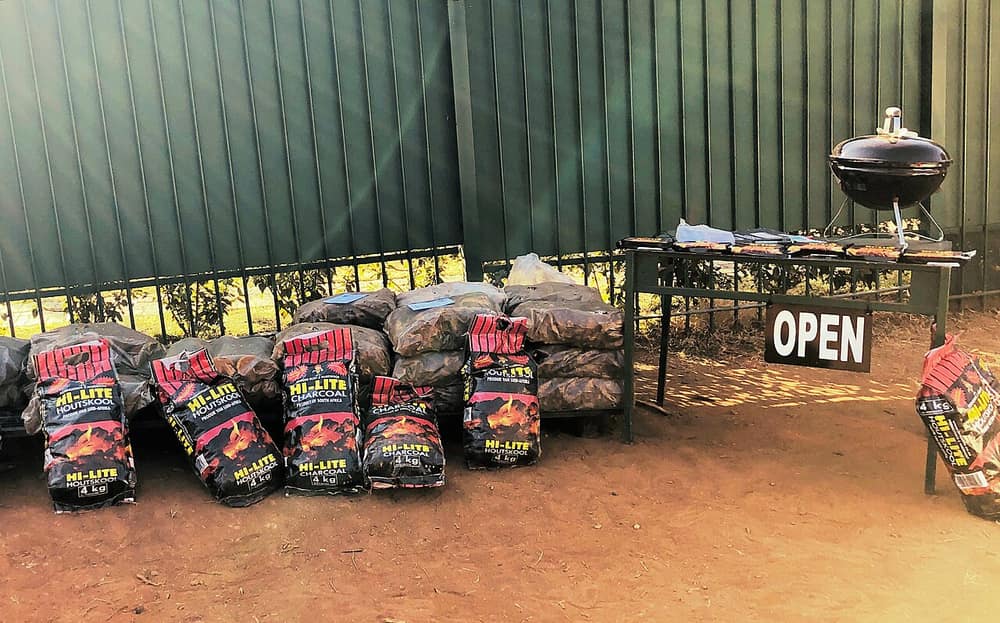
The woods, one by one
Sekelbos: the all-rounder
Sekelbos (Dichrostachys cinerea) is the wood most braai fundis reach for in Gauteng, Limpopo and the North West. It is dense, lights without much fuss and burns down to hot coals that last long enough for a second round of meat.
Best for: pretty much everything, from chops and wors to a slow potjie.
Rooikrans: the Cape classic
Rooikrans (Acacia cyclops) is what most braais in the Western Cape run on. It catches quickly and gives good coals in about half an hour, which is exactly what you want on a Tuesday evening.
Best for: quick braais, weeknights, anyone who is hungry now.
Mopane: for the long haul
Mopane (Colophospermum mopane) is very dense and very hot. It takes longer to get going but rewards you with coals that last, which is why it is a favourite for big crowds and potjies.
Best for: steaks that need fierce heat, big braais, and potjiekos that needs hours of steady coals.
Kameeldoring: the legend (with a catch)
Camel thorn (Vachellia erioloba) has an almost mythical reputation: long, hot, clean coals. It earned it. But it is also a protected tree under the National Forests Act, and you may not cut or damage live protected trees without a licence.
Blackwattle and Port Jackson: the budget pair
Both are invasive aliens and both are cheap. Blackwattle makes decent coals at a good price; Port Jackson burns fast and hot but disappears quickly, so treat it as kindling and fire-starter wood rather than the main event.
Vine stumps: the flavour wood
Wingerdstompies are old grapevine roots pulled from replanted vineyards. They give off a lovely, slightly sweet aroma and medium-hot coals. You will mostly find them in the Western Cape, and they are worth the slightly higher price for a special braai. If flavour is the whole point, our guide to smoking meat on a braai shows how to get more of it into the meat.
Swarthaak and hardekool: the other names on the bag
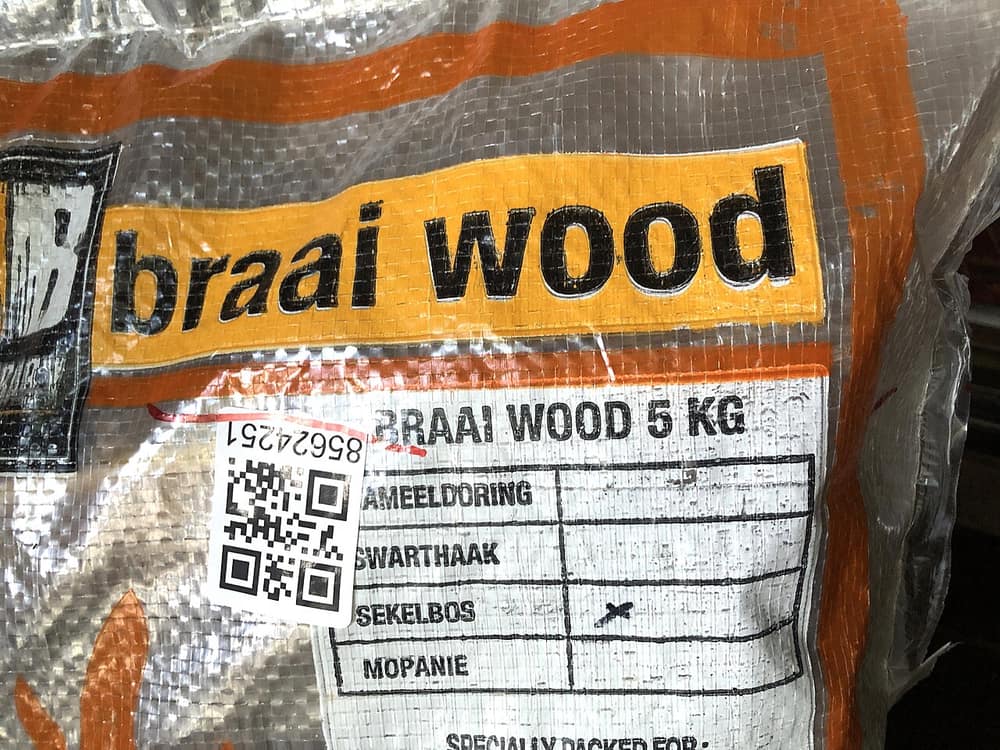
Some braai wood bags have a tick-box label listing kameeldoring, swarthaak, sekelbos and mopanie, so it helps to know the two names that aren’t covered above.
- Swarthaak (black thorn, Senegalia mellifera) is a thorny acacia and one of the worst bush encroachers in Namibia and the drier parts of southern Africa. Its hard wood is sold as braai wood and made into charcoal, and, like sekelbos, much of it comes from bush clearing. Treat it like sekelbos: dense, hot and slow to burn down.
- Hardekool (leadwood, Combretum imberbe) is sometimes sold at roadside stalls. Like kameeldoring, it is on the national list of protected trees under the National Forests Act, so the same rule applies: only buy it if the seller can show it was legally harvested.
The best all-rounders
For most braais, sekelbos or rooikrans is hard to beat. Rooikrans gets you to coals faster; sekelbos gives hotter coals that last longer. Buy whichever is local. It will be fresher, drier and cheaper.
For a long braai or a potjie, mix them. Start with a fast wood (rooikrans or blackwattle) to get the fire going, then add a dense wood (mopane or sekelbos) on top. The fast wood gives you early coals; the dense wood keeps the heat going for hours.
How to tell if braai wood is dry
Wet (green) wood is the most common reason for a smoky, frustrating braai. Most of its energy goes into boiling off water instead of making heat. Before you buy or burn, check:
- Look at the ends. Dry wood has cracks (checks) running out from the centre.
- Knock two pieces together. Dry wood sounds hollow and sharp; wet wood gives a dull thud.
- Feel the weight. Dry wood feels light for its size.
- Look at the bark. On dry wood, it is loose or comes away easily.
How to store braai wood
Even properly dry wood soaks up moisture again if it sits in a wet bag on the ground. A few minutes of sorting when you get home saves you a smoky braai later.
- Take it out of plastic. Woven bags are fine for carrying, but wood sealed in plastic can sweat and go mouldy. Stack it loose or leave the bag open.
- Keep it off the ground. Stack it on a pallet, bricks or a rack so air moves underneath and the wood doesn’t sit on damp soil, where termites and rot find it more easily.
- Cover the top, not the sides. A roof, carport or tarp over the top keeps the rain off; open sides let the wind dry it.
- Keep it away from the house. Don’t stack wood against walls, wooden fences or under eaves. It invites termites, and in dry, windy weather a woodpile next to the house is extra fuel if a fire starts.
- Bring in only what you need. Keep a day’s worth near the braai and the rest in the stack.
Dense woods like sekelbos and mopane catch more easily with a decent starter; our firelighters guide compares the options.
Woods to avoid
- Pine and other softwoods. They burn fast, spit and give off resin. Fine as kindling, bad for cooking over.
- Treated, painted or varnished wood, including old pallets, decking and building offcuts. These can release harmful chemicals onto your food.
- Green (wet) wood. Lots of smoke, little heat.
- Anything you can’t identify. Some plants, such as oleander, are poisonous, and the smoke carries the toxins.
How much wood do you need?
As a rough guide, one standard bag of braai wood does a braai for four to six people. Buy an extra bag:
- for a big crowd,
- for a potjie or anything slow-cooked,
- when it is cold or windy, because wind makes coals burn out faster,
- when you’re camping, because the campsite shop may not have dry wood (our camping braai guide covers what else to pack).
Planning the meat as well? Our braai meat calculator works out quantities per person.
Kit for a proper wood braai
You can braai over wood in almost anything, but a stand with room for the fire to burn down, a hinged grid and long tools make it much easier.

Jetmaster
Jetmaster Kalahari 2 in 1 Fire Basket – wood burning
A fire basket that works as a braai and, with the grill lifted off, as a fire pit. Wood needs room to burn down, and this gives it that without building anything.
- Wood burning
- 477 × 500 × 452 mm
- Removable nickel-plated grill
- Collapsible, with base plate
- Doubles as a fire pit after the meat is done
- Packs down for storage or a weekend away
- Small grid for big crowds
- Mild steel needs a cover to last outdoors

Megamaster
Megamaster 430 x 330 Folding Grid Braai Kit
A proper hinged (toeklap) grid, so you can turn a whole load of chops in one move over a hot wood fire. Comes with tongs, a grid cleaner and a bag.
- 430 × 330 mm
- Galvanised
- Includes tongs, cleaner and bag
- Turns everything at once
- Good value for a full kit
- Galvanised, not stainless: keep it out of the fire itself

Megamaster
Megamaster Braai Essential Set
Long stainless tools keep your hands away from a roaring wood fire. Spatula, tongs, basting brush, fork, cleaning brush and four skewers in a case.
- Stainless steel
- Heat-resistant handles
- Aluminium carry case
- Everything in one case
- Long enough for wood-fire heat
- Skewers are short for sosaties on a big fire
Prices change often; check the retailer for the current price and stock. We may earn a commission if you buy through these links, at no extra cost to you. Star ratings are the store's own customer reviews, shown once a product has at least 3. How we choose products.
Wood or charcoal?
Wood takes longer (usually 45 minutes to an hour before you have proper coals) but gives you the flame, the ritual and the flavour. Charcoal and briquettes are faster and more predictable, and gas is fastest of all. Our guide to gas vs charcoal vs wood covers the trade-offs, and how to make a braai fire covers the method step by step.
FAQ
What is the best braai wood in South Africa?
Sekelbos and rooikrans are the best all-rounders. Sekelbos gives hotter, longer-lasting coals; rooikrans lights faster. Mopane and kameeldoring burn hottest and longest, but take longer to get going.
Is it illegal to braai with kameeldoring?
Burning it isn’t illegal, but camel thorn is a protected tree, and cutting or damaging live protected trees without a licence is. Only buy kameeldoring from sellers who can show it was legally harvested.
How long does braai wood take to make coals?
Usually 30 to 60 minutes, depending on the wood, how dry it is and the wind. Rooikrans and blackwattle are quickest; mopane and kameeldoring are slowest.
Can I braai with pine?
Use pine only as kindling to get the fire started. Don’t cook over it: it burns fast, spits and its resin gives food an unpleasant taste.
Why is my braai fire so smoky?
Almost always because the wood is wet. Dry wood has cracked ends, sounds hollow when knocked and feels light for its size.
Can I braai with wood from my garden?
Only if you know exactly what it is, it hasn’t been treated or painted, and it has dried for months, not weeks. Fresh prunings are green wood and will smoke badly, and some garden plants, such as oleander, are poisonous to burn.

Johan Botha
Braai & outdoor editor
Writes our braai, fire pit and pizza oven guides. Firmly in the wood-fire camp, but owns up to a gas braai for weeknights.
More from Johan →