We're independent: products are chosen on merit and prices come from the retailers' own sites. We may earn a commission if you buy through our links. Learn more.
Key takeaways
- Chicken wants gentle heat for longer: you should manage 6–7 seconds with your hand about 10 cm above the grid.
- Build two zones. Brown the chicken over the coals, then let it cook through on the cooler side, ideally under a lid.
- It's safe at 74 °C in the thickest part. Breasts are juiciest just there; thighs and drumsticks are better at about 80–85 °C.
- Sugary sauces and marinades burn. Baste with them only in the last 10 minutes or so.
- Never wash raw chicken, keep a separate board and plate for it, and boil any marinade it sat in before using it as a sauce.
Everyone has seen braai chicken go wrong: drumsticks charred black outside and still pink at the bone, or a flattie so dry it needs a litre of sauce. It happens because chicken gets the same fierce coals as steak, when it wants the opposite.
Get the heat gentle and the timing right, and chicken is one of the easiest things on the fire. This guide covers flattie vs pieces vs beer-can, two-zone heat, marinades and basting, the temperatures that matter, times per cut and raw-chicken food safety.
Quick answer
Braai chicken over medium-low coals (6–7 seconds with your hand 10 cm above the grid), brown it on the hotter side, then finish it on the cooler side, turning often. It’s done at 74 °C in the thickest part, not touching the bone. Baste with anything sweet only in the last 10 minutes, then rest it for 5–10 minutes before cutting.
| Cut | Heat | Rough time* | Take it off at |
|---|---|---|---|
| Wings | Medium-low, turn often | 20–30 min | 74 °C+ (they’re forgiving) |
| Drumsticks, bone-in thighs | Medium-low, then cool side | 30–40 min | 80–85 °C in the thigh |
| Leg quarters | Medium-low, then cool side | 35–45 min | 80–85 °C in the thigh |
| Boneless thighs | Medium | 10–15 min | 74 °C+ |
| Boneless breast (flattened to even thickness) | Medium | 10–15 min | 74 °C |
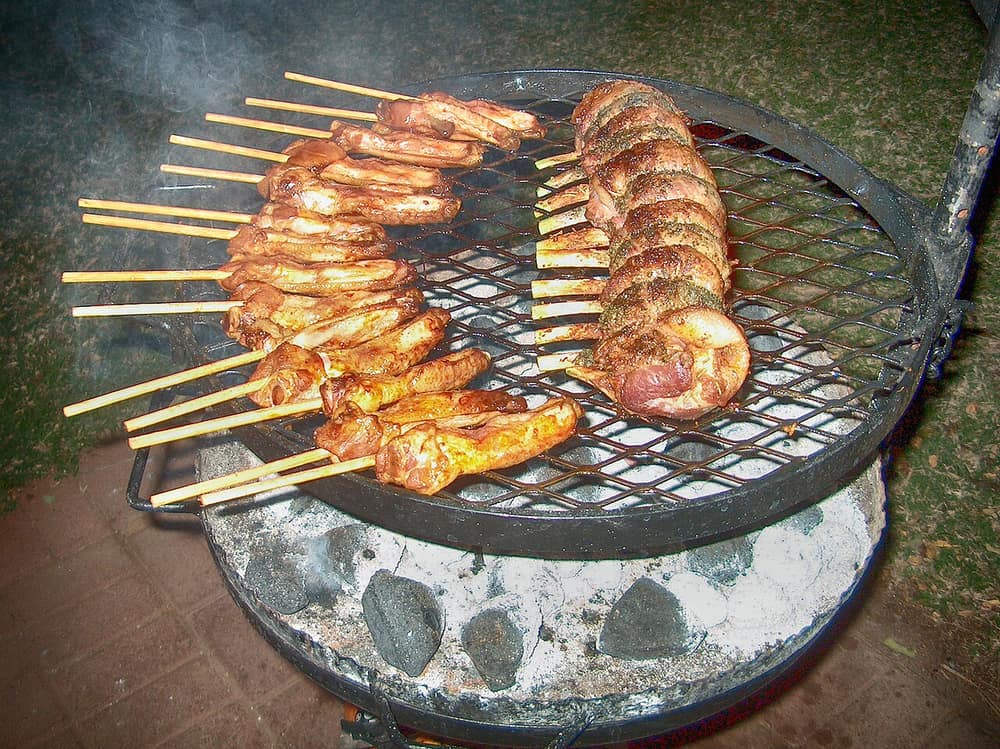
| Chicken sosaties | Medium | 10–15 min | 74 °C in the thickest piece |
| Flattie (spatchcock), 1.2–1.6 kg | Medium-low, bone side down most of the time | 45–60 min | 74 °C in the breast, 80 °C+ in the thigh |
| Whole or beer-can chicken | Indirect, lid closed | 1¼–1½ hours | 74 °C in the breast, 80 °C+ in the thigh |
*Times are a starting point for meat that has stood out of the fridge for 15–20 minutes. Wind, tired coals and the size of the bird change everything, so the thermometer column is the one to trust. Our braai timer can count down the turns for you.
Flattie, pieces or beer-can?
Flattie (spatchcock)
A flattie is a whole chicken with the backbone cut out and the bird pressed flat. Lying at an even thickness, it cooks more evenly and faster than a whole chicken, with crisp skin all over. Supermarkets sell them ready-marinated, or make your own:
- Put the chicken breast side down on a board.
- Cut along both sides of the backbone with poultry shears and lift it out (keep it for stock).
- Turn the bird over and press hard on the breastbone with the heel of your hand until it flattens.
- Tuck the wing tips behind the breast so they don’t burn.
Pieces
Pieces give you the most control. Thighs and drumsticks are the most forgiving: more fat and connective tissue means a few extra minutes won’t ruin them. Breasts are lean and dry out quickly past 74 °C, so flatten them or cut them into sosaties, and put them on after the dark meat. Wings suit a crowd and sticky glazes.
Beer-can or whole chicken
A whole chicken sits upright on an opened, half-full can of beer (or a stand made for the job) and roasts in a kettle braai with the lid closed. The beer does less than people think: several barbecue writers argue it barely gets hot enough to steam the bird, so the indirect heat and the lid do the real work. A purpose-made stand is also more stable than a wobbly can. This method needs a lidded braai such as a Weber or other kettle or a kamado; on an open braai, make a flattie.
Set up two-zone heat
Chicken on the bone needs time for the heat to reach the middle, and fierce coals burn the skin long before that happens, helped along by flare-ups from the dripping fat.
- Build a good bed of coals. See how to make a braai fire for the timing. Wait for the flames to die down and the coals to grey over.
- Rake them into two zones. Push most of the coals to one side and leave the other side with a thin layer, or none at all in a kettle braai.
- Do the hand test. Hold your palm about 10 cm above the grid. Over the hot side, 4–5 seconds is fine for browning. Over the side where the chicken will spend most of its time, you should manage 6–7 seconds.
- Brown, then move. Give the chicken a few minutes over the hotter coals to colour the skin, then move it to the cooler side to cook through, turning every 5 minutes or so.
On a mixed braai, chicken goes on early because it takes longest; let it cook gently on the cool side while steak sears over the hot side.
On a kettle braai
A kettle makes chicken easy. Bank the coals on both sides of the coal grate (or use charcoal baskets), put the chicken in the middle over nothing but a drip tray, close the lid and leave the vents open. You can add a few chunks of wood for a smoky flavour; our guide to smoking meat on a braai explains how.
Marinades, rubs and basting
Marinades
A marinade flavours the outside of the meat, so slash drumsticks and thighs to the bone in two or three places to help it in.
- Marinate in the fridge, never on the kitchen counter, in a covered dish or a sealed bag.
- Keep it to about two days at most. US food-safety guidance says to cook raw poultry within two days of putting it in a marinade in the fridge. Very acidic marinades (lots of lemon juice or vinegar) can make the surface mushy if left too long, so a few hours is plenty for those.
- Keep some aside for later. If you want marinade to baste with or to serve as a sauce, set a portion aside before the raw chicken goes in. Marinade that has touched raw chicken must be brought to a rolling boil before it goes on cooked meat.
A dry rub of salt, paprika, garlic, lemon zest and a pinch of chilli does a lot of the same job with less mess. Salting the chicken a few hours ahead, uncovered in the fridge, also helps the skin dry out and crisp.
When to baste
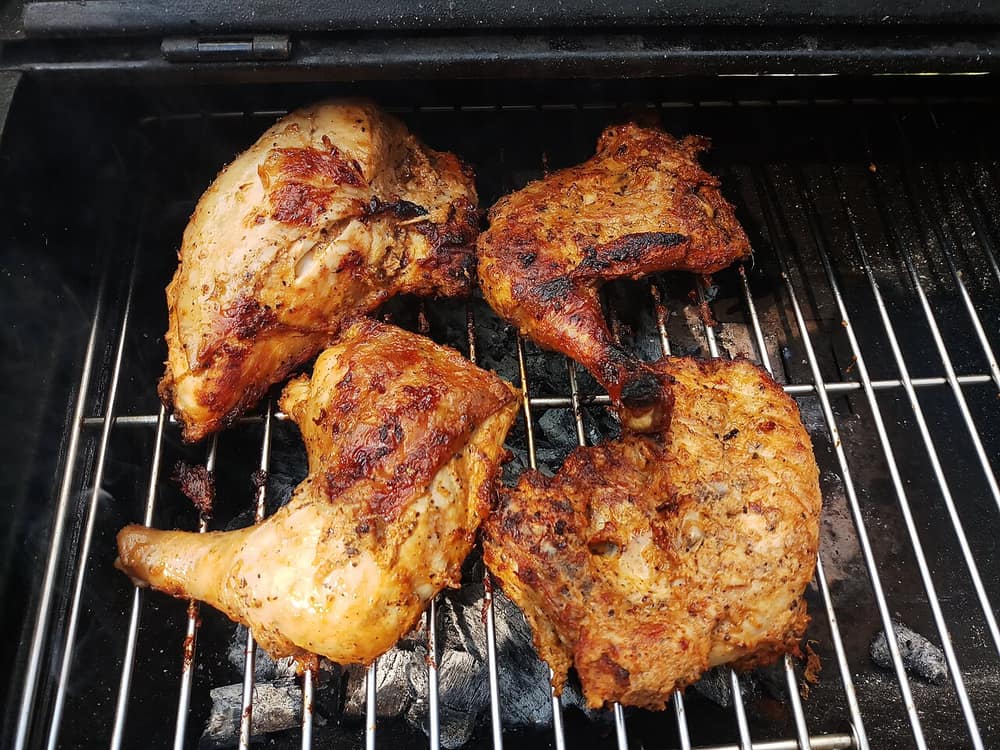
Most South African braai sauces are sweet: barbecue sauce, apricot jam glazes, chutney, honey and many bottled peri-peri sauces. Sugar starts to burn long before the chicken is cooked through, which is how you end up with black outside and raw inside.
When is braai chicken done?
The safe internal temperature for chicken is 74 °C (165 °F). That’s the figure US food-safety authorities give for every part of the bird: breasts, thighs, wings, whole chickens and minced chicken. Measure it in the thickest part of the meat with the probe not touching the bone, because a probe against the bone can give a misleading reading.
Breast vs thigh
At 74 °C the chicken is safe, but the two kinds of meat are at their best at different temperatures:
- Breast is juiciest right at about 74 °C. Every degree beyond that dries it out.
- Thighs and drumsticks are safe at 74 °C but can still be a little rubbery at the bone. Taking them to about 80–85 °C gives the connective tissue time to break down, and they turn tender and juicy instead of dry.
That’s why a flattie spends most of its time bone side down: the thighs need more heat than the breast.
Rest pieces and flatties for 5–10 minutes on a clean plate, loosely covered, and a whole bird for 10–15 minutes before carving.
Raw chicken and food safety
Chicken is a common source of food poisoning bacteria such as Campylobacter and Salmonella. Cooking to 74 °C kills them; careless handling spreads them.
- Don’t wash raw chicken. Rinsing doesn’t remove the bacteria; it splashes them around the sink and counter. Pat it dry with paper towel instead.
- Use separate boards, plates and tongs. Never put cooked chicken back on the plate the raw chicken came out on, and keep a second pair of tongs for cooked meat.
- Wash your hands with soap after handling raw chicken, before you touch the salad or the bread.
- Thaw in the fridge, not on the counter, and make sure it has thawed all the way through. Frozen chicken burns outside before the middle cooks.
- Par-cooking is fine if it’s one continuous process. Pre-cooking chicken in the oven or microwave shortens braai time, but it has to go straight onto the hot fire to finish. Never part-cook chicken and finish it later.
- Don’t leave it standing. Raw or cooked chicken shouldn’t sit out for more than two hours, or one hour on a day above about 32 °C.
Common mistakes
- Coals too hot. Black skin, raw bone. Chicken wants 6–7 seconds on the hand test.
- Saucing too early. Sweet bastes go on at the end.
- One zone only. Without a cooler side you can’t stop flare-ups or let thick pieces catch up.
- Treating breast and thigh the same. Breast comes off at 74 °C; thighs like 80–85 °C.
- Pressing it with the tongs. It squeezes out juice and fat, and the fat feeds flare-ups.
What to buy
A thermometer takes the risk out of braai chicken, poultry shears make flatties easy, and a hinged box grid turns a bird or a load of pieces in one go. Our braai grid guide covers other grid types.

Megamaster
Megamaster Meat Thermometer
Chicken is the one braai meat you can't serve undercooked, so a probe is the cheapest insurance on the fire. Push it into the thickest part of the thigh or breast and the guessing stops.
- Stainless steel probe
- Celsius and Fahrenheit
- Reads up to 280 °C
- Costs less than a flattie
- No batteries or app to fuss with
- Analogue dial, slower to read than a digital probe

Chad-O-Chef
Chad-O-Chef MeatStick X (Wireless Thermometer and Charger)
A wireless probe that stays in the bird and reports to your phone. Most useful for a whole or beer-can chicken under a kettle lid, where every peek lets the heat out.
- Wireless Bluetooth probe
- Heat resistant to 300 °C
- Dual temperature sensors
- Rechargeable, with charger
- Alerts you when the chicken hits your target
- No wire to trap under the lid
- Expensive for a weeknight braai
- Needs charging and a phone nearby

CASA
Poultry Shears Scissors - Bari
Cutting out a backbone with a kitchen knife is slow and slippery. Curved poultry shears do it in two cuts, and they're handy for trimming wings and portions too.
- Curved stainless steel blades
- Notched blade grips bone
- Handle lock for storage
- Makes spatchcocking quick and safe
- Cheap
- Kitchen tool, not braai kit: wash it straight after raw chicken

Megamaster
Megamaster 500 x 400 Stainless Steel Box Folding Grid
The box shape opens up to hold a thick flattie or a load of thighs without squashing them, and the whole lot turns in one move. Stainless copes with sticky marinades and a dishwasher.
- 500 × 400 mm
- Stainless steel
- Adjustable box shape
- Fits a big flattie or pieces for a family
- Easy to clean after sticky bastes
- Heavy to turn when fully loaded

Megamaster
Megamaster Heavy Duty Tong
Sturdy stainless tongs for moving pieces between the hot and cool zones without tearing the skin. Keep a second pair for cooked chicken.
- Stainless steel
- Heavy-duty build
- Firm grip on drumsticks and quarters
- Strong enough to lift a flattie
- Pricier than basic tongs
Prices change often; check the retailer for the current price and stock. We may earn a commission if you buy through these links, at no extra cost to you. Star ratings are the store's own customer reviews, shown once a product has at least 3. How we choose products.
Planning the rest of the braai
To work out how much chicken to buy, our braai meat calculator does the sums and allows extra for bone. For sides, see our braai salads, and if steak is going on the same fire, our guide on how to braai steak covers the high-heat end of the grid.
FAQ
How long does it take to braai chicken?
About 20–30 minutes for wings, 30–40 minutes for drumsticks and bone-in thighs, 45–60 minutes for a flattie and 1¼–1½ hours for a whole chicken under a lid. Go by a thermometer reading of 74 °C, not the clock.
What temperature should braai chicken be inside?
At least 74 °C in the thickest part, without the probe touching bone. Thighs and drumsticks are more tender at around 80–85 °C.
Should you braai chicken skin side down first?
Pieces can start skin side down for a few minutes over the hotter coals to brown, then move to the cooler side and turn often. A flattie spends most of its time bone side down, so the thighs get more heat and the skin doesn’t burn.
Should you pre-cook chicken before braaiing?
You can, to save time: par-cook it in the oven or microwave and put it straight onto the hot braai to finish. Don’t part-cook it and leave it to finish later.
Is it safe if braaied chicken is a little pink?
It can be. Chicken that has reached 74 °C throughout is safe even if it’s slightly pink near the bone. If you haven’t checked the temperature, put it back on the cooler side.
Why is my chicken burnt outside and raw inside?
The coals were too hot, the sauce went on too early, or both. Use medium-low heat and a cooler zone, and baste with anything sweet only at the end.

Johan Botha
Braai & outdoor editor
Writes our braai, fire pit and pizza oven guides. Firmly in the wood-fire camp, but owns up to a gas braai for weeknights.
More from Johan →