We're independent: products are chosen on merit and prices come from the retailers' own sites. We may earn a commission if you buy through our links. Learn more.
Key takeaways
- A hinged (toeklap) grid is the South African favourite for chops, wors and sosaties: you turn everything in one go.
- Flat grids suit kettles, gas braais and mixed cooks where you move pieces between hot and cooler zones.
- Stainless steel is the easiest grid to live with, especially at the coast; chrome plating can flake and rust.
- Measure your braai before you buy, and choose an adjustable-depth or box grid for thick cuts.
- Clean the grid while it's warm, oil it lightly, and check for loose wire bristles after brushing.
Ask a South African what makes a braai and the grid is right up there with the fire. Specifically, the hinged one: two grids clamped over a load of chops and wors, flipped in one smooth move while everyone watches. Get the wrong grid and you’re chasing sausages through the bars into the coals.
The right braai grid depends on what you cook and how you braai. A hinged (toeklap) grid is the favourite for chops, wors and sosaties; a flat grid suits a kettle or a braai with a fixed grid rest; and fish and vegetable grids stop delicate food falling through. For material, stainless steel is the easiest to live with, especially at the coast. This guide covers the types, materials, sizes, cleaning and a few grids worth buying.
Braai grid types compared
| Grid type | Best for | Turning | Braai it suits | Price band |
|---|---|---|---|---|
| Hinged / toeklap | Chops, wors, sosaties, broodjies | Whole grid at once | Open wood or charcoal braais | Entry to mid-range |
| Adjustable or box hinged | Thick steaks, chicken | Whole grid | Open braais | Mid-range |
| Flat | Mixed cooks, kettles, gas | Piece by piece | Kettles, gas, drum and box braais | Entry to premium |
| Fish | Whole fish, fillets | Whole basket | Open braais | Entry to mid-range |
| Vegetable / mesh | Veg, prawns, small items | Shake or turn | Any | Entry-level |
Types of braai grid
Hinged grid (toeklap)
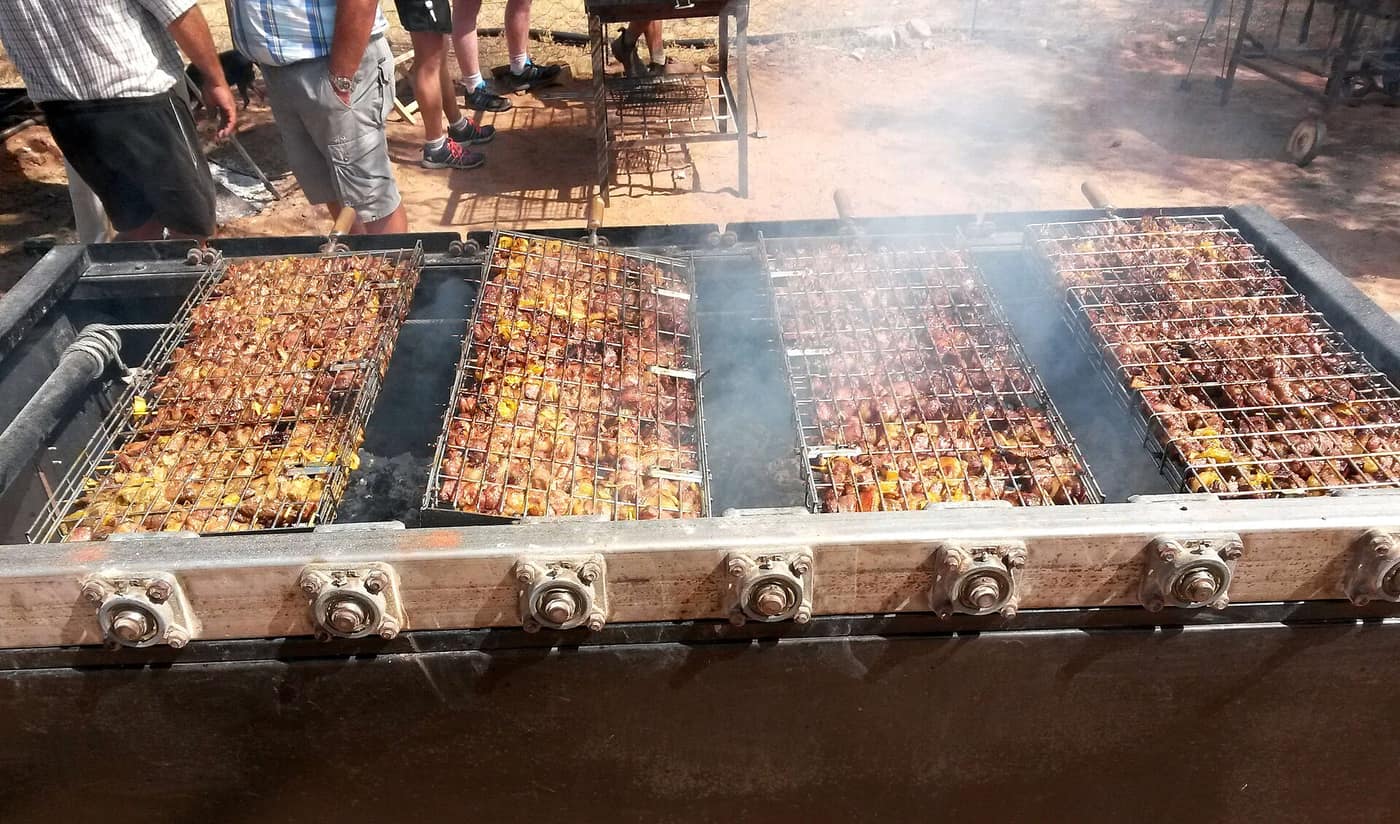
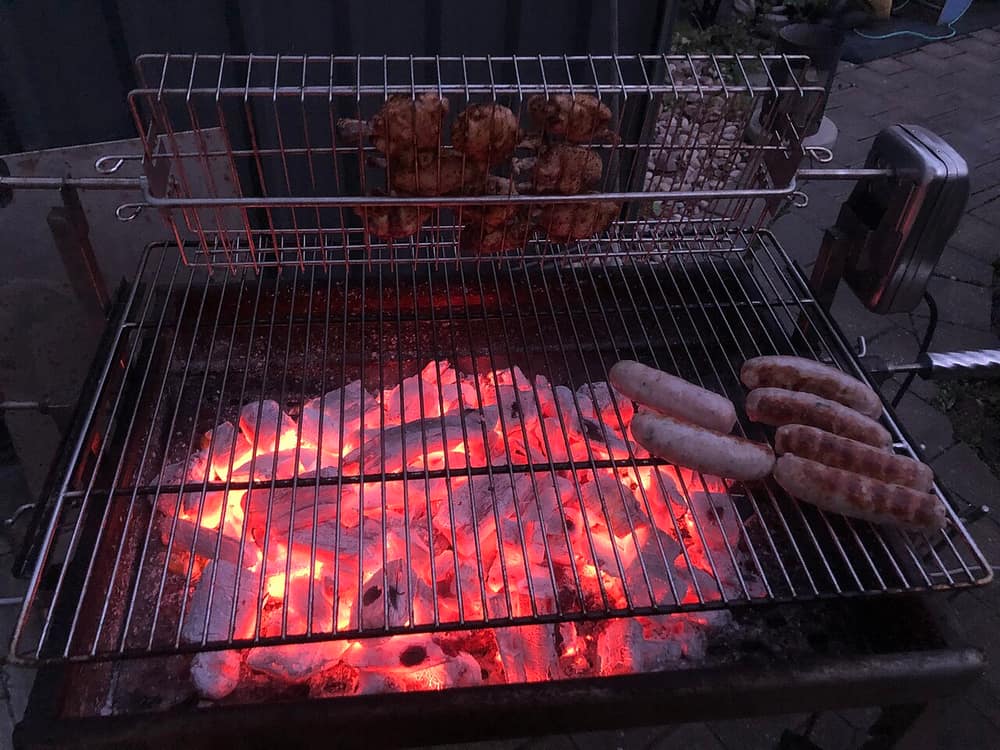
Two grids joined by a hinge, closing like a sandwich over the meat, with long handles and usually a sliding ring or clip to keep them closed. You turn the whole grid over in one go, which is ideal for cooking lots of chops and boerewors quickly and evenly. (Close it gently on a coil, though: our boerewors guide explains why squashing or pricking wors dries it out.)
- Pros: fast turning, food doesn’t move, works over any open braai.
- Cons: pieces need to be similar thickness; an adjustable-depth grid helps with thicker cuts.
Look for adjustable-depth, box-shaped or deep hinged grids if you braai thick steaks, chicken pieces or braaibroodjies.
Flat grid
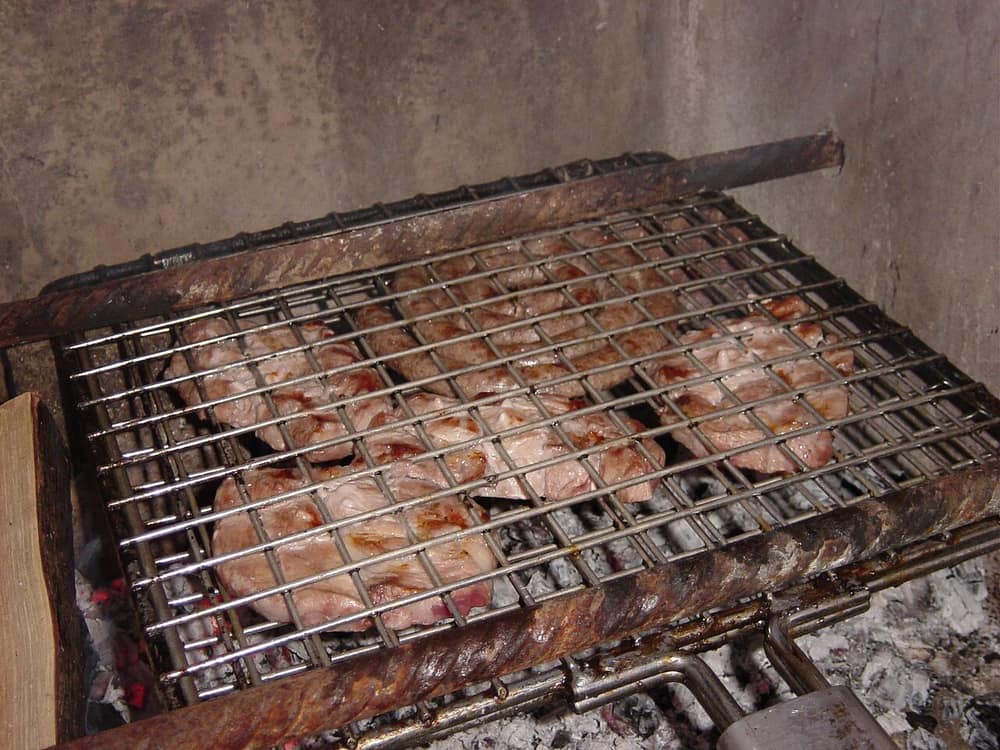
A single grid that rests on the braai’s grid supports or on bricks. Kettle braais and gas braais use flat grids designed for their size and shape. On an open braai, a flat grid lets you move individual pieces around between hotter and cooler zones.
- Pros: flexible, easy to move food around, good for mixed cooks.
- Cons: you turn each piece separately with tongs.
Fish grid
A hinged basket shaped for whole fish or fillets, often with a deeper frame. It holds the fish firmly so the skin doesn’t tear when you turn it. Our guide to snoek on the braai shows how to use one for a whole butterflied fish.
Vegetable and small-item grids
Fine-mesh grids, baskets or perforated plates for vegetables, mushrooms, prawns and anything that would fall through standard bars.
Braaibroodjie grids
Hinged grids made for toasted sandwiches, sometimes with sections for individual broodjies. A standard toeklap with enough depth also works. Braai them over gentle coals at the end of the braai; our braai ideas have more to cook once the meat’s done.
Rotisserie and spit
A rotating spit or basket for whole chickens, joints or a full spit braai. That’s a different setup altogether; see our spit braai guide.
Materials compared
| Material | Rust resistance | Care | Best for |
|---|---|---|---|
| Stainless steel | High | Low | Most people, especially at the coast |
| Chrome- or nickel-plated steel | Good until the plating wears | Medium | Budget grids |
| Galvanised steel | Good | Keep it out of the fire itself | Budget hinged grids |
| Mild steel | Low | Oil after every use | Cheap, strong grids |
| Cast iron / enamelled cast iron | Low (bare) / good (enamel) | Oil bare iron; don’t chip enamel | Kettle and gas braais |
Stainless steel
Resists rust and is easy to clean. Thicker rods hold heat better and last longer. The best option for most people, especially near the sea.
Chrome-plated (or nickel-plated) steel
Common on entry-level grids. It looks good when new, but plating can wear or flake over time, and the steel underneath then rusts. Replace the grid if the plating is badly damaged.
Mild steel
Cheap and strong, but rusts quickly unless you oil it after each use.
Cast iron and enamelled cast iron
Mostly used on kettle and gas braais. Heavy rods hold heat for strong sear marks. Bare cast iron needs oiling; enamel-coated cast iron resists rust but can chip.
Choosing the right size
- Measure your braai. Measure the inside width and depth where the grid will sit. A grid that’s too big won’t sit level; too small and food falls into the fire.
- For kettles and gas braais, buy the grid made for your model. Kettle grids are sized to the bowl diameter.
- For hinged grids, count how many chops or how much wors you usually cook. Larger grids are heavier to turn, especially full of meat.
- Check handle length. Long handles keep your hands away from the heat. Wooden or insulated handles stay cooler.
- For camping, a standard toeklap that fits the campsite’s braai is usually enough; our camping braai guide has the full kit list.
What to look for: buying checklist
- Rod thickness: thicker lasts longer and sears better
- Spacing narrow enough that wors and small pieces don’t fall through
- Strong, clean welds where the rods meet the frame
- A secure closing ring or clip on hinged grids
- Adjustable depth if you braai thick cuts
- Comfortable, heat-resistant handles
- The right size for your braai
Braai grids are sold at Builders, Makro, Game, Checkers Hyper, supermarkets, outdoor and camping stores, braai specialists and online at Takealot. Brand-specific kettle and gas grids are best bought through that brand’s stockists.
Grids worth buying
A stainless box grid is the one to have if you buy only one; the rest fill specific gaps. All were in stock when we checked, from around R89 for a fish grid to R949 for a large flat grid at Megamaster (Nov 2026).

Megamaster
Megamaster 430 x 330 Stainless Steel Box Folding Grid
A stainless hinged grid with an adjustable box shape, so thick steaks and chicken fit as well as chops. Dishwasher safe for the clean-up.
- 430 × 330 mm
- Stainless steel
- Adjustable box-shape folding design
- Dishwasher safe
- Handles thick and thin cuts
- Stainless resists rust
- Heavier to flip when fully loaded

Megamaster
Megamaster 430 x 330 Chrome Locking Folding Grid
A chrome hinged grid with a stay-open feature, so you can load it with one hand and lock it before you flip.
- 430 × 330 mm
- Chrome finish
- Locking, stays open while loading
- Easy to load
- Cheaper than stainless
- Chrome plating can wear over time; keep it out of the fire itself

Megamaster
Megamaster 725 x 500 Stainless Steel Grid
A big flat stainless grid for built-in or freestanding charcoal braais, with room to move food between hot and cooler zones.
- 725 × 500 mm
- Stainless steel
- For built-in or freestanding charcoal braais
- Lots of cooking space
- Easy to clean
- Measure first: it only fits braais with supports this size
- Listed as slightly box damaged

Megamaster
Megamaster Large Fish Grid
A grid made to hold a whole fish, so it turns in one piece instead of breaking up and sticking to the bars.
- Large fish grid
- Chrome-plated, corrosion-resistant
- Cheap
- Keeps a whole fish together when you turn it
- Only really useful for fish

Megamaster
Megamaster Edge Grid Cleaner
A brush with a stainless scraper for getting between and under the rods. The bristles are removable for cleaning.
- Hard bristles
- Stainless steel scraper
- Removable bristles
- Scraper reaches between rods
- Cheap
- Check the grid for loose bristles after brushing
Prices change often; check the retailer for the current price and stock. We may earn a commission if you buy through these links, at no extra cost to you. Star ratings are the store's own customer reviews, shown once a product has at least 3. How we choose products.
Using the grid: first use, height and heat
Before the first braai
New grids often come with a light oil coating or factory residue. Wash a new grid in warm soapy water, rinse and dry it fully, then wipe the bars with a thin film of cooking oil before it goes over the coals. Stainless steel doesn’t need more than that. Bare cast-iron grids (mostly on kettles and gas braais) benefit from proper seasoning: a thin coat of high-smoke-point oil, then about 30 minutes over medium to high heat, and a light coat of oil after each braai to keep building the non-stick layer. Follow the maker’s instructions where they differ.
Matching grid height to what you cook
The grid’s distance from the coals is your main heat control. Hold your palm about 10 cm above the grid and count how long you can keep it there, then set up like this:
| What’s on the grid | Hand test | Grid setup |
|---|---|---|
| Steak, sosaties | 2–3 seconds | Grid low over a full bed of coals |
| Chops, boerewors | 4–5 seconds | Toeklap at middle height, coals spread evenly |
| Chicken pieces, thick cuts | 4–5 seconds, then cooler | Box grid; start over coals, finish on the cooler side |
| Braaibroodjies, roosterkoek | 6–8 seconds | Grid raised, or over the thin edge of the coals |
If your braai has a fixed grid rest, you can’t raise the grid, so change the coals instead: rake them thinner for less heat, or pile them up under one half for a hot zone. A flat grid makes this two-zone setup easy because you move pieces one at a time; with a toeklap, slide the whole grid across. Our guides to braaiing steak and roosterkoek give times for each, and the braai timer keeps count while you watch the fire.
How to clean a braai grid
After every braai
- Clean while it’s still warm. Scrape off food with a grid brush or scraper while the grid is hot and the residue is soft.
- Burn it off. On a gas braai or over hot coals, leave the empty grid over the heat for a few minutes, then brush.
- Oil lightly. Wipe the bars with a paper towel dipped in cooking oil, using tongs. This helps prevent rust and sticking.
Deep clean
- Soak the grid in hot soapy water, then scrub with a stiff brush.
- For baked-on grease, a paste of bicarbonate of soda and water helps. Rinse well and dry fully.
- Avoid harsh oven cleaners on plated or coated grids unless the manufacturer says they’re safe.
For the rest of the braai, from the ash and the drum to built-ins and kettles, see how to clean a braai.
About wire brushes
Wire-bristle brushes can shed bristles that stick to the grid and end up in food. Check the grid after brushing, replace worn brushes, or use a bristle-free scraper or scrunched-up foil instead.
Care and storage
- Store grids dry, under cover. Moisture is the main cause of rust.
- Don’t leave grids lying in the ash or in the rain.
- At the coast, rinse and dry grids more often; salt air speeds up corrosion.
- Replace a grid if the rods are thin, rusted through or the plating is flaking.
For the rest of your kit, see our braai tools guide. If you’re still choosing the braai itself, start with how to choose a braai, and for the fire under the grid, our braai wood guide.
FAQ
What is a toeklap braai grid?
“Toeklap” is the Afrikaans name for a hinged braai grid that closes over the meat. You flip the whole grid to turn everything at once, which makes it a favourite for chops and boerewors.
Is a stainless steel braai grid worth it?
For most people, yes. Stainless steel resists rust and is easy to clean, so it usually outlasts chrome-plated and mild-steel grids, especially near the sea.
How do I stop meat sticking to the grid?
Preheat the grid over the coals, clean it, and oil it lightly before the meat goes on. Pat the meat dry and don’t turn it too early; it releases more easily once it’s seared.
How do I clean a very dirty braai grid?
Burn it off over high heat, then scrub with a grid brush. For heavy build-up, soak it in hot soapy water and scrub with a bicarbonate of soda paste. Rinse, dry well and oil lightly.
How high should the grid be above the coals?
There’s no single right height, because it depends on how hot the coals are. Use the hand test instead: with your palm about 10 cm above the grid, 2–3 seconds is steak heat and 4–5 seconds suits chops and wors. If it’s too hot and the grid won’t go higher, spread the coals out.
Is a galvanised braai grid safe?
Galvanised grids are made to sit above the coals, not in the flames, so don’t burn one clean in the fire. Zinc can dissolve into acidic food, so keep lemon, vinegar and other acidic marinades off it, and a flaking coating is a sign to replace the grid. If you’d rather not worry about coatings at all, choose stainless steel.

Johan Botha
Braai & outdoor editor
Writes our braai, fire pit and pizza oven guides. Firmly in the wood-fire camp, but owns up to a gas braai for weeknights.
More from Johan →