We're independent: products are chosen on merit and prices come from the retailers' own sites. We may earn a commission if you buy through our links. Learn more.
In an emergency, get everyone out first and call 112 from a cellphone, or your local fire brigade. This guide is general information; always follow the manufacturer's instructions and local regulations.
Key takeaways
- A 1 kg to 2.5 kg ABC dry chemical powder (DCP) extinguisher is the usual choice for a car.
- Regulation 260 requires extinguishers in minibuses and buses operating for reward, not in private cars, though some traffic departments say otherwise.
- Mount it on a proper bracket within the driver's reach. A loose extinguisher becomes a projectile in a crash.
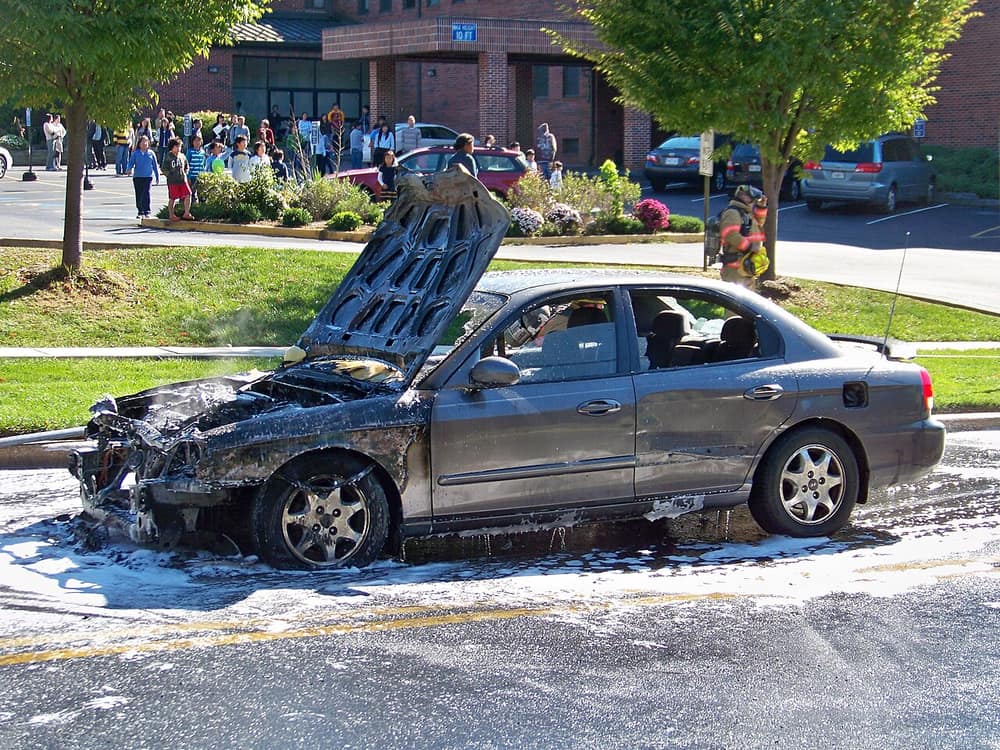
- In a car fire, stop, get everyone out and move well away. Don't open the bonnet fully.
Smoke from under the bonnet on the N1, a stranger’s car burning on the hard shoulder, a camping braai that gets away from you: these are the moments a small extinguisher in the car pays for itself. They’re also moments when the right move is often to walk away.
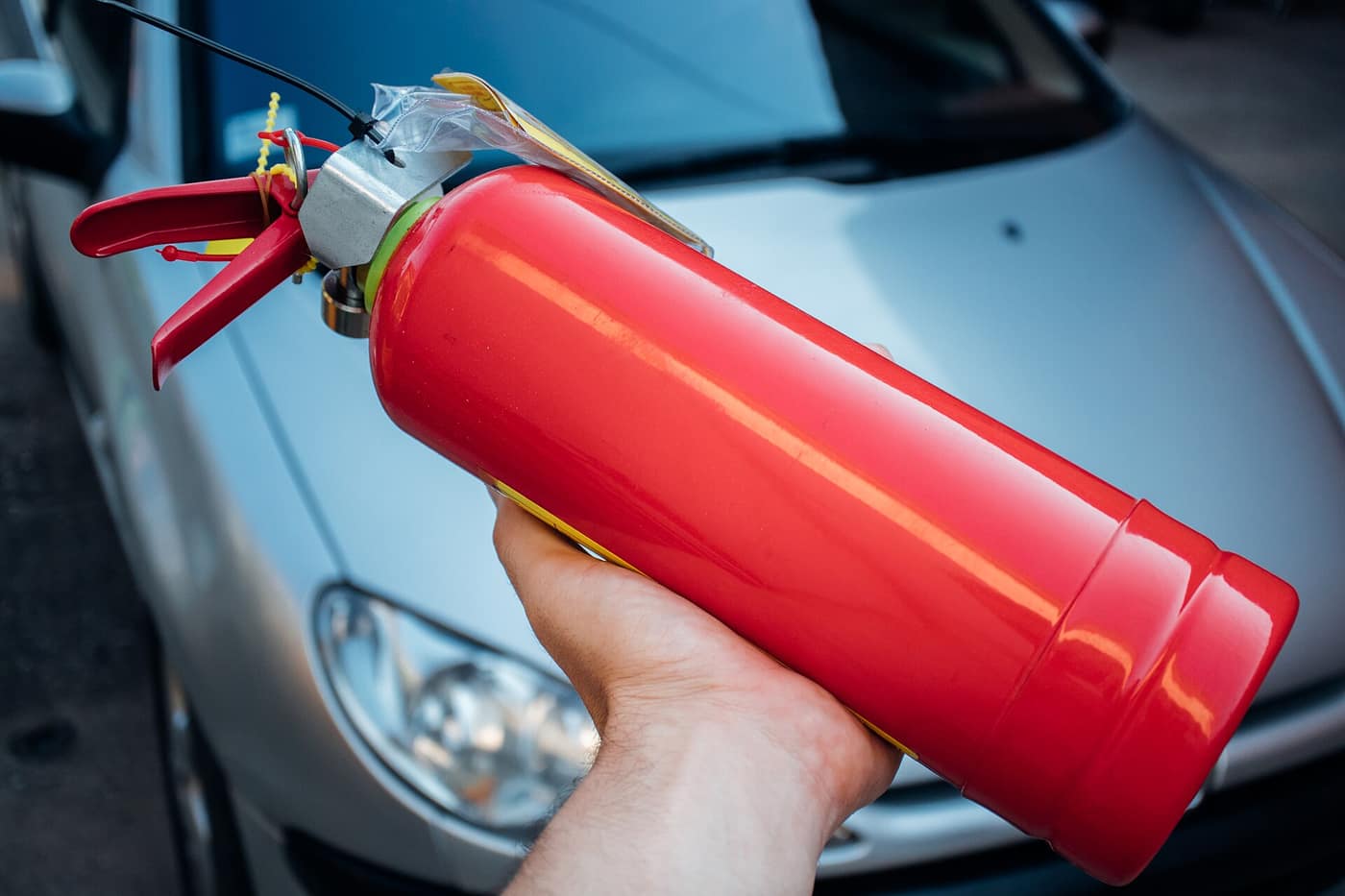
A 1 kg to 2.5 kg dry chemical powder (DCP) extinguisher, rated ABC and mounted securely within reach of the driver, is the usual choice for a car in South Africa. For private cars it’s a sensible extra rather than a general legal requirement, but minibuses and buses operating for reward must carry one by law. This guide covers the law, the right size and type, how to mount it, and exactly what to do if your car catches fire. Your first job is always to stop, get everyone out and move well away.
Quick answer
| Your vehicle | What to carry | Where |
|---|---|---|
| Hatchback or sedan | 1 kg ABC DCP | Bracket under the front passenger seat or on a seat rail |
| Family car, trailer or weekend trips | 1 kg to 1.5 kg ABC DCP | As above, or the passenger footwell |
| SUV, bakkie, towing, rural driving | 2 kg or 2.5 kg ABC DCP | Bracket in the cabin or the load area, reachable quickly |
| Minibus for reward | At least 1 kg dry powder (required) | Readily accessible position |
| Bus for reward | At least 2.5 kg dry powder (required) | Readily accessible position |
What the law says
The National Road Traffic Regulations (regulation 260, under the National Road Traffic Act 93 of 1996) require:
| Vehicle | Requirement (regulation 260) |
|---|---|
| Minibus operating for reward (e.g. a minibus taxi) | At least one extinguisher in a readily accessible position: dry powder of at least 1 kg (or an older halogenated BCF type of at least 1 kg) |
| Bus operating for reward | At least one extinguisher in a readily accessible position: dry powder of at least 2.5 kg (or BCF of at least 1 kg) |
| Private car | Not required by regulation 260 |
In both cases the extinguisher must be kept in good working order. BCF (halon) extinguishers are old technology and not what you’ll find on shelves today; dry powder is the practical choice.
Other vehicles may have extra rules. Vehicles carrying dangerous goods, fleet and company vehicles, and vehicles used on mines or sites often have extinguisher requirements under other regulations, standards or company policy. If you drive one of these, ask your fleet manager or operator.
Why carry one anyway
Car fires usually start in the engine bay from fuel or oil leaks, electrical faults or overheating. A small extinguisher can deal with a fire that’s just starting, such as smoke from under the bonnet or a small fire next to the road. It’s also handy for other people: a burning bin at a rest stop, a braai that gets out of hand on a camping trip, or another motorist’s car.
It’s not a reason to stay with a burning car. Cars contain fuel, plastics, pressurised parts and, increasingly, lithium-ion batteries.
Which type and size?
| Option | Good for | Notes |
|---|---|---|
| 1 kg DCP (ABC) | Most cars | Compact, fits under a seat. Short discharge time, so it’s for very small fires |
| 2 kg or 2.5 kg DCP (ABC) | SUVs, bakkies, towing, long road trips, rural driving | More capacity, still manageable. Needs more mounting space |
| CO2 | Not ideal for cars | Disperses quickly outdoors and in wind |
| Water or foam | Not recommended for cars | Not safe on electrical faults; water doesn’t work on fuel fires |
DCP rated ABC is the default, because it handles burning solids (A), fuels and oil (B) and gas (C), and many units are also marked for electrical equipment. Check the label for the fire classes, a pressure gauge in the green, and certification to SANS 1910. Our fire extinguisher types guide explains the classes in detail.
Prices: at Arbor Safety (Nov 2026), a 1 kg ABC DCP costs around R241, a 1.5 kg around R320 and a 2.5 kg around R404. Brackets vary, and metal-headed units with better quick-release brackets cost more. Buy from a supplier that can also service the unit.
Car extinguishers we’d carry
All three are ABC dry powder units in stock at a South African fire equipment supplier. Pick by how much space you have and how far from help you usually drive.

Arbor Safety Co
1.0kg DCP Fire Extinguisher (Firemate)
The classic car size: slim enough to fit under a front seat, and rated for solids, fuels and gas. Treat it as a first-few-seconds tool, not a fire engine.
- 1 kg ABC dry chemical powder
- 330 mm tall, 80 mm diameter
- About 1.8 kg full
- Fire rating 5A/21B
- Compact and light
- Low price for peace of mind
- Short discharge time, listed as more than six seconds

Arbor Safety Co
1.5kg DCP Fire Extinguisher (Firemate)
Half as much powder again for not much more money or space. A sensible middle ground for a family car or a weekend trailer.
- 1.5 kg ABC dry chemical powder
- 360 mm tall, 110 mm diameter
- About 2.8 kg full
- More capacity than a 1 kg unit
- Still small enough for most cabins
- Wider body needs more mounting space under a seat

Arbor Safety Co
2.5kg DCP Fire Extinguisher (Firemate)
For SUVs, bakkies, caravans and long rural trips where help may be far away. Also the minimum size regulation 260 sets for buses operating for reward.
- 2.5 kg ABC dry chemical powder
- 415 mm tall, 110 mm diameter
- Supplier says it conforms to SANS 1910:2009 fire ratings
- Most capacity of the three
- Doubles as a braai or camp extinguisher
- Too big for under the seat in many cars
Prices change often; check the retailer for the current price and stock. We may earn a commission if you buy through these links, at no extra cost to you. Star ratings are the store's own customer reviews, shown once a product has at least 3. How we choose products.
Mounting it properly
A loose extinguisher is dangerous. In a crash or a hard stop, it becomes a heavy projectile.
- Use a proper bracket, bolted or securely clamped, not just a strap or a spot in the boot.
- Common spots: under the front passenger seat, on the seat rail, in the footwell of the passenger side, or on a bracket in the boot of a bakkie or SUV where you can reach it quickly.
- Driver reach: ideally you can grab it without climbing over seats.
- Don’t drill blindly. Check for fuel lines, wiring and airbag components first. If in doubt, have a fitment centre or auto electrician mount it. Follow the vehicle and bracket manufacturer’s instructions.
- Protect it from heat. Cars get very hot in the South African sun. Keep the extinguisher out of direct sunlight and away from the exhaust.
What to do if your car catches fire
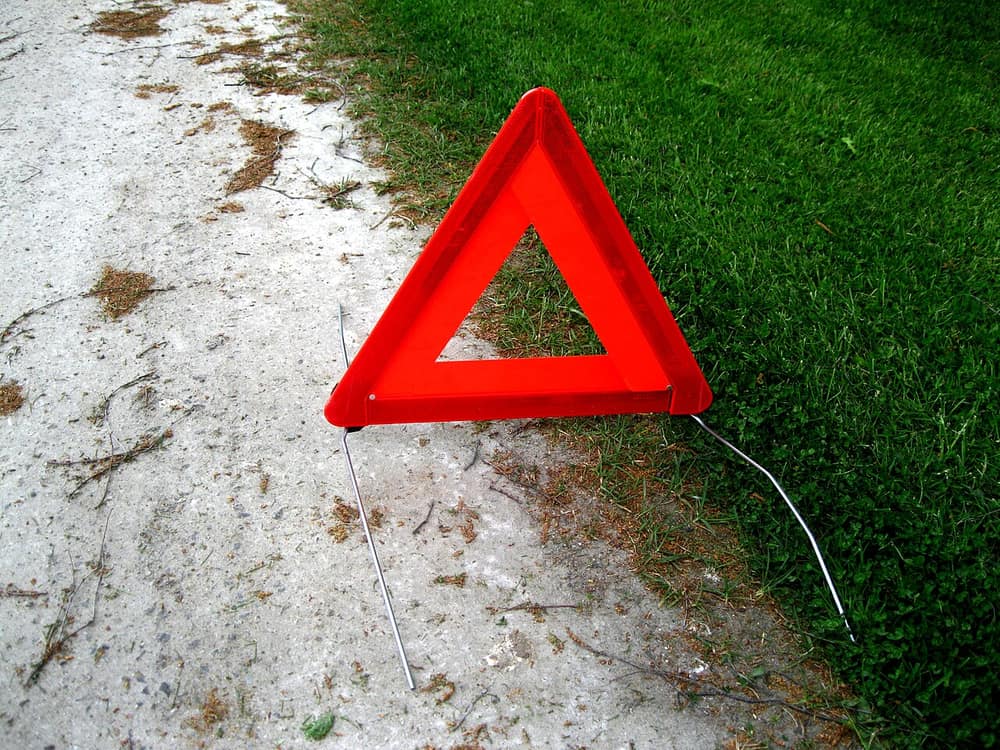
- Signal, pull over and stop somewhere safe, away from buildings, other cars, fuel pumps and dry grass if you can.
- Switch off the engine and engage the handbrake.
- Get everyone out, including pets, and move well away and upwind, behind a barrier if possible. Keep away from traffic.
- Call for help. From a cellphone, dial 112. For the police, dial 10111. Save your local fire and rescue number for the areas you drive in often.
- Leave your belongings. Nothing in the car is worth the risk.
Should you use the extinguisher?
Only if the fire is very small, you’re out of the car, your exit is clear and traffic isn’t a danger. And:
- Don’t open the bonnet fully. A rush of air can make an engine fire flare up. If there’s thick smoke or visible flames under the bonnet, leave it to the fire brigade.
- Use the PASS method: pull the pin, aim at the base of the fire, squeeze, sweep.
- Stand upwind so the powder blows towards the fire, not into your face.
- Stop if it isn’t working within a few seconds, and get away.
- Electric and hybrid vehicles: a fire in the traction battery is not one to fight yourself. Get out, get well away and tell the emergency call taker it’s an electric or hybrid vehicle. See our lithium battery fire safety guide.
After any use, even if the fire seems out, let the fire brigade check the car and have the extinguisher recharged or replaced.
Look after it
- Monthly: check the gauge is in the green, the pin and seal are intact, and the bracket is tight.
- Yearly: have it serviced, ideally by a company with a SANS 1475 permit, using SAQCC Fire registered technicians. Vibration in a car can compact powder over time, which a service picks up. Fleet vehicles usually have to follow a formal servicing schedule.
- Replace any unit that’s damaged, rusted or below pressure.
Our main fire extinguisher guide covers servicing in more detail.
Prevention beats extinguishers
- Keep up with vehicle services and fix fuel or oil leaks quickly.
- Have aftermarket electrics (sound systems, lights, trackers, inverters) fitted by a reputable installer.
- Never carry petrol in unapproved containers inside the car.
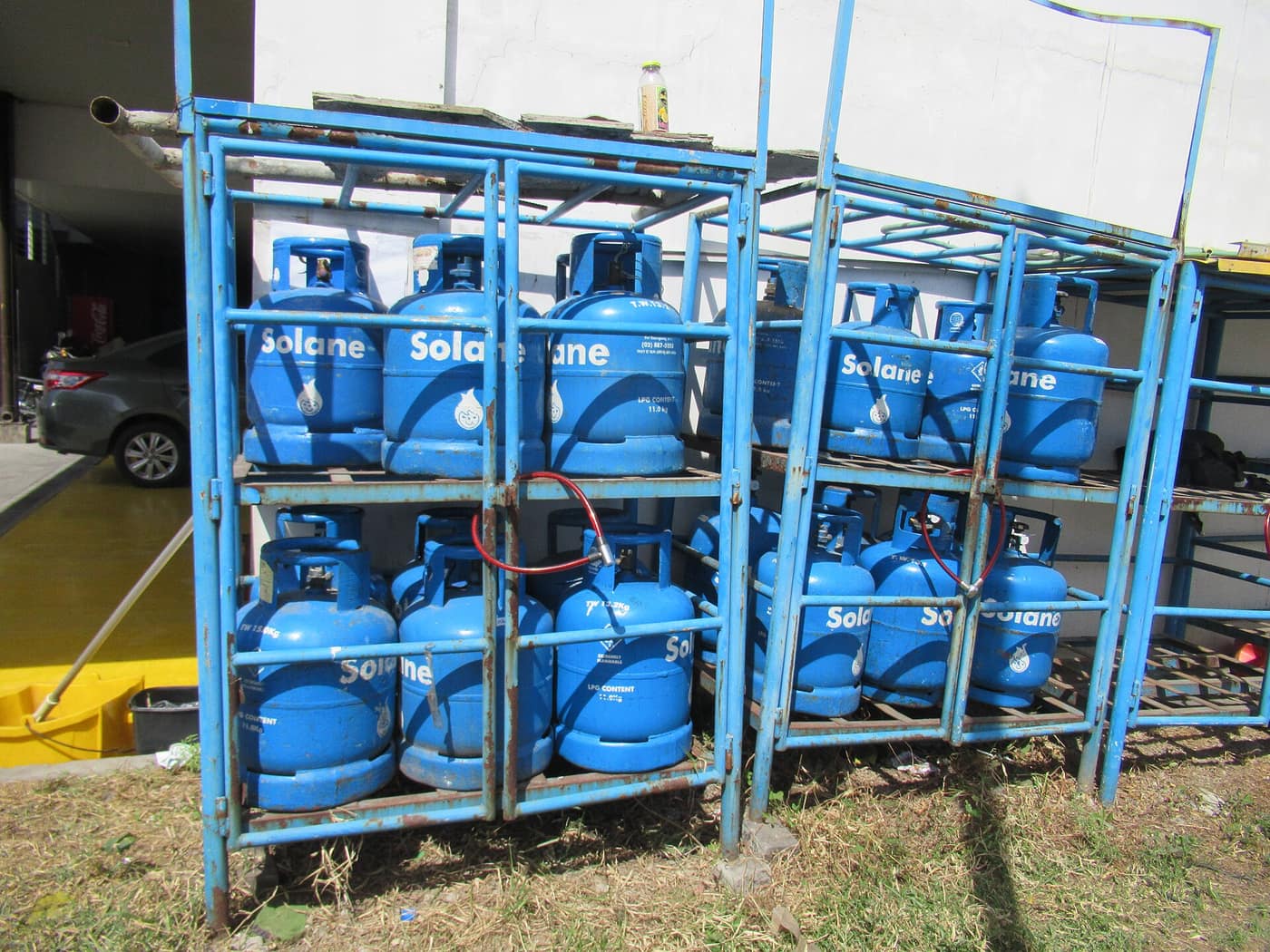
- Don’t leave gas cylinders in a hot car; transport them upright, secured and ventilated, with the valve closed. See our gas braai buying guide for cylinder tips.
- Don’t park on long dry grass, especially in winter in the highveld; a hot exhaust can ignite it. See our veld fire guide.
FAQ
Is it compulsory to have a fire extinguisher in a private car in South Africa?
Regulation 260 of the National Road Traffic Regulations requires extinguishers in minibuses and buses operating for reward, not in private cars. Other rules may apply to dangerous goods, fleet and site vehicles, so check with your operator or local traffic authority.
What size fire extinguisher should I carry in my car?
A 1 kg ABC dry powder extinguisher suits most cars. A 2 kg or 2.5 kg unit makes sense for SUVs, bakkies, towing and long-distance or rural driving, as long as you can mount it securely.
Where should I mount a car fire extinguisher?
On a proper bracket within reach of the driver, often under the front passenger seat or on a seat rail. Never leave it loose, and check for wiring, fuel lines and airbag parts before drilling.
Should I open the bonnet if my engine is on fire?
No, not fully. Opening it lets in air that can make the fire flare. Get everyone out, move well away and call for help. Only tackle a very small fire, and only if it’s safe.
Can I use a car extinguisher on an electric vehicle fire?
Not on a battery fire. Get everyone out, move well away and tell the emergency call taker it’s an electric or hybrid vehicle.

Nadia Pillay
Home fire safety writer
Writes our home fire safety guides, built on SANS standards, SAQCC rules and fire service advice.
More from Nadia →