We're independent: products are chosen on merit and prices come from the retailers' own sites. We may earn a commission if you buy through our links. Learn more.
Key takeaways
- For most homes, a portable gas oven is the easiest start; a wood- or charcoal-fired portable oven gives more flavour for more effort.
- A pizza oven reaches 400°C or more on the stone, which cooks a thin pizza in 60–120 seconds. A kitchen oven tops out around 250°C.
- Measure the stone with an infrared thermometer, not the built-in dial, which reads air temperature.
- A pizza stone on your gas braai or kettle is the cheapest way to find out if you'll actually make pizza regularly.
You can make decent pizza in a kitchen oven. You can’t make that pizza: the one with a leopard-spotted, puffy crust and a crisp base that’s done before you’ve finished pouring the wine. For that you need far more heat than a home oven gives, which is exactly what a pizza oven is for.
The best pizza oven for most South African homes is either a portable gas oven (easiest, quickest to heat) or a portable wood- or charcoal-fired oven (more flavour, more effort). A built-in brick oven suits keen cooks with space and budget, and a braai-top pizza stone or kettle insert is the cheapest way to start. This guide compares the types, explains what to look for and covers how to use one well.
Quick answer
| You are… | Buy | Why |
|---|---|---|
| New to pizza, want it easy | Portable gas oven | Even heat, no fire to manage, heats in 15–25 minutes |
| A braai person who loves the fire | Portable wood/charcoal oven | Smoky flavour and real flame; more practice needed |
| Building an outdoor kitchen | Built-in brick or dome oven | Holds heat for hours: pizza, then bread, then a slow roast |
| Not sure you’ll use it | Pizza stone or kettle insert | Works with the braai you already have |
Why a pizza oven and not the kitchen oven?
A home oven tops out at around 250°C. A good pizza oven reaches 400°C or more on the stone, which cooks a thin pizza in 60–120 seconds with a crisp, blistered base and a puffy crust. That intense heat from below and above is what you can’t easily get indoors.
Types of pizza oven compared
| Type | Fuel | Max heat (typical) | Heat-up time | Price band | Best for |
|---|---|---|---|---|---|
| Portable gas oven | LP gas cylinder | 400–500°C | 15–25 min | Entry to mid | Weeknight pizza, beginners, consistency |
| Portable wood/charcoal oven | Wood pellets, wood chunks, charcoal | 400–500°C | 20–30 min | Mid | Flavour; braai culture; off-grid |
| Multi-fuel portable oven | Gas or wood | 400–500°C | 15–30 min | Mid to premium | Flexibility |
| Built-in brick or dome oven | Wood | 400°C+ | 1–2 hours | Premium (built) | Big gatherings, roasting and baking too |
| Braai-top stone or kettle insert | Charcoal, gas braai heat | 250–350°C | 20–30 min | Entry | Trying pizza without a new appliance |
Portable gas ovens
A compact insulated box with a gas burner and a cordierite stone, running off a standard LP gas cylinder. You get even, controllable heat with no fire to manage. Some models have a rotating stone so you don’t have to turn the pizza.
Several international brands, including Ooni and Gozney, are sold through South African outdoor and braai retailers, and local gas brands such as Cadac offer gas pizza ovens and pizza stones for their braais. Alva and Megamaster also sell gas pizza ovens locally. Ranges change, so check what’s in stock.
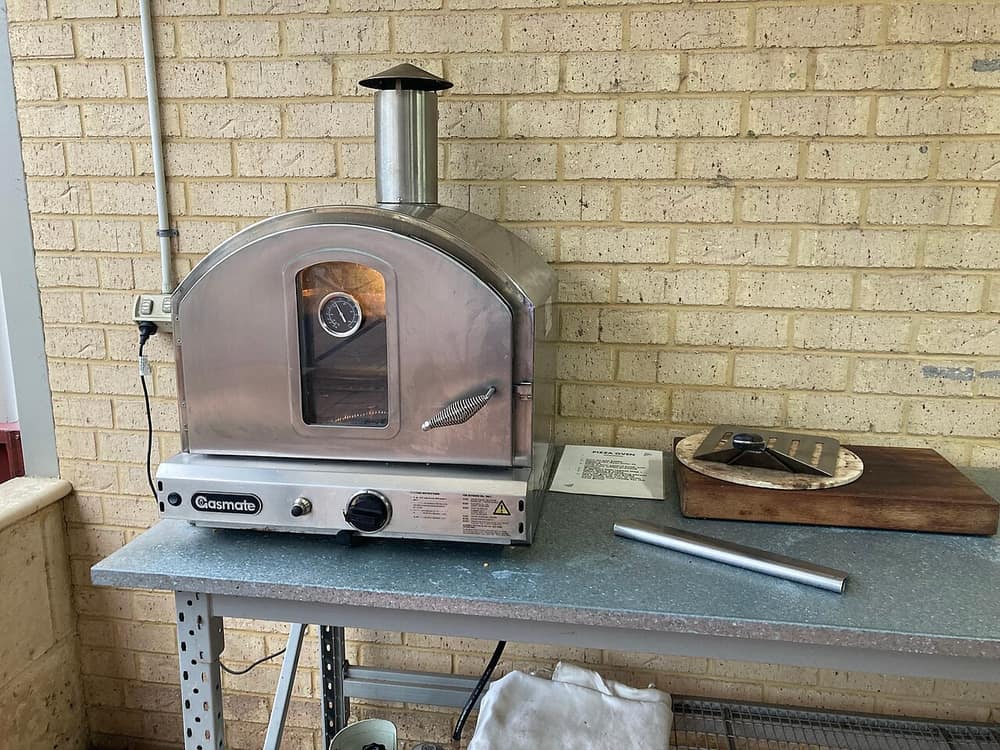
Portable wood- and charcoal-fired ovens
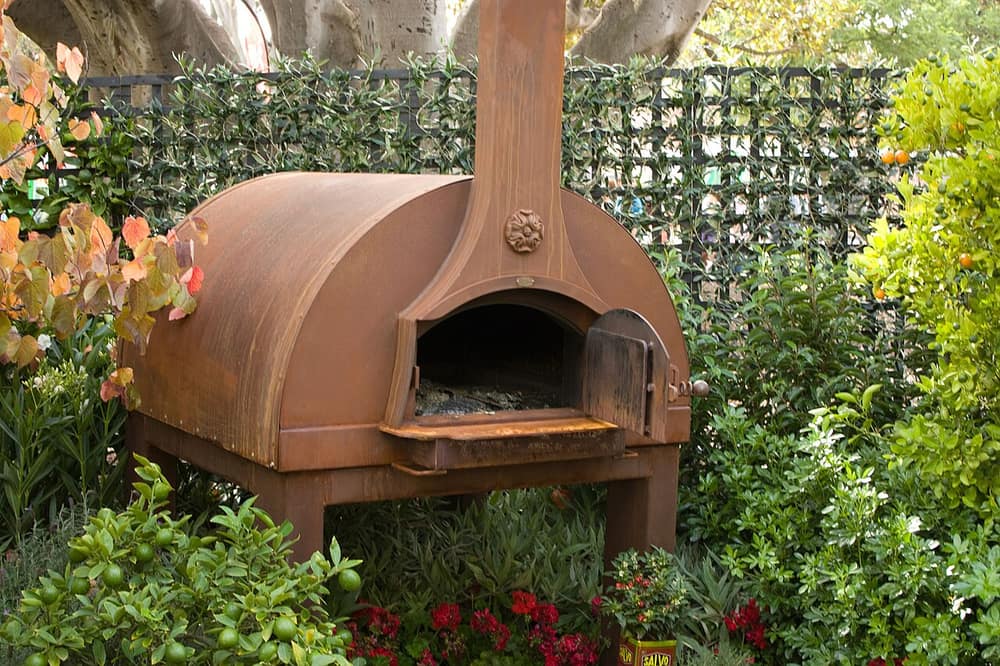
Same idea, with a fuel tray at the back. Wood gives a smoky flavour and a proper flame rolling over the top of the pizza, but you need to feed the fire every few minutes and the heat is less even. Some models accept a gas burner attachment as well, making them multi-fuel.
Built-in brick or dome ovens
A permanent wood-fired oven built from fire bricks or a refractory dome, usually as part of an outdoor kitchen or built-in braai area. It takes much longer to heat but holds heat for hours, so you can bake bread and slow-roast after the pizzas. Freestanding wood-fired dome ovens, which arrive ready-made and sit on a stand, are a middle road. If you’re thinking of building one, our DIY pizza oven guide covers the options, or you can get quotes from local builders for an installed oven.
Braai-top and kettle options
A pizza stone on a gas braai or a kettle braai, or an insert ring that turns a 57 cm kettle into a pizza oven. It won’t reach the heat of a dedicated oven, but it’s an affordable way to find out if you’ll actually make pizza regularly. A kamado also makes very good pizza on a stone, because the ceramic body holds high heat well.
What to look for when buying
- Pizza size: most portable ovens take 30 cm (12-inch) or 40 cm (16-inch) pizzas. Bigger ovens mean more room to turn the pizza but use more fuel and take longer to heat.
- Fuel: gas for convenience, wood for flavour, multi-fuel for both. Consider where you’ll use it: wood ovens need open air and make smoke.
- Stone thickness and material: thicker cordierite stones hold heat better between pizzas.
- Insulation: better insulation means faster heat-up and less fuel. The outside should stay safer to touch.
- Opening height: a low mouth keeps heat in; a taller one lets you cook other dishes like roast vegetables or a steak in a skillet.
- Thermometer: a built-in thermometer measures air temperature, not the stone. An infrared thermometer gun is a worthwhile extra.
- Portability and weight: if you’ll take it camping, check the weight and whether the legs fold.
- Accessories: you’ll need a pizza peel for launching, ideally a metal turning peel too, and a cover.
- Local support: buy from a retailer that stocks spare parts, burners and stones.
Pizza ovens worth buying
From a R369 stone for your braai to a wood-fired dome, these cover every budget across three local stores. Prices were checked in November 2026.

ALVA
ALVA Cibo LPG Gas Pizza Oven
A countertop LPG oven that arrives with its pizza stone, a built-in thermometer and a removable front door. The straightforward way into high-heat pizza without learning to manage a fire.
- LPG gas
- Pizza stone included
- Integrated thermometer
- Detachable door
- No fire to manage
- Stone and door come with it, so there's little else to buy
- 30 cm stone rules out big family pizzas
- No wood-smoke flavour

Megamaster
Megamaster Venture Series 4-in-1 Pizza Oven
A gas unit that does pizza on the stone, then swaps to a griddle, steak plate or cast-iron grids. Good if you want one outdoor cooker that isn't only for pizza nights.
- 19,000 BTU gas
- Push-and-turn ignition
- Pizza stone, griddle and steak plate
- Cast-iron cooking grids
- Four ways to cook in one unit
- Comes with all the plates
- More parts to store and clean than a pizza-only oven

Al Fresco Pizza Ovens
Al Fresco Magnifique – Wood-fire Pizza Oven (1-2 pizzas) (optional Mobile Stand)
A proper wood-fired dome oven for one or two pizzas at a time, without building anything. It is the step up for people who want the flame, the smoke and the ritual.
- Wood fired
- 1–2 pizzas at a time
- Mobile stand optional (extra)
- Real wood-fired flavour
- No masonry or curing build needed
- Stand and chimney parts are sold separately
- Takes longer to heat than gas

ALVA
Pizza Stone Ceramic 30cm With Lifter & Cutter
A 30cm ceramic stone on a chrome carry rack that goes straight onto your braai grid, with a lifter and cutter included. It won't match a dedicated oven, but it tells you cheaply whether pizza nights will stick.
- 30cm ceramic stone
- Chrome steel carry rack
- Lifter and cutter included
- Uses the braai you already own
- Very low cost
- Lower heat, so pizzas take minutes, not seconds
- 30cm limits pizza size
Prices change often; check the retailer for the current price and stock. We may earn a commission if you buy through these links, at no extra cost to you. Star ratings are the store's own customer reviews, shown once a product has at least 3. How we choose products.
How to use a pizza oven
- Set up safely on a stable, heat-resistant surface outdoors, away from walls, overhangs and anything flammable.
- Preheat properly. Heat until the stone reads around 400°C on an infrared thermometer. The air may be hotter than the stone.
- Stretch the dough thin and keep toppings light. Overloaded pizzas don’t cook through in 90 seconds.
- Flour or semolina the peel so the pizza slides off cleanly. Launch with a quick forward-and-back jerk.
- Turn often. The back, near the flame, cooks fastest. Turn the pizza a quarter every 15–20 seconds.
- Let the stone recover for a minute or two between pizzas, or turn the gas up briefly.
Temperature guide
| Food | Stone temperature | Approx. time |
|---|---|---|
| Thin Neapolitan-style pizza | 400–450°C | 60–90 seconds |
| New York-style or thicker pizza | 300–350°C | 4–6 minutes |
| Flatbreads and roosterkoek-style rolls | 250–300°C | 2–5 minutes |
| Roast vegetables in a cast-iron pan | 250–300°C | 10–15 minutes |
| Steak in a skillet | 350°C+ | 2–3 minutes a side |
Fuel and the first firing
Which wood to burn
A braai cooks over a bed of coals. A wood-fired pizza oven cooks with a live flame rolling across the roof as well as heat stored in the floor, so you want wood that catches fast and burns bright, fed in small pieces.
| Burn | Don’t burn |
|---|---|
| Dry hardwood, split into small pieces | Pine and other resinous softwoods, which smoke and leave a sooty taste |
| Wood that burns cleanly without hissing (kiln-dried wood is often sold at under 20% moisture) | Green or wet wood: it smoulders and the oven never reaches pizza heat |
| Fast-lighting rooikrans or blackwattle to build the flame, denser sekelbos to hold heat | Treated, painted or varnished timber, pallets and building offcuts |
Our braai wood guide compares the local species in more detail. To start the fire, a wood-wool firelighter smells far less than a paraffin block, which matters when the fire sits in the same chamber as your pizza. Either way, let it burn out completely before the first pizza goes in; see the firelighters guide.
Gas: how long a cylinder lasts
A gas oven runs off a normal LPG cylinder with a regulator. How many pizza nights you get from a refill depends on the burner’s rating and how long you run it on full, including preheating. Check the rating plate (kW or g/h) and put it into our gas cylinder calculator for hours and cost per session.
Before your first pizza
- Portable ovens (gas, wood or charcoal): many manuals tell you to run the new oven empty and hot first, to burn off oils and coatings left over from manufacturing. Ooni, for example, asks for about 30 minutes at full heat, then a full cool-down. Expect some smoke and smell the first time, and follow your own manual for how long.
- Brick, clay or refractory ovens: these hold water in the mortar and render, so they need a proper cure of small fires over several days before a full-heat fire. Our DIY pizza oven guide walks through it.
Common pizza oven problems and how to fix them
Most early disappointments come down to the same handful of causes: a stone that isn’t hot enough (or is far too hot), too much flour, and too many toppings. Find your symptom below.
| Problem | Likely cause | Fix |
|---|---|---|
| Pizza sticks to the peel | Too little flour or semolina, wet toppings, or the pizza sat on the peel too long | Dust the peel evenly, top quickly and launch within a couple of minutes. Shake the peel before you walk to the oven |
| Base burnt, top still pale | Stone hotter than the flame above it, or loose flour scorching on the stone | Let the flame build before launching, brush excess flour off the stone, and lift the pizza towards the roof for a few seconds to finish the top |
| Top done, base pale or soft | Stone not heat-soaked yet: the air heats faster than the floor | Preheat longer and check the stone with an infrared thermometer, not the dial. Give it a minute or two to recover between pizzas |
| Soggy middle | Too many or wet toppings, or dough left thick in the centre | Go lighter on toppings, drain or pat dry fresh mozzarella, and stretch the centre thinner than the rim |
| Burnt on one side, raw on the other | Not turned often enough | Turn a quarter every 15–20 seconds; the side facing the flame cooks fastest |
| Lots of smoke | Flour, cheese or oil burning on the stone, or damp wood | Use only as much flour as stops sticking, scrape the stone clean between pizzas and burn only dry wood |
| Wood oven won’t get hot | Wet wood, logs too big, or the fire was let die down | Feed small, dry splits often to keep a rolling flame (see the wood table above) |
Safety and care
- Use outdoors only, especially gas and wood ovens. Never use one in an enclosed room or garage.
- Keep children and pets away; the outside and mouth get extremely hot.
- For gas ovens, check hoses and regulators regularly and do a soapy-water leak test. See our gas cylinder safety guide for storing, transporting and connecting cylinders, our gas braai buying guide for cylinder setup and our gas heater safety guide for leak testing.
- Never wash the stone with soap. Burn off spills by running the oven hot, then brush off the ash once cool.
- Let the oven cool completely before covering or storing it, and keep it dry.
FAQ
Is a gas or wood-fired pizza oven better?
Gas is easier and more consistent, which suits beginners and quick weeknight pizzas. Wood gives a smokier flavour and a more traditional experience, but takes more practice. Multi-fuel ovens let you try both.
How hot does a pizza oven get?
Most portable gas and wood ovens are designed to reach 400–500°C, which cooks a thin pizza in around 60–90 seconds. Built-in brick ovens reach similar temperatures and hold them for longer.
Can I make pizza on a normal braai?
Yes. A pizza stone on a gas braai, or a kettle braai with the lid closed, makes good pizza at around 250–350°C. It takes a few minutes per pizza rather than 90 seconds.
What size pizza oven do I need?
A 30 cm (12-inch) oven suits a couple or small family: it is lighter, heats faster and is easier to take camping. A 40 cm (16-inch) oven gives room for bigger, New York-style pizzas and makes turning easier, but it is heavier and uses more fuel, so it suits a fixed spot and people who often cook for a crowd.
Do I need to cure a portable pizza oven?
Not in the way a brick oven is cured over several days. A new steel portable oven usually just needs one empty run at high heat to burn off manufacturing residue; your manual gives the time. Masonry and clay ovens do need a slow, multi-day cure to dry out without cracking.
Can I use a pizza oven during load shedding?
Gas, wood and charcoal ovens don’t need electricity, so yes. Electric pizza ovens do, so check the power source before you buy if outages are a concern.

Johan Botha
Braai & outdoor editor
Writes our braai, fire pit and pizza oven guides. Firmly in the wood-fire camp, but owns up to a gas braai for weeknights.
More from Johan →