We're independent: products are chosen on merit and prices come from the retailers' own sites. We may earn a commission if you buy through our links. Learn more.
Key takeaways
- A 60–80 cm steel bowl suits four to six people and is the easiest, most flexible way to start.
- Keep any wood fire pit at least 3 metres from the house, decks, fences and sheds, further from thatch, and never under a roof or branches.
- Gas fire pits give instant, smoke-free flame but less warmth than wood, and still need open-air ventilation.
- Check your municipality's by-laws and your estate or body corporate rules before you buy or build.
- A simple brick ring in the garden is a weekend DIY job, as long as you use fire bricks or solid clay bricks, not hollow concrete blocks.
There’s a reason South Africans gravitate to the fire long after the braai is done. A fire pit turns a cold garden into the best room in the house, and it doesn’t take much: a steel bowl on the paving, a gas burner on the patio, or a stone boma on a farm or estate.
The right pit depends on your space, how you’ll use it (warmth, atmosphere or cooking) and the rules where you live. This guide compares the main types, shows you what to look for, explains safe placement and walks through a simple DIY build, with some ideas to finish.
Quick answer: which fire pit?
| If you want… | Choose | Why |
|---|---|---|
| A cheap, flexible start | Steel fire bowl (60–80 cm) | Move it around, cook on it with a grid, replace it in years |
| A permanent gathering spot | Stone or brick boma | Built-in seating, bush-camp feel, lasts for decades |
| Flame with no smoke or ash | Gas fire pit or fire table | Instant on and off; suits open-sided patios |
| A small garden with neighbours close by | Chiminea | The chimney sends smoke up and away from seating |
| Something for camping or a small yard | Portable or “smokeless” pit | Lighter, smaller, less smoke (see our camping braai guide) |
Types of fire pit compared
| Type | Fuel | Price band | Best for | Watch out for |
|---|---|---|---|---|
| Steel fire bowl | Wood, charcoal | Entry to mid | Patios, small gardens, moving it around | Sparks and embers; rust on thin steel |
| Corten / heavy steel fire pit | Wood | Mid to premium | Design-led gardens; lasts for years | Corten stains paving as it weathers |
| Stone or brick boma | Wood | Mid to premium (built) | Large gardens, farms, lodges, gatherings | Permanent; needs space and planning |
| Gas fire pit or fire table | LP gas | Mid to premium | Covered patios with open sides, instant flame, no smoke | Less heat than wood; gas safety and cylinder storage |
| Chiminea | Wood | Entry to mid | Small spaces; directs smoke upwards | Clay types crack in rain and frost; metal versions get very hot |
| Portable / smokeless pit | Wood, pellets | Mid | Camping, apartments with gardens, less smoke | Smaller fire; still needs open air |
Steel fire bowls
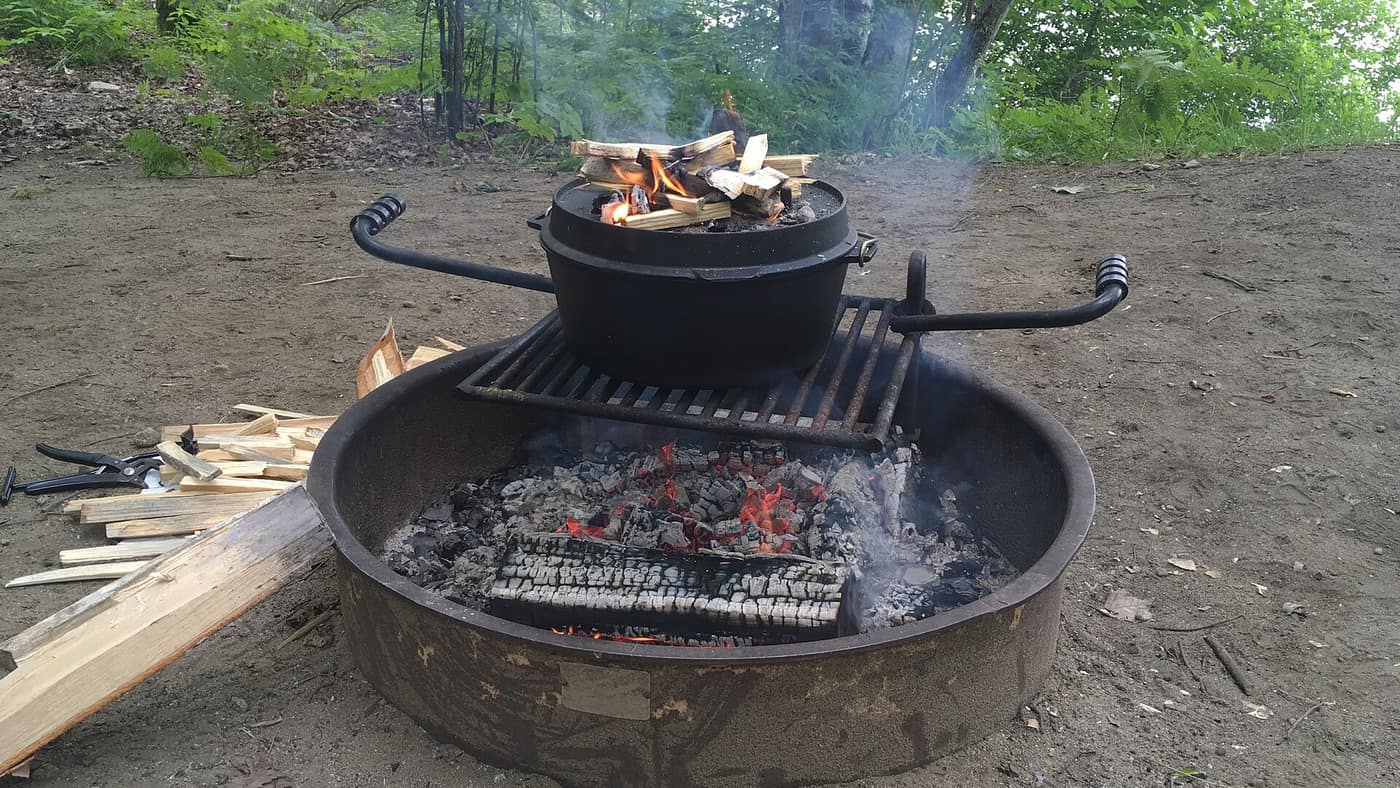
The most common choice. A wide, shallow bowl on legs, often with a spark screen and a grid so it doubles as a braai. Thicker steel lasts longer and won’t warp. Check that it has drainage holes, or rain will collect and rust the base.
Corten and heavy steel pits
Corten (weathering steel) is designed to rust on the surface and then stop, leaving a stable orange-brown layer that protects the steel underneath. It looks great in a modern or indigenous garden, but the run-off in the first months will stain light paving.
Boma fire pits
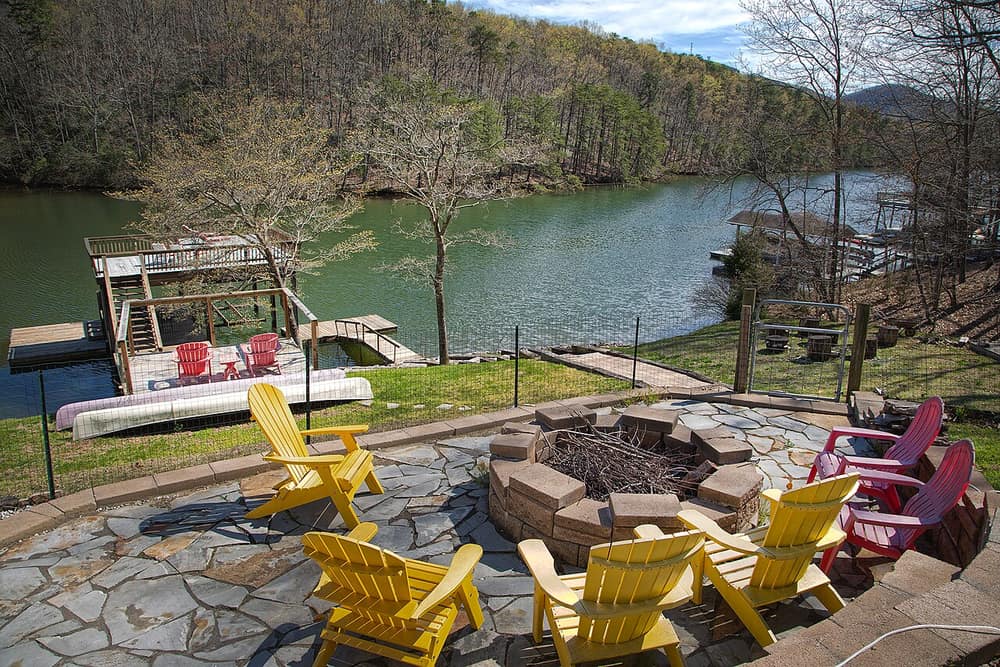
A sunken or raised stone, brick or concrete ring, usually with built-in seating around it. This is the South African bush-camp classic and works best on bigger properties. Our guide on how to build a boma covers sizes, layouts and materials. Because it’s a permanent build, it’s worth getting a builder or landscaper to quote: you can get quotes from local installers for a boma or built fire feature.
Gas fire pits
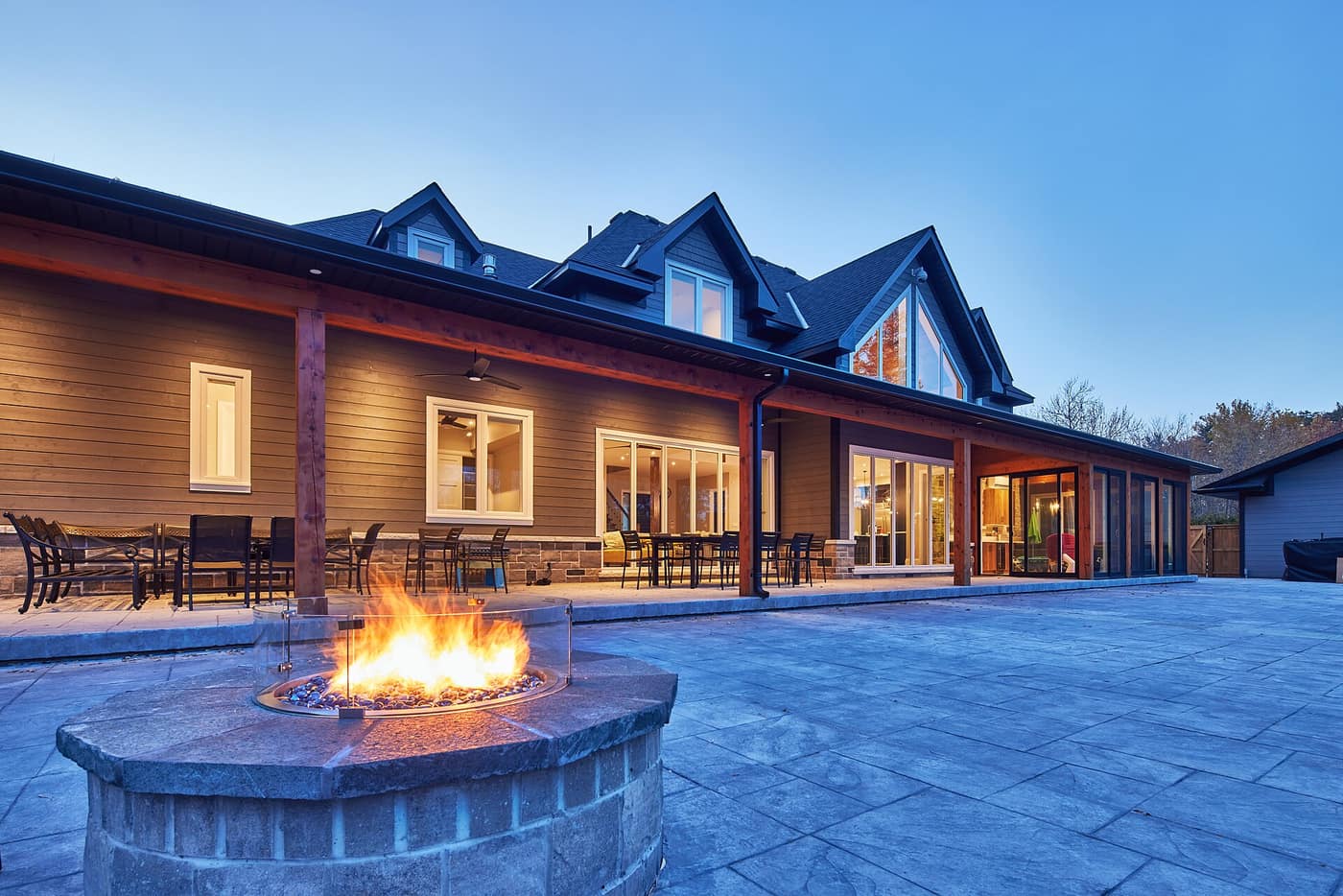
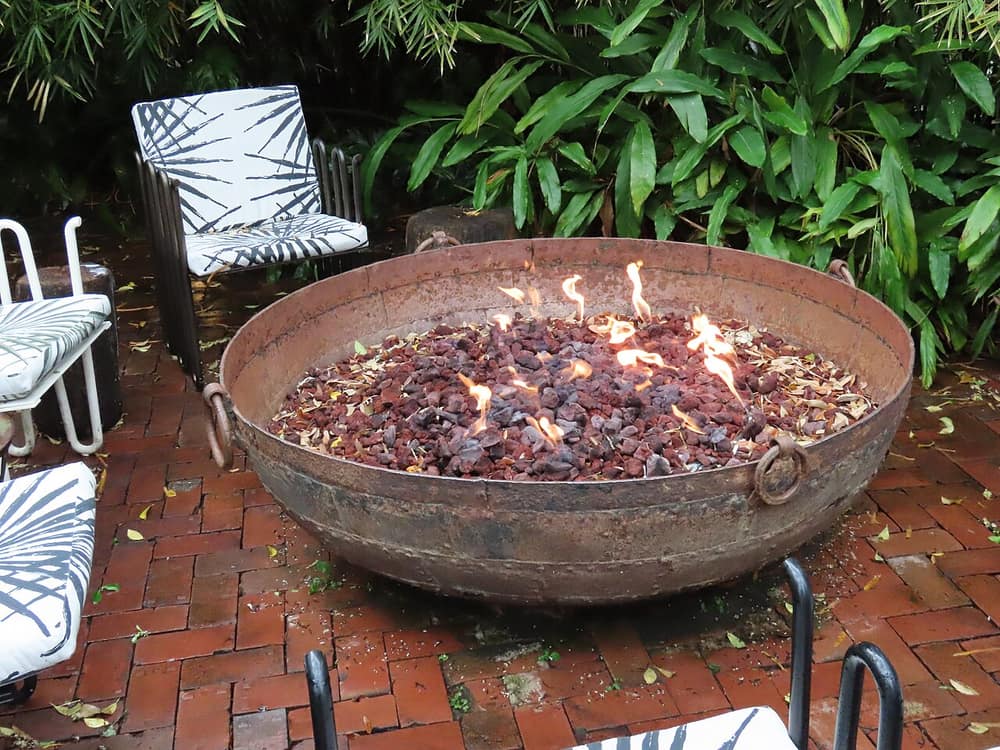
A burner set in a table or bowl, filled with lava rock or fire glass, fed by a gas cylinder hidden underneath. You get flame at the turn of a knob, no smoke and no ash, but less warmth than a wood fire. They must still be used in a well-ventilated space and never in an enclosed room. Our gas heater safety guide covers cylinder handling and leak testing, which apply here too, and our guide to smokeless and gas fire pits explains running costs and how double-wall “smokeless” wood pits work.
Chimineas
A pot-bellied stove with a chimney. It directs smoke up and away from seating, which suits smaller gardens. Clay chimineas are pretty but fragile; cast iron or steel versions are tougher.
What to look for when buying
- Size: a 60–80 cm bowl suits four to six people. Bigger groups need a bigger pit, but a larger fire also needs more clearance.
- Material and thickness: heavier steel resists warping and rust. Stainless steel and cast iron last longer than thin painted mild steel.
- Spark screen: essential if you have dry grass, trees or thatch nearby, or children around.
- Airflow and ash: vents or holes around the bowl help the fire light and burn cleaner; a removable ash pan makes the morning-after clean-up easy.
- Cooking options: many pits come with a braai grid or a swing arm. If you want to cook, see our guide to braai stands as well; a dedicated braai cooks better than most fire pits.
- Lid or cover: a cover keeps rain out and stops the pit from becoming a puddle.
- Gas pits: check for a flame-failure device, a stable cylinder housing with ventilation, and that the burner is rated for outdoor use.
- Where to buy: hardware chains, outdoor and braai specialists, garden centres and online marketplaces all stock fire pits. Local metalworkers often make heavy-gauge bowls to order.
Fire pits worth buying
These span a budget wood bowl to a full boma-style pit with a braai grid, plus a gas option for patios where wood isn’t practical. Prices were checked in November 2026 and change often.

Megamaster
Tambotie Boma
A light, movable steel fire pit with grass-pattern cut-outs that throw flickering light around the garden. The loose ash pan makes clean-up after a cold evening easy.
- Wood burning
- Two carry handles
- Loose ash pan
- Easy to assemble
- Cheapest way into a real wood fire
- Easy to move around the garden
- No spark screen mentioned, so keep it well clear of dry grass

Megamaster
Sekel Boma
Rows of ventilation holes feed air to the fire from all round, which helps it light easily and burn cleaner. It arrives ready to use, poker included.
- 360 ventilation holes
- Rust-painted finish
- No assembly required
- Poker included
- Good airflow for easy lighting
- Rugged look that suits a natural garden
- Still a wood fire: smoke drops but doesn't disappear

ALVA
Short Stand Firepit Gas Patio Heater (With Lava Stones)
A short gas fire-pit heater with lava stones, designed to sit among outdoor tables and chairs. Flame at the turn of a knob, with no ash to clean up.
- LP gas
- Lava stones included
- Outdoor use only
- No smoke, sparks or ash
- Good for patios where a wood fire isn't allowed
- Less warmth than a wood fire
- Needs a gas cylinder and regular leak checks

Al Fresco Pizza Ovens
Al Fresco Fire Pit with Fire Braai Grid (Wood/Charcoal)
A big, 90 cm boma-style pit with an adjustable braai grid, so the fire you sit around is also the fire you cook on. Made for the campfire-braai feeling at home.
- Wood or charcoal
- 900 mm (Ø) × 475 mm (H)
- Adjustable braai grid
- Ash tray
- Seats a big group around one fire
- Cooks and heats in one unit
- Large and heavy: plan its spot before it arrives
- Premium price
Prices change often; check the retailer for the current price and stock. We may earn a commission if you buy through these links, at no extra cost to you. Star ratings are the store's own customer reviews, shown once a product has at least 3. How we choose products.
Placement and safety
A fire pit is an open fire, so placement matters more than the pit itself.
- Distance from structures: keep the pit well away from the house, wooden decks, fences, sheds and thatch. A common guideline is at least 3 metres from any structure, and more for thatch. Follow the manufacturer’s clearance figures if they’re larger.
- Nothing overhead: never use a wood fire pit under a roof, pergola, umbrella, carport or low tree branches. Heat and sparks rise.
- Stable, non-flammable base: use paving, gravel, brick or concrete, never a wooden deck unless the pit is designed for it with a heat shield.
- Wind: don’t light up on windy days. Embers travel, and South African winters are dry. Position seating so the prevailing wind carries smoke away.
- Never leave it unattended, and keep children and pets at a distance.
- Have water ready: a hose, a bucket of water or sand, and ideally a fire extinguisher or fire blanket. See our fire extinguisher guide.
- Put it out properly: let the fire burn down, then douse the embers with water and stir until cold. Never put warm ash in a plastic bin.
- Fuel: burn dry, seasoned wood. Never use petrol or paraffin to light or revive a fire, and don’t burn treated timber, painted wood or rubbish.
Which wood to burn
The same rules as a braai apply: dense, dry hardwood gives steady heat with less smoke. Rooikrans and sekelbos are good, widely available choices, and never burn pine, pallets or treated timber in a pit people sit around. Our braai wood guide compares the options.
Getting more warmth on a winter night
A few small habits make a big difference to how warm the circle feels on a cold June evening:
- Start with an empty pit. Clear out old ash (cold, and into a metal bucket) so air can reach the fire from below.
- Give it air. Raise the wood on a grate if your pit has one, leave gaps between logs, and don’t pile on so much at once that you smother it.
- Burn dense, dry hardwood. It gives more heat per log than soft or damp wood, so you’ll use less.
- Light it properly. A couple of good firelighters and kindling get you to a hot bed of coals faster than a smoky, half-lit pile.
- Mind the wind. Sit with your back to it if you can, so the smoke and the heat aren’t both blown away from the circle.
Gas pits give out noticeably less heat than wood. If you need real warmth on a covered, open-sided patio, a patio heater may suit you better than a gas fire table; an electric infrared heater suits covered braai areas, and no gas heater belongs on a patio closed in with blinds or glass.
By-laws and fire restrictions
Rules on open fires vary by municipality, and many estates and sectional-title schemes have their own conduct rules. Some areas restrict open fires during high fire-danger periods or when there is a fire ban. Before building or using a fire pit, check with your municipality, your estate or body corporate, and look out for fire-danger warnings, especially in dry, windy months. On farms and smallholdings, landowners also have responsibilities for preventing veld fires; see our guide on veld fires and firebreaks.
DIY fire pit: a simple brick or stone ring
A basic in-ground fire pit is a weekend project.
You’ll need: a spade, a spirit level, string and a peg, river sand or gravel, fire bricks or solid clay bricks (not hollow concrete blocks, which can crack in heat), and a steel ring insert if you want neater edges.
- Choose the spot using the clearance rules above, and check your by-laws first.
- Mark a circle about 90–120 cm across with a string and a peg.
- Dig out about 20–30 cm deep.
- Lay a base of 10 cm of compacted gravel or sand for drainage.
- Build the wall with fire bricks or natural stone, two or three courses high, keeping it level. Use refractory mortar if you want a permanent wall, or dry-stack for a simpler build.
- Add a layer of gravel or sand inside, then let any mortar cure before the first fire. Clay brick guidance suggests waiting seven to 10 days for mortar and cement to harden; follow the mortar maker’s figure if it’s longer, and start with a small fire.
- Surround it with gravel or paving for a non-flammable area of at least a metre all round.
For a larger boma with seating, retaining walls or gas lines, it’s worth hiring a professional. Any fixed gas installation must be done by a registered installer who issues a certificate of compliance.
What a fire pit costs
A bought steel pit is the cheapest way in; a built pit costs more because you’re paying for materials and labour. The bought prices below come from the cards above (November 2026). Installed pits are shown as relative bands, because the cost of a build varies a lot by region, access and finish, so get at least three quotes.
| Option | Typical cost | What drives it |
|---|---|---|
| Steel fire bowl or boma-style pit | Around R999 to R10,600 | Size, steel thickness, grid and ash pan |
| Freestanding gas fire pit | Around R3,599 (Alva) | Plus a gas cylinder and refills |
| Basic professionally built wood pit | Typically a few times the price of an entry-level steel bowl | Bricks or stone, site preparation |
| Custom build | More than a basic build, and can run well beyond it | Design, materials, size |
| Built-in gas fire pit | Usually the most expensive option, plus the gas line and a CoC | Distance from the gas supply, CoC |
| Built-in seating | Adds noticeably to any built pit | Length, material, finish |
A DIY brick ring costs mainly the bricks, gravel and mortar, so it’s usually the cheapest permanent option if you’re happy to dig.
Fire pit ideas
- Sunken boma with built-in bench seating for a bush-camp feel.
- Gravel garden with a steel bowl and loose deck chairs: cheap and easy to change.
- Corten bowl set in a lawn clearing, surrounded by a ring of paving.
- Swing seats or hanging chairs around a pit, with plenty of clearance.
FAQ
How far should a fire pit be from the house?
A common guideline is at least 3 metres from the house and any structure, and further from thatch, trees and wooden fences. Always follow the manufacturer’s clearances, and check local by-laws and estate rules.
Can I use a fire pit under a covered patio?
Not a wood fire pit. Smoke, heat and sparks can damage the roof and cause fires. A gas fire pit may be used in a well-ventilated, open-sided area if the manufacturer allows it, but never in an enclosed space.
Do I need permission for a fire pit?
It depends on where you live. Some municipalities, estates and complexes restrict or ban open fires, especially during high fire-danger periods. Check with your municipality and your estate or body corporate before you buy or build.
Can I braai on a fire pit?
Yes, if it has a grid. A fire pit is less efficient than a braai stand because it’s wider and shallower, so keep the coals concentrated under the grid.
Wood or gas fire pit?
Wood gives more heat, the crackle and the option to cook, but makes smoke and ash. Gas is instant and clean but gives less warmth and needs careful cylinder handling.
Can I use ordinary bricks to build a fire pit?
Solid clay bricks are kiln-fired and are widely used for garden pits, though fire bricks are the safest lining for big, frequent fires. Avoid concrete bricks and hollow blocks, which can crack or burst in high heat, and use a fire-resistant mortar if you mortar the inner wall.
What size fire pit do I need?
A 60–80 cm bowl suits four to six people. For bigger groups, go larger, but remember that a bigger fire also needs more clearance around it.

Johan Botha
Braai & outdoor editor
Writes our braai, fire pit and pizza oven guides. Firmly in the wood-fire camp, but owns up to a gas braai for weeknights.
More from Johan →