We're independent: products are chosen on merit and prices come from the retailers' own sites. We may earn a commission if you buy through our links. Learn more.
Key takeaways
- An oil heater is the safe choice for bedrooms and overnight heating: no flame, no fumes, no ventilation needed.
- A gas heater heats faster and keeps working in load shedding, but belongs in living areas only, with a window open.
- Oil heater cost per hour = kW × your tariff. A 2,000 W heater on full uses 2 kWh an hour.
- At R380 for a 9 kg refill, heat from LPG works out at roughly R3.10 per kWh. Compare that with the tariff on your electricity bill.
- Many homes do best with both: oil in the bedrooms, gas in the lounge for outages.
It’s the question that comes up every May: do you buy an oil heater or a gas heater? Ask around and you’ll hear that gas is cheaper, that oil is safer, that one or the other is useless in load shedding. Some of that is true, some of it depends entirely on your tariff and your rooms.
The short version: an oil heater is a safe, silent, electric option for bedrooms and closed rooms, while a gas heater gives faster, stronger heat and keeps working through load shedding. Which is cheaper depends on your electricity tariff, your gas price and how you use them, and you can work that out yourself in a minute. Here’s how they compare.
The short answer
- Choose an oil heater for bedrooms, children’s rooms, studies and any room you want to heat overnight or for long periods with the door closed.
- Choose a gas heater for lounges and open-plan areas where you want quick warmth, and for heat during load shedding.
- Many homes use both: an oil heater in the bedroom and a gas heater in the living area.
Side by side
| Oil heater (oil-filled radiator) | Gas heater (portable LPG) | |
|---|---|---|
| Fuel | Electricity | LPG from a cylinder (usually 9 kg) |
| Heat-up time | Slow (it warms the oil first) | Fast, almost instant |
| Heat type | Gentle, even convection and radiant heat | Radiant (panel) or convection (blue flame) |
| Works in load shedding | No (it stays warm for a short while after the power goes) | Yes |
| Safe in bedrooms / overnight | Yes, used as the manual directs | No |
| Ventilation needed | No combustion, so no special ventilation | Yes, always |
| Fumes / CO risk | None from combustion | Yes, if misused or faulty |
| Noise | Silent (may tick as it heats) | Quiet hiss |
| Running cost | Wattage × electricity tariff | Gas consumption × gas price |
| Typical price (Nov 2026) | Around R929 to R1,499 for Alva’s 7- to 11-fin models | Around R1,199 to R1,699 for Alva’s cabinet heaters, plus a cylinder |
Which one for which room?
| Room | Best choice | Why |
|---|---|---|
| Main bedroom | Oil heater with a timer | No flame or fumes; warm the room before bed |
| Children’s room | Oil heater | Safest option; keep it clear of bedding |
| Study or home office | Oil heater | Steady, silent heat for long hours with the door closed |
| Lounge or TV room | Gas heater (or both) | Quick warmth when you sit down, works in outages |
| Open-plan living area | Gas heater | An oil heater struggles to make a dent in a big space |
| Bathroom | Neither of these | Gas is never safe here, and plug-in heaters near water are a shock risk; only use a heater whose manual says it suits bathrooms |
How an oil heater works
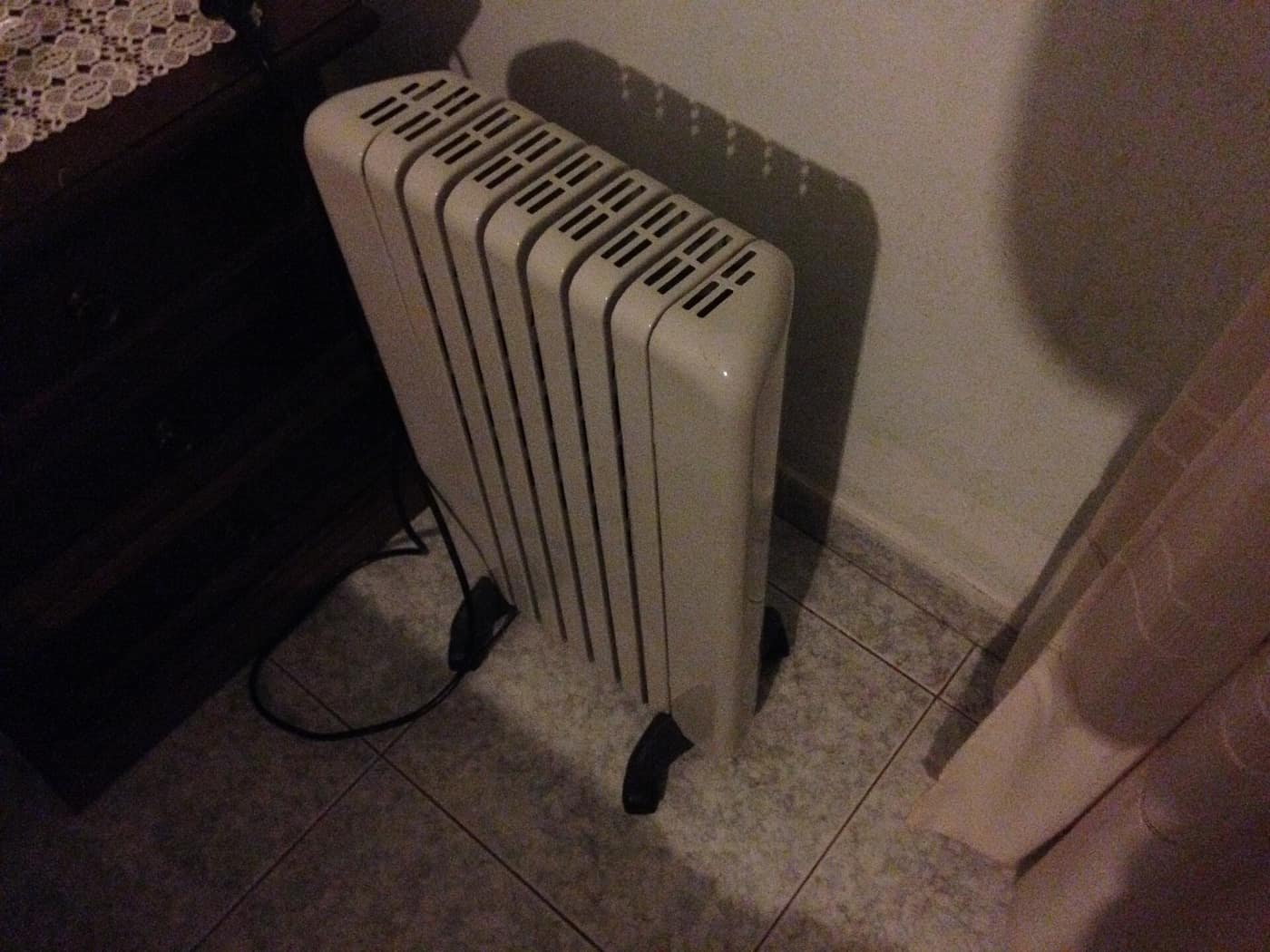
An oil heater is an electric heater, not a fuel burner. An element heats a sealed reservoir of oil inside the fins. The fins warm the air around them, which rises and circulates through the room.
Because the oil holds heat, an oil heater:
- takes a while to warm a room, but gives steady, even heat once it’s going;
- stays warm for a while after it switches off or the power cuts;
- has no flame, no fumes and nothing to burn, so it’s the usual choice for bedrooms.
More fins generally mean more surface area and a higher wattage. Models sold locally commonly run from about 1,500 W to 2,500 W, with most offering two or three power settings and a thermostat. Brands sold in South Africa include Alva, Defy and Goldair, among others.
Features worth having: an adjustable thermostat, a timer, a tip-over switch and overheat protection. Check the specification, as not every model has all of them.
How a gas heater works
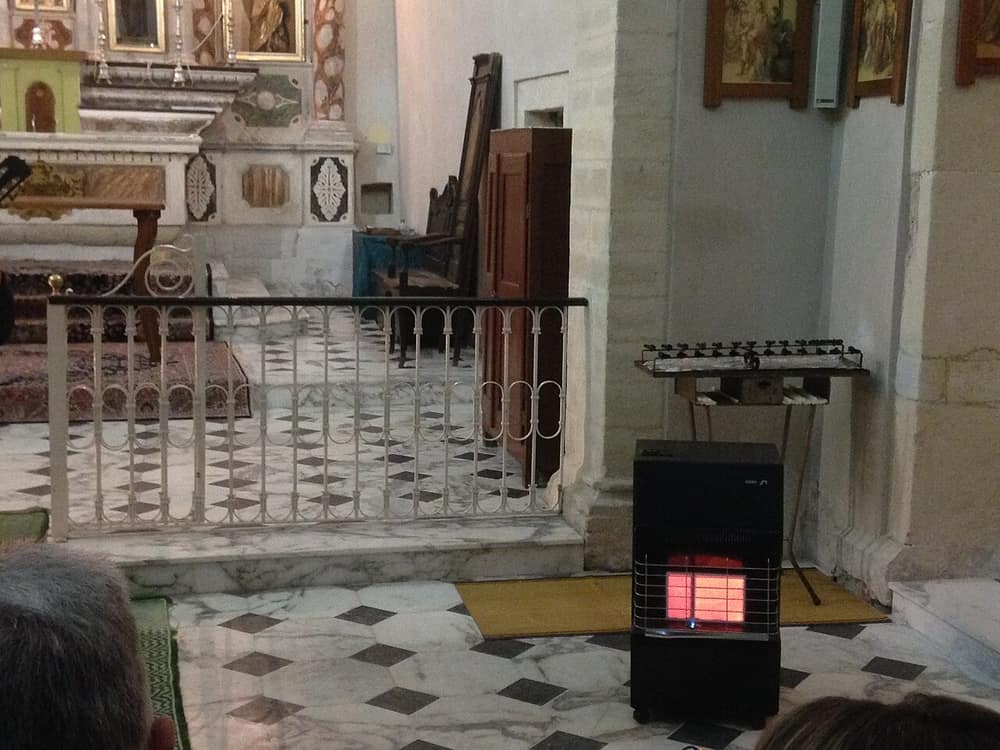
A portable gas heater burns LPG from a cylinder inside its cabinet. Radiant heaters heat people and surfaces directly through ceramic panels; blue flame heaters heat the air. Both give heat within moments of lighting and need no electricity, which is why they’re so popular in South African winters. Our gas heater guide covers the types in detail.
The trade-off is that a gas heater burns oxygen and produces combustion gases in the room. That means ventilation, an oxygen depletion sensor (ODS), a carbon monoxide alarm (see smoke and CO detectors) and strict rules: no bedrooms and never while sleeping.
Running costs: do the maths yourself
Tariffs and gas prices differ by municipality, Eskom tariff and dealer, and they change every year. So rather than pretend there’s one answer, here’s how to work out yours.
Oil heater (electricity)
Cost per hour = heater power in kW × your tariff in rand per kWh
- Convert watts to kW by dividing by 1,000. A 2,000 W heater is 2 kW.
- Find your tariff on your Eskom or municipal bill, or your prepaid vendor’s tariff sheet. If you’re on a block (inclining) tariff, use the rate for the block you usually reach in winter.
- Example: a 2 kW heater on full for one hour uses 2 kWh. Multiply 2 by your tariff.
| Setting | Power | Electricity per hour |
|---|---|---|
| Low (e.g. Alva 7-fin) | 600 W | 0.6 kWh |
| Medium (e.g. Alva 7-fin) | 900 W | 0.9 kWh |
| Full, 9-fin | 2,000 W | 2 kWh |
| Full, 11-fin | 2,500 W | 2.5 kWh |
Multiply the last column by your tariff for your cost per hour.
Reality check: the heater doesn’t draw full power the whole time. Once the room reaches the thermostat setting, the element cycles on and off, so actual use is often lower than the maximum.
Gas heater (LPG)
Cost per hour = gas consumption in kg/h × your price per kg
- Find the consumption in the manual (often in g/h; divide by 1,000 for kg/h).
- Price per kg = what you pay for a refill ÷ the cylinder size. Alva’s 9 kg refill voucher was R380 (Gauteng only, Nov 2026), which works out at about R42 per kg.
- If you only know the heater’s kW rating, LPG contains roughly 13 to 14 kWh of energy per kg, so divide the kW by about 13.5 for an approximate kg/h on full.
Comparing them like for like
The fairest comparison is the cost of one kWh of heat from each:
- Gas: price per kg ÷ about 13.5. At R42 per kg, that’s roughly R3.10 per kWh of heat.
- Electricity: your tariff per kWh, straight off the bill.
- Compare. If your electricity costs noticeably less than the gas figure, the oil heater makes each unit of heat more cheaply; if it costs more, gas wins on fuel.
Then weigh up the extras: gas needs a cylinder and an open window, which loses some heat; an oil heater’s cost rises if winter use pushes you into a higher tariff block. Our heater size calculator does this sum for you, comparing LPG and electric running costs for your room.
Which heater for load shedding?
- Gas heaters work without power, so they’re the simplest way to keep warm during load shedding.
- Oil heaters stop heating when the power goes, though the oil keeps radiating some warmth for a while afterwards.
- Running an oil heater on an inverter or backup battery is usually impractical. A heater drawing 2 kW or more will drain most home batteries quickly and may exceed the inverter’s rating. Check your system’s specifications with your installer before trying.
- A practical approach: heat the bedroom with an oil heater while the power is on (using a timer), and switch to a gas heater in the living area during outages.
For other heating that works off-grid, look at a closed combustion fireplace or a gas fireplace.
Heaters worth buying
Three oil heaters across the size range, plus a gas heater for the lounge if you want both. Prices change often in winter, so check the live price.

ALVA
9 Fins 2000W Oil Filled Heater - Timer Function - Glossy Black
A 2,000 W oil heater with a 24-hour timer, so you can have the bedroom warm before you go to bed and not leave it running all night.
- 9 oil-filled fins, 2,000 W
- 24-hour timer
- Castor wheels
- Timer saves electricity
- Slim enough for a bedroom corner
- Slow to warm a cold room
- No heat during load shedding

ALVA
7 Fins 1500W Oil Filled Heater - Glossy Black
A smaller oil heater for a child's room, study or small bedroom. The low setting draws just 600 W, which keeps running costs in check.
- 7 oil-filled fins, 1,500 W
- 3 heat settings (low 600 W, medium 900 W)
- Castor wheels and carry handle
- Low entry price
- Low setting is easy on the electricity bill
- No timer
- Too small for a big lounge

ALVA
11 Fins 2500W Oil Filled Heater - Timer Function - Glossy Black
More fins and 2,500 W for a larger room, with a timer so it can switch itself on and off at set times.
- 11 oil-filled fins, 2,500 W
- Programmable timer
- Glossy black finish
- More output for bigger rooms
- Timer for scheduled heating
- Draws 2.5 kWh an hour on full
- Overkill for a small bedroom

ALVA
3-Panel Luxurious Infrared Radiant Indoor Gas Heater
If you want the gas side of the equation, a three-panel radiant heater is the simplest choice for a lounge, and it keeps going when the power doesn't. Living areas only.
- Three ceramic infrared panels
- Runs on LPG, no electricity
- Up to 50 m² (maker's claim)
- Fast heat, even in load shedding
- Turn panels on and off to suit the night
- Needs ventilation and a CO alarm
- Never for bedrooms or overnight
Prices change often; check the retailer for the current price and stock. We may earn a commission if you buy through these links, at no extra cost to you. Star ratings are the store's own customer reviews, shown once a product has at least 3. How we choose products.
Safety notes for both
Oil heaters
- Plug directly into a wall socket, not into an extension lead or multi-plug, unless the manual permits it.
- Keep clear of curtains, bedding and drying clothes.
- Don’t cover the heater.
- Check the cable and plug for damage before each winter.
Gas heaters
- Ventilate, never use while sleeping and keep out of bedrooms.
- Leak test with soapy water at every cylinder change.
- Fit a CO alarm in the room.
FAQ
Is an oil heater cheaper to run than a gas heater?
It depends on your electricity tariff, the price you pay for LPG and how you use each heater. Compare the cost of a kWh of heat: your tariff for the oil heater, and your price per kg of gas divided by about 13.5 for gas.
Can I leave an oil heater on overnight?
Oil heaters are the usual choice for overnight heating because there’s no flame or fumes. Use one with a thermostat, timer and overheat protection, keep it clear of bedding and follow the manufacturer’s instructions.
Do oil heaters work during load shedding?
No. They need electricity. They’ll stay warm briefly after the power goes off, but they won’t produce new heat until it returns.
Which heats a room faster?
A gas heater. It gives noticeable heat within minutes. An oil heater takes longer to warm up, but gives very even heat once the room is warm.
How much electricity does a 2,000 W oil heater use?
2 kWh for every hour on full power. In practice it uses less once the thermostat starts cycling the element on and off.

Lize van Wyk
Heating & fireplaces writer
Covers gas heaters, fireplaces and keeping a South African home warm through winter and load shedding.
More from Lize →