We're independent: products are chosen on merit and prices come from the retailers' own sites. We may earn a commission if you buy through our links. Learn more.
Key takeaways
- Buy steaks 2.5–4 cm thick. Thin steaks overcook before they brown; thick ones give you time to build a crust.
- Steak wants the hottest coals of the braai: you should only manage 2–3 seconds with your hand about 10 cm above the grid.
- A thermometer beats guesswork. Take the steak off 3–5 °C below your target, because it keeps cooking while it rests.
- Medium-rare is about 55–57 °C in the centre after resting; medium is about 60–63 °C.
- Rest the steak for about 5 minutes, then slice across the grain.
Steak is the cut most people worry about on the braai. It costs the most, there are a dozen opinions on how to do it, and the difference between a juicy medium-rare and a grey, chewy slab is only a few minutes.
The good news is that steak is simple once you control three things: the thickness of the meat, the heat of the coals and the temperature in the middle of the steak. This guide covers which cut to buy, how to get the fire right, cooking times and temperatures for every doneness, resting and slicing, and the mistakes that ruin good meat.
Quick answer
For a 2.5 cm steak over very hot coals, braai it for about 3–4 minutes a side for medium-rare, rest it for 5 minutes, and slice across the grain. For anything thicker, use a thermometer and take it off when the centre reads 3–5 °C below your target.
| Doneness | Take it off at | After resting | What it looks like inside | 2.5 cm steak, per side* |
|---|---|---|---|---|
| Rare | 46–48 °C | 50–52 °C | Deep red, cool-ish centre | 2–3 min |
| Medium-rare | 51–53 °C | 55–57 °C | Red-pink, warm centre | 3–4 min |
| Medium | 56–58 °C | 60–63 °C | Pink centre, firmer | 4–5 min |
| Well done | 66–68 °C | 70 °C+ | Grey-brown throughout | 6–7 min |
*Times assume very hot coals and a steak at room temperature for 20–30 minutes. Wind, the coals and the cut change everything, which is why the thermometer column matters more. Our braai timer counts down the turns for you.
Choose the right steak
The common cuts
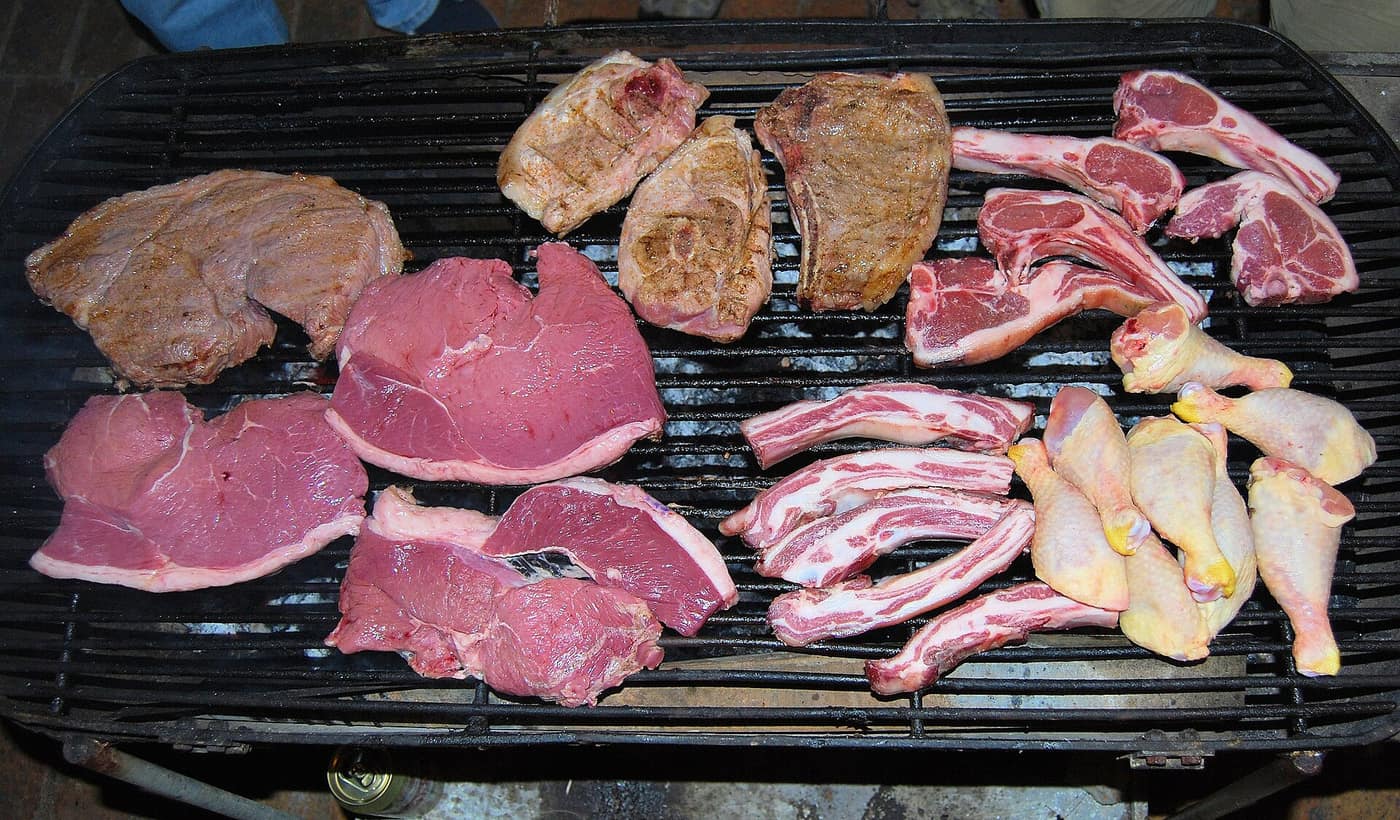
- Rump. The South African braai steak. Plenty of beefy flavour, good value, a little chewier than sirloin. Ask for a thick slice rather than the thin pre-packed ones.
- Sirloin. Tender with a strip of fat along one edge. Easy to braai and forgiving.
- Rib-eye (sometimes sold as Scotch fillet or prime rib on the bone). Well marbled, rich and juicy. The fat makes flare-ups more likely, so keep a cooler zone.
- T-bone. Sirloin on one side of the bone and fillet on the other. The fillet side cooks faster, so keep it towards the cooler edge of the fire.
- Fillet. The most tender cut but the mildest in flavour, and lean, so it dries out quickly past medium.
- Picanha (rump cap). Increasingly common at butchers. Braai it fat side down first to render the fat, then slice thinly across the grain.
Thickness matters more than the cut
Thin steak is the most common reason for a disappointing braai. A 1 cm steak is cooked through before it has any colour on the outside. Aim for 2.5–4 cm. If your butcher only has thin slices, ask them to cut fresh ones from the loin.
Reading the roller mark
South African beef carcasses are stamped with a coloured roller mark that shows the age class of the animal. Under the classification regulations, A (youngest) is marked in purple, AB in green and B in brown, with older animals in class C. Younger beef is generally more tender, so a purple stamp on the fat of a whole piece is a good sign. Pre-cut steaks often lose the mark, so ask the butcher if you can’t see it.
Get the fire right
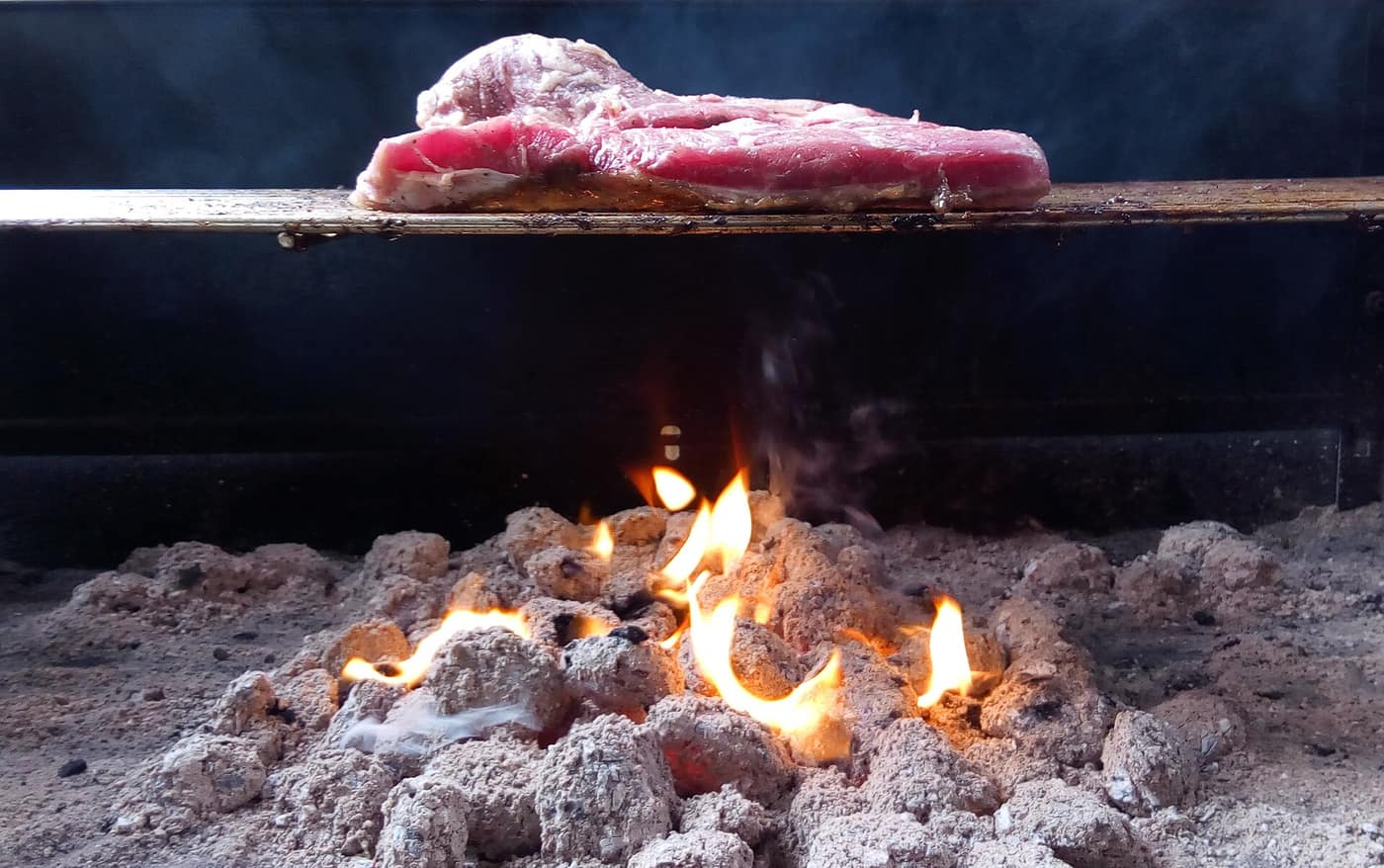
Steak wants the hottest coals of the braai. Plan it so the steak goes on first, while the coals are at their peak, and the wors and chicken follow on the gentler heat.
- Make a good bed of coals. Hardwood such as sekelbos or mopane gives the fierce heat steak needs. See our guide to the best braai wood, or use lump charcoal if you’re short of time (our charcoal and briquettes guide compares them).
- Wait for the flames to die down. The coals should be glowing with a light coat of grey ash. Cooking over flames gives you soot, not a crust. Our guide on how to make a braai fire covers the timing.
- Build two zones. Rake most of the coals to one side for searing, and leave a thinner layer on the other side. The cooler side is where thick steaks finish and where you move anything that flares up.
- Heat the grid. Put the grid on for a few minutes before the meat, then brush it clean. A hot, clean grid is what stops steak sticking.
- Do the hand test. Hold your palm about 10 cm above the grid over the hot side. If you have to pull away after 2–3 seconds, it’s hot enough for steak. If you can stand it for 4–5 seconds, it’s medium heat: fine for chops and wors, too gentle for steak.
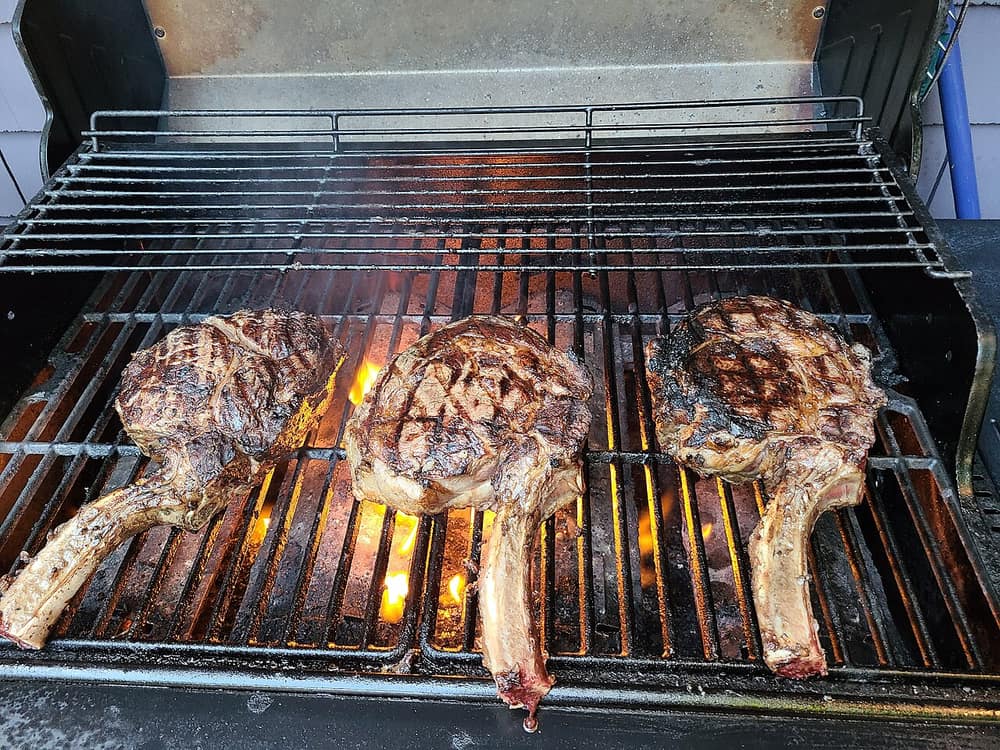
Step by step: how to braai a steak
1. Take it out of the fridge
Let the steak stand for 20–30 minutes before it goes on. It won’t come up to room temperature in that time, but the surface dries a little and it cooks more evenly. Keep it covered and out of the sun.
2. Pat it dry and season
Dry the surface with paper towel. A wet steak steams before it browns. Salt it generously, either just before it goes on or at least 40 minutes ahead so the salt has time to be reabsorbed. Many cooks avoid the window in between (from a few minutes up to about 40 minutes ahead), because the salt draws moisture to the surface and the steak won’t sear as well.
Pepper can burn over fierce coals, so add it at the end if you prefer. A spice rub with sugar in it burns quickly, so save it for gentler heat.
3. Sear on the hot side
Put the steak on the hottest part of the grid and leave it alone. Let it build a crust before you move it. Turn it with tongs, not a fork, after 2–4 minutes depending on thickness.
4. Turn and finish
Turning only once is the classic advice, and it works. Turning every minute or so also works and cooks the steak a little more evenly, so don’t stress about it. What matters is the temperature in the middle. For a fat-edged cut like sirloin or rib-eye, hold the steak on its fatty edge with tongs for a minute to render and crisp the fat.
5. Check the temperature
Push the thermometer probe into the side of the steak, into the thickest part, away from any bone. Take it off when it reads 3–5 °C below your target (see the table above).
6. Rest, then slice across the grain
Rest the steak on a warm plate or board for about 5 minutes. The temperature rises a few degrees and the juices settle, so less ends up on the board. Then slice across the grain (the lines of muscle fibre) into strips. It makes even rump noticeably more tender to eat.
Thick steaks: the reverse sear
For steaks thicker than about 4 cm, tomahawks or a whole rump cut into a “roast”, searing first can burn the outside before the centre is ready. Flip the order:
- Cook the steak on the cool side of the fire, away from direct coals, with a kettle braai lid closed if you have one. Turn it now and then.
- When the centre is about 5–8 °C below your target, move it to the hottest coals.
- Sear each side for 1–2 minutes until crusted.
- Rest briefly and slice.
This works best with a lidded braai such as a kettle or kamado, and a wireless probe makes it much easier because you don’t have to keep opening the lid.
How to tell doneness without a thermometer
A thermometer is the only reliable test, but you can get close without one:
- The press test. Press the centre of the steak with your finger. Rare feels soft and squishy, medium-rare yields with gentle spring, medium is springy and firm, and well done is firm. It takes practice and varies by cut.
- Juices on top. When beads of juice appear on the uncooked top surface, the steak is usually past rare.
- Cut and peek. If you have to, make a small cut in the thickest part of one steak. It loses a little juice, which beats serving a raw or overcooked steak to a guest.
Common mistakes
- Steaks too thin. Buy thicker and share, rather than one thin steak each.
- Cooking over flames. Wait for coals. Flames mean soot and a bitter taste.
- Not enough heat. A lukewarm fire stews the meat grey before it browns.
- Using a braai fork. Every hole lets juice run out. Use tongs.
- Saucing too early. Sugary marinades and basting sauces burn over steak heat. Baste in the last minute or serve sauce on the side.
- Cutting straight away. Five minutes of rest makes a real difference.
- Slicing with the grain. Long fibres make even a good steak chewy.
Kit that helps
You don’t need much to braai a great steak: hot coals, tongs and a thermometer. A probe thermometer pays for itself the first time it saves an expensive cut. Our braai tools guide covers the rest of the kit.

Megamaster
Megamaster Meat Thermometer
A simple probe thermometer for less than the price of a good rump. Push it into the side of the steak and you stop guessing about doneness.
- Stainless steel probe
- Celsius and Fahrenheit
- Reads up to 280 °C
- Cheap enough to keep one in the braai drawer
- Reads in Celsius and Fahrenheit
- Not wireless: you check each steak by hand at the fire

Chad-O-Chef
Chad-O-Chef MeatStick X (Wireless Thermometer and Charger)
A wireless probe that stays in the meat and sends the temperature to your phone. Most useful for thick cuts, tomahawks and reverse-searing, where the steak spends longer on the fire.
- Wireless Bluetooth probe
- Heat resistant to 300 °C
- Dual temperature sensors
- Rechargeable, with charger
- Alerts you when the steak hits your target
- No wire to trap under a lid or grid
- Expensive for weeknight rump
- Needs charging and a phone nearby

Megamaster
Megamaster Locking Tong
Sturdy stainless tongs for turning steaks without stabbing them. A braai fork pokes holes in the meat; tongs don't.
- Stainless steel
- Wood-finish handle
- Locks closed for storage
- Firm grip on a heavy steak
- Cheap and easy to replace
- Basic tongs with no extras, so pair them with gloves over a big fire
Prices change often; check the retailer for the current price and stock. We may earn a commission if you buy through these links, at no extra cost to you. Star ratings are the store's own customer reviews, shown once a product has at least 3. How we choose products.
Planning the rest of the braai
Steak goes on first, at peak heat. Wors, chops and chicken follow as the coals settle, and roosterkoek and braaibroodjies go on last over the dying coals. To work out how much meat to buy, use our braai meat calculator, and for sides, see our braai salads.
FAQ
How long do you braai a steak for medium-rare?
For a 2.5 cm steak over very hot coals, about 3–4 minutes a side, then a 5-minute rest. The reliable test is temperature: take it off at 51–53 °C and it will rest up to about 55–57 °C.
Should you flip a steak only once?
Not necessarily. Turning once gives a good crust and is the traditional way; turning every minute or so cooks the steak slightly more evenly. Either works as long as the coals are hot and you watch the internal temperature.
How hot should the coals be for steak?
Very hot: you should only be able to hold your hand about 10 cm above the grid for 2–3 seconds. The coals should be glowing under a light coat of ash, with no big flames.
Should I salt steak before braaiing?
Yes. Salt just before it goes on, or at least 40 minutes ahead. Salting somewhere between a few minutes and 40 minutes ahead tends to leave the surface wet, which makes it harder to sear.
Why is my braaied steak tough?
The usual causes are overcooking, a cut that was too thin, not resting it, or slicing with the grain. Older beef (a B or C age class) is also naturally less tender than A-class beef.
What is the best steak for the braai?
Rump is the classic South African braai steak for flavour and value. Sirloin and rib-eye are more tender and juicier, and fillet is the most tender but the easiest to overcook.

Johan Botha
Braai & outdoor editor
Writes our braai, fire pit and pizza oven guides. Firmly in the wood-fire camp, but owns up to a gas braai for weeknights.
More from Johan →