We're independent: products are chosen on merit and prices come from the retailers' own sites. We may earn a commission if you buy through our links. Learn more.
In an emergency, get everyone out first and call 112 from a cellphone, or your local fire brigade. This guide is general information; always follow the manufacturer's instructions and local regulations.
Key takeaways
- Draw a floor plan and mark two ways out of every room, including at least one window with burglar bars that open.
- Hang security gate and burglar bar keys where every adult can reach them in the dark, but out of arm's reach from outside.
- Pick one meeting point outside, and once you're out, stay out. Nobody goes back in, not for a pet and not for a phone.
- Close bedroom doors at night. A closed door holds back heat and smoke and buys you time.
- Practise the plan at least twice a year, once at night, and decide in advance who helps young children and older family members.
The smoke alarm goes off at 2am. The passage is filling with smoke, the security gate is locked, and somebody has to remember where the key is. That moment is the reason to make an escape plan now, on an ordinary afternoon, while everyone is calm and the lights are on.
A home fire escape plan is simple: a drawing of your home with two ways out of every room, a place to meet outside, keys you can find in the dark, and a drill you have actually practised. This guide covers each part for a South African home, from burglar bars and gate keys to children, pets and blocks of flats.
Quick answer: your escape plan in six steps
| Step | What to do |
|---|---|
| 1. Draw it | Sketch every room and mark two ways out of each |
| 2. Fix the bars | At least one openable burglar-barred window per bedroom area, and a key near every gate |
| 3. Meeting point | One fixed spot outside, at a safe distance |
| 4. Save the numbers | 112 from a cellphone, 10177 for an ambulance, and your municipal fire number |
| 5. Assign helpers | Decide who wakes and helps children and older or disabled family members |
| 6. Practise | A drill at least twice a year, once at night |
Then tick off the rest of your home with our home fire safety checklist.
Draw a floor plan with two ways out
Draw your home from above: every room, door, window, passage and staircase. Do it with the children, so they remember it.
On the drawing, mark:
- Two ways out of every room. The door is the first. The second is usually a window or a patio door, in case the first is blocked.
- Every smoke alarm.
- Every locked gate, security door and burglar-barred window on each route, and where its key lives.
- The meeting point outside.
Walk each route with the drawing in your hand. If a “way out” is a window with fixed bars, a door blocked by a fridge, or a sliding door nobody can unlock, it isn’t a way out yet.
Burglar bars and security gates
Burglar bars and trellis gates keep intruders out, but in a fire they can lock your family in.
Keys: reachable inside, useless outside
- Every locked gate needs a key nearby, on a hook close to the gate, in the same place every night.
- Keep keys out of arm’s reach from outside. A key hanging right next to a barred window can be hooked by a burglar through broken glass. Hang it a little way along the wall, or inside a cupboard by the door.
- Never leave keys in the lock. Security suppliers warn that a burglar who breaks the glass can use them.
- Every adult and teenager should be able to find every key in the dark.
- Ask a locksmith to key the gates alike if possible. One key beats a bunch in the dark.
Burglar bars that open
Fixed bars on every window are the real risk. South African security suppliers sell openable and retractable burglar bars and window gates that slide or swing open with a key, so a window can become an emergency exit. You don’t have to replace every set: choose one or two windows, ideally one in or near each bedroom area, and make those your escape windows.
In the United States, fire services recommend keyless “quick-release” bars that open from inside with a lever. If you want something similar, ask your security supplier what they offer, and make sure any release works from inside only and can be opened by a child or an older person without great effort.
Choose a meeting point
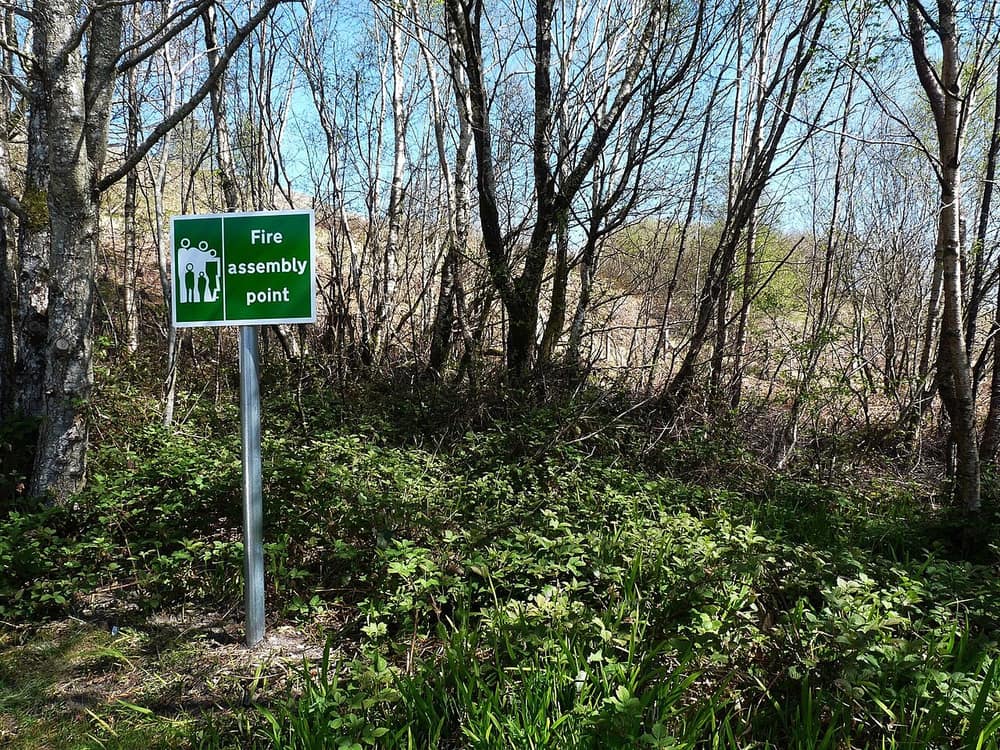
Pick one spot outside where everyone goes and stays: the front gate, a lamp post, a tree across the road, or a neighbour’s driveway. It should be safely away from heat and smoke, and somewhere firefighters can see you. It also tells you within seconds whether anyone is missing, which is the first thing firefighters need to know.
Calling for help
Get out first, then call. Don’t stay inside to phone.
- 112 works from any cellphone in South Africa, and connects you to an emergency call centre.
- 10177 is the national ambulance number, and in some areas it also handles fire calls.
- Your municipal fire brigade number. Fire services are run by municipalities, so the direct number differs from town to town. The City of Cape Town, for example, lists 021 480 7700. Look up your own municipality’s number today and save it in every phone in the house.
Give your full address and say whether anyone is still inside. In an estate or complex, give the block number and send someone to the gate to guide the fire engine in.
Close the door before you sleep
A closed door is one of the simplest pieces of fire protection you own. Research by the UL Fire Safety Research Institute (FSRI), behind its “Close Before You Doze” campaign, found that in their tests a room with an open door could reach more than 1,000°F (about 540°C), while a room behind a closed door stayed as low as about 100°F (about 38°C).
If you close bedroom doors at night, fit a smoke alarm inside the bedroom as well as in the passage, so the warning still gets through. Our smoke and CO detector guide covers where to put them and which type to buy.
Children
Children need the plan explained in their own words, and practised, not just described.
- Get low and go. Smoke and heat rise, so teach them to crawl under smoke towards the exit.
- Never hide. Frightened children often hide under beds or in cupboards, where nobody can find them. Teach them that the alarm means “get out”, not “hide”.
- Feel the door. Before opening a closed door, touch it with the back of the hand. If it’s hot, or smoke is coming round the edges, use the other way out. If it’s cool, open it slowly.
- Go to the meeting point and stay there. Never go back in. Tell a firefighter instead.
- Know the sound. Press the alarm’s test button so they recognise it.
Older family members and people with limited mobility
A good plan matches the person, not the other way round.
- Bedroom near an exit. If someone has trouble moving or with stairs, a ground-floor bedroom close to an outside door makes the biggest difference.
- Name a helper. Decide who helps whom, and have a backup if that person is away.
- Keep essentials by the bed: glasses, a walking aid, a phone and a torch.
- Hearing loss: standard alarms may not wake someone who is hard of hearing. Ask a safety supplier whether they stock alarms with strobe lights or vibrating pads.
- Living alone: share the plan with a neighbour or building manager.
Pets
Include pets in the plan, but never put a person at risk for an animal. If a pet is still inside, tell the firefighters where it was last seen. Keep leads near the main exit.
Double-storey homes, flats and complexes
Double-storey homes. Everyone upstairs needs a second way out if the stairs are full of smoke: a window onto a roof or balcony, or a veranda door with an openable security gate. US fire agencies suggest an escape ladder for upper-floor rooms; if you find one locally, keep it in the room it serves. Don’t plan to jump from an upper floor.
Flats and complexes.
- Use the stairs, never the lift. The City of Cape Town’s fire advice is blunt: never use lifts to escape a fire. Lifts can stop when the power fails and can fill with smoke.
- Know the building’s fire exits and stairwells, and walk them once so you know where they come out.
- Find out the building’s plan. Ask the body corporate or managing agent about the fire alarm, the assembly point and whether escape doors are kept unlocked from inside.
- If the stairwell is full of smoke, go back into your flat, close the door and follow the “trapped” steps below.
If you’re trapped
If both ways out are blocked:
- Close the door between you and the fire.
- Seal the gaps. Push towels, bedding or clothes, wet if possible, along the bottom of the door and over any vents.
- Call for help. Dial 112 or your fire brigade and say exactly which room you’re in.
- Signal from the window. Wave a light-coloured sheet or shine a torch so firefighters can see where you are.
- Stay by the window, low down if smoke gets in, and don’t jump from an upper floor.
Practise: the fire drill
A plan nobody has practised is a drawing on the fridge. US fire agencies recommend a drill at least twice a year, with at least one at night, and Ready.gov suggests aiming to get everyone out in under two minutes.
- Start from different rooms and block one exit each time, so people use the second way out.
- Press the smoke alarm’s test button to start the drill, so the sound means “go”.
- Practise in the dark, finding the keys and opening the gates.
- Time it, and talk afterwards about what slowed you down.
- Include anyone who sleeps over or looks after the children.
Your printable escape plan checklist
| Check | Done? |
|---|---|
| Floor plan drawn, with two ways out of every room | ☐ |
| At least one openable burglar-barred window per bedroom area | ☐ |
| Gate and burglar bar keys on hooks, reachable inside, out of reach from outside | ☐ |
| Every adult can find every key in the dark | ☐ |
| Meeting point chosen and known by everyone | ☐ |
| 112, 10177 and the municipal fire number saved in every phone | ☐ |
| Smoke alarms working on every level, outside sleeping areas and in bedrooms | ☐ |
| Bedroom doors closed at night | ☐ |
| Helper named for each child, older or disabled person | ☐ |
| Drill done this year: once in daylight, once at night | ☐ |
Kit for your escape route
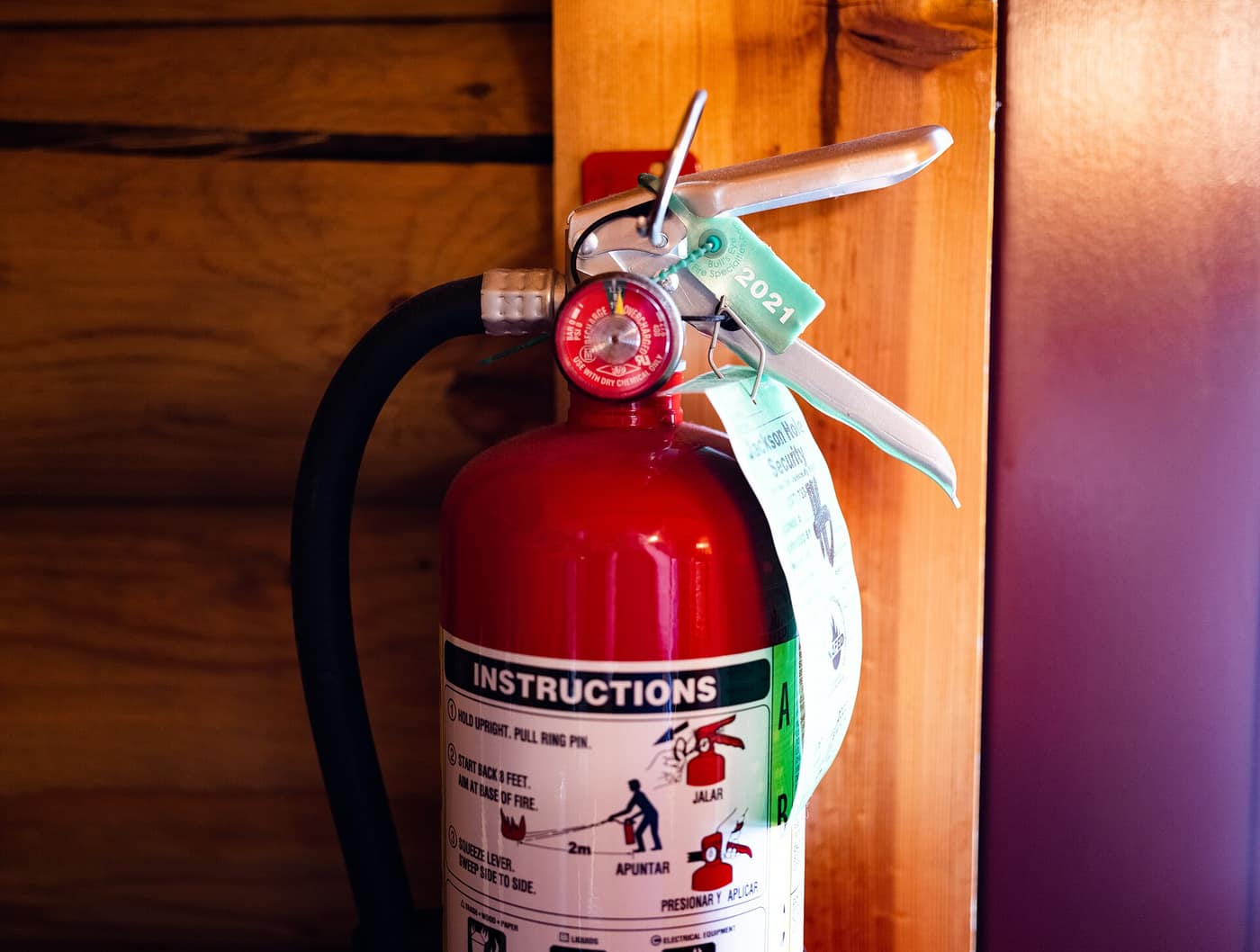
An escape plan is about getting out. A fire blanket at the kitchen door and an extinguisher by the main exit can stop a small fire, as long as they sit on your way out. If a fire is spreading or the room is filling with smoke, leave. Our fire extinguisher guide and fire blanket guide explain how to use them, and kitchen fire safety covers the room where so many house fires start.

Arbor Safety Co
2.5kg DCP Fire Extinguisher (Firemate)
An ABC powder extinguisher to mount beside the main exit, so you grab it on your way out rather than heading deeper into the house to find it. For small fires only.
- 2.5 kg ABC dry chemical powder
- Class A, B and C
- Supplier says it conforms to SANS 1910:2009 fire ratings
- Covers most household fires
- Light enough for most adults to handle
- Only for small, early fires
- Leaves fine powder everywhere

Arbor Safety Co
Glass Fibre Fire Blanket
Smothers a pan fire before it becomes a house fire, and at 2 m × 2 m it can wrap a person whose clothes have caught. Hang it at the kitchen exit.
- 100% glass fibre
- 2 m × 2 m
- Complies with EN 1869:1997
- Single use
- Anyone in the house can use it
- Comes in a red bag for a wall hook
- Replace it after one use
- Bag rather than a quick-release hard case
Prices change often; check the retailer for the current price and stock. We may earn a commission if you buy through these links, at no extra cost to you. Star ratings are the store's own customer reviews, shown once a product has at least 3. How we choose products.
FAQ
What should a home fire escape plan include?
A floor plan with two ways out of every room, smoke alarm locations, where every gate key is kept, a meeting point, emergency numbers, and who helps each child or older family member.
How often should you practise a fire escape plan?
At least twice a year, with one drill at night, starting from different rooms.
Where should a fire escape meeting point be?
At one fixed spot outside, safely away from the house, where you can count heads and firefighters can see you.
What number do I call for a fire in South Africa?
Dial 112 from a cellphone. 10177 is the ambulance number and handles fire calls in some areas, and your municipality has its own fire brigade number, which you should save in every phone.
What should you do if you’re trapped in a room during a fire?
Close the door, seal the gaps with towels or bedding, call 112 or the fire brigade and say which room you’re in, and signal from the window with a sheet or torch. Stay low and don’t jump from an upper floor.
Should you close doors during a house fire?
Yes. Close doors behind you as you get out, and keep bedroom doors closed at night. A closed door slows heat and smoke and buys time.

Nadia Pillay
Home fire safety writer
Writes our home fire safety guides, built on SANS standards, SAQCC rules and fire service advice.
More from Nadia →