We're independent: products are chosen on merit and prices come from the retailers' own sites. We may earn a commission if you buy through our links. Learn more.
Key takeaways
- Decide fuel (wood, charcoal or gas) and how many people you cook for first: they set the firebox, chimney and budget.
- Smoke is the most common built-in braai problem. A wide enough canopy, a correctly sized and tall enough flue, and enough fresh air prevent it.
- A fixed gas installation must be done by a registered gas installer, who issues a Certificate of Conformity (CoC).
- Check with your municipality before building a braai room or chimney; plans may need approval.
- Give every builder the same written brief, and ask their previous clients whether their braais smoke.
A built-in braai turns a patio into the heart of the house, and a well-planned braai room lets you braai through a Highveld winter or a Cape storm. It’s also a permanent build, so the mistakes are permanent too. The most common one, a braai that fills the room with smoke, is almost always a planning problem rather than bad luck.
This guide covers what to decide before you call a builder: fuel and size, where to put it, how canopies and chimneys work, materials, approvals and gas compliance. It ends with a ready-to-use brief so every builder quotes on the same job.
Planning at a glance
| Decision | Options | What it affects |
|---|---|---|
| Fuel | Wood, charcoal, gas, or a combination | Chimney, firebox lining, gas installation and CoC |
| Size | Width of the firebox and grid | Canopy width, flue size, cost |
| Build type | Fully brick-built, or a steel unit set into brickwork | Cost, build time, finish |
| Setting | Open patio, covered patio or enclosed braai room | Smoke control, fresh air, approvals |
| Extras | Pizza oven, side burner, sink, counter, wood storage | Space, plumbing, electrics, budget |
1. Decide how you’ll use it
- Wood, charcoal or gas? A wood or charcoal braai needs a proper chimney and a fire-resistant firebox. A built-in gas braai needs a gas supply installed by a registered gas installer. Our gas braai buying guide covers burners and cooking surfaces.
- How many people? This sets the width of the firebox and the grid. Cooking for big groups regularly calls for a wider braai or a second cooking zone.
- What else? Many people add a pizza oven, a side burner, a sink, a prep counter or storage for wood. If a pizza oven is on the list, read the pizza oven guide before the plans are drawn, because it needs its own flue and space.
2. Choose a build type
Fully brick-built braais are designed and built on site, with a firebrick-lined firebox, a canopy and a chimney. You get any size and finish you like, but the result depends entirely on the builder.
Steel built-in units (from brands such as Jetmaster and Homefires) are factory-made fireboxes with a grid and fire grate that the builder sets into brickwork and connects to a flue. They take some of the guesswork out of the firebox, and the brickwork becomes the surround.
Stainless steel grades matter at the coast. Built-in units are sold in mild steel, 430-grade stainless, and 304 “coastal grade” stainless. 304 resists salt-air corrosion better than 430, which is why it costs more and why it’s worth it near the sea.
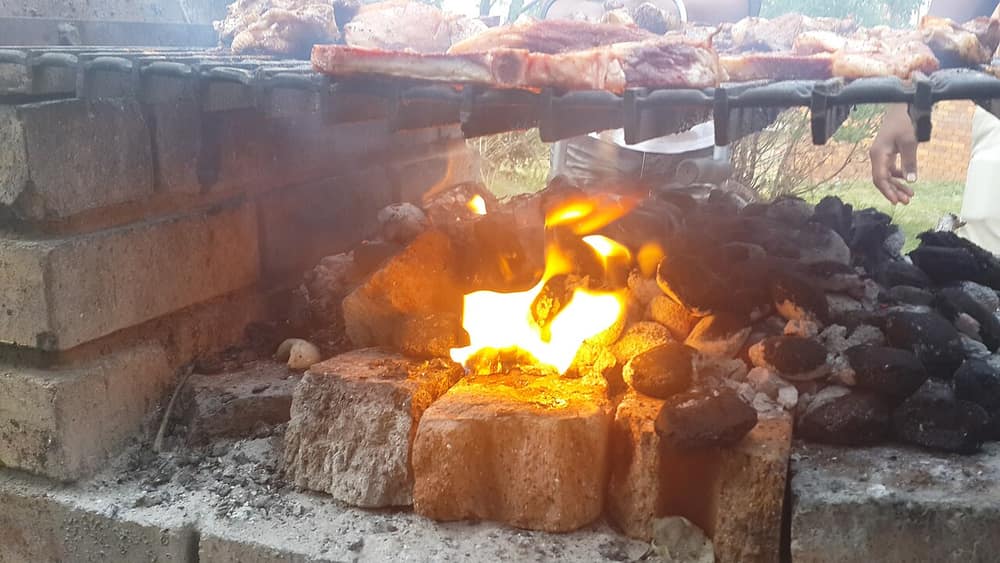
3. Placement
- Put it where smoke won’t blow into the house or the neighbours’ windows. Think about the prevailing wind where you live.
- Keep it close enough to the kitchen to carry food easily, but with enough space for people to stand around the fire.
- Plan for lighting, power points and somewhere to put things down.
- Leave space for wood storage that stays dry but isn’t right against the firebox.
- If you’re planning a fire circle for after the braai as well, see our guide on how to build a boma so the two work together.
4. Chimneys and smoke extraction
Smoke is the most common problem with built-in braais. A good builder will get these right:
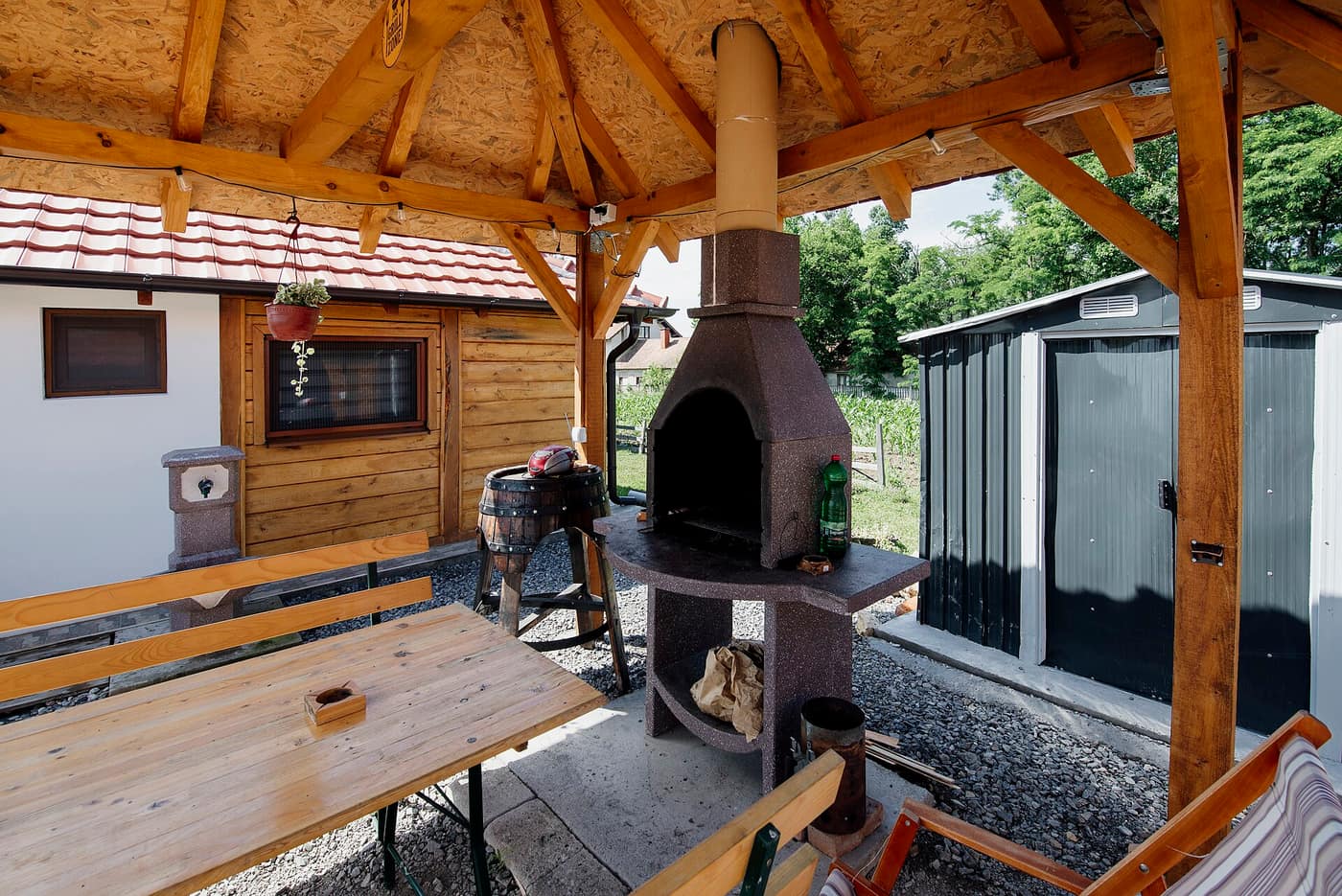
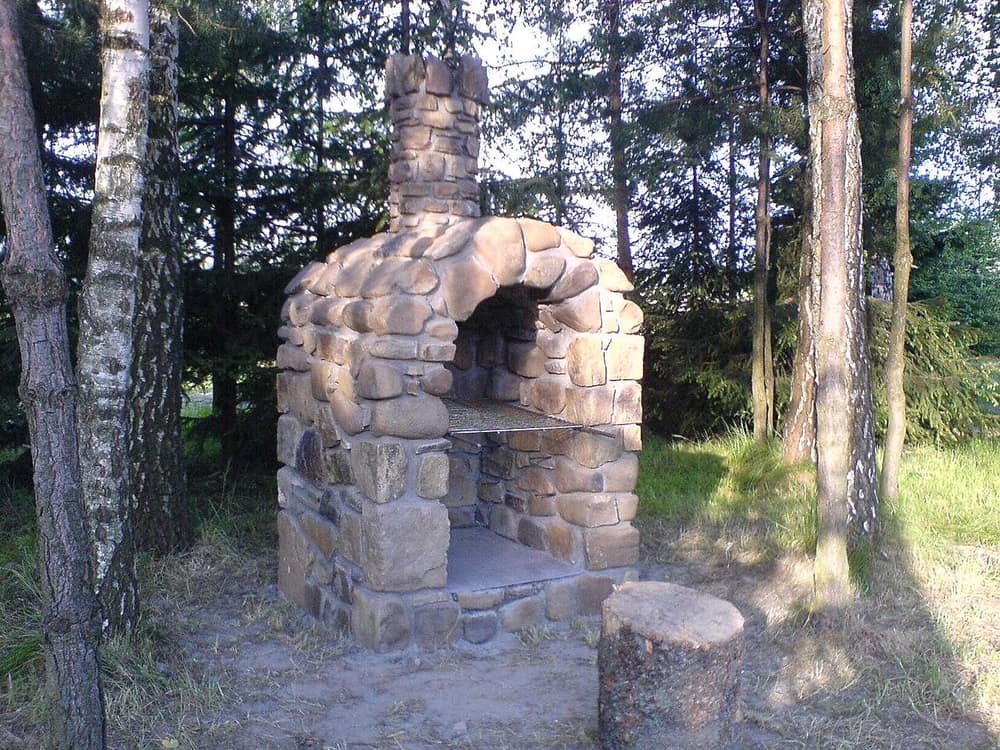
- The canopy (hood) should be large enough to capture smoke across the full width of the firebox.
- The chimney flue must be the right size and height for the firebox. A flue that’s too small or too short will smoke back into the room.
- Enclosed braai rooms need enough fresh air coming in for the chimney to draw properly.
- A wind cowl on top of the chimney helps stop downdrafts in windy areas.
Why is my built-in braai smoking?
| Symptom | Likely cause | What helps |
|---|---|---|
| Smoke spills out at the sides of the canopy | Canopy too narrow for the firebox | A wider canopy, or keeping the fire to the centre |
| Smoke rolls back into the room | Flue too small or too short | A larger or taller flue (ask the builder) |
| Smokes only when doors and windows are shut | Not enough fresh air | Air vents or an open window |
| Smokes on windy days | Downdraft | A wind cowl on the chimney |
| Still smokes after all of that | Flue can’t draw enough on its own | An extractor fan in the flue |
5. Materials and fire safety
- The firebox should be lined with fire bricks or another heat-resistant material.
- Keep combustible materials (timber, thatch, paint, curtains) a safe distance from the fire and the chimney. Timber roofs, pergolas and thatched lapas need particular care where the flue passes through.
- Keep a fire blanket or a suitable fire extinguisher within easy reach.
6. Approvals and compliance
Building a braai room or adding a chimney may require building plans approved by your municipality. Check before you build, especially for enclosed rooms, structural changes, chimneys or anything in an estate with architectural guidelines.
A fixed gas installation must be done by a registered gas installer, who issues a Certificate of Conformity (CoC). You’ll need it for insurance and when you sell the house. Our gas compliance certificate guide explains what the certificate covers.
7. Briefing a builder
Get at least three quotes, and give every builder the same brief:
- Fuel type (wood, charcoal or gas)
- Firebox width and grid size, or the built-in unit you’ve chosen
- Canopy and chimney design, including the chimney height and a cowl
- Fresh-air supply, if it’s an enclosed braai room
- Finishes (face brick, plaster, tiles, stainless)
- Extras (pizza oven, counter, sink, storage, lighting and power points)
- Who handles plan approval and any gas installation
Ask to see photos of their previous braais, and ask previous clients whether those braais smoke.
Ready to price it up? Get up to three quotes from braai builders and gas installers.
Built-in braai units worth considering
These are steel units your builder can set into brickwork, from an entry-level firebox to a coastal-grade stainless model. Prices are for the unit only; the brickwork, canopy, flue and installation are extra.

HomeFires
Homefires 700 Basic EconoMaster Built-in Braai
An entry-level steel built-in braai unit for wood or charcoal. A sensible starting point if the brickwork and chimney are where most of your budget goes.
- 700 size
- Wood and charcoal
- Indoor or outdoor installation
- Lowest-priced built-in unit here
- Can go indoors or outdoors
- Smaller firebox for big crowds
- Mild steel needs looking after at the coast

Jetmaster
Jetmaster 1000 Table Top / Charcoal Insert with Charcoal Starter
Works as a table-top braai or drops into a built brick braai as an insert. Handy if you already have brickwork and want a proper charcoal cooking unit in it.
- 1000 size
- Charcoal
- Table top or insert
- Charcoal starter included
- Flexible: freestanding on a counter or built in
- Comes with a charcoal starter
- Charcoal rather than a full wood fire

Entertainer
Jetmaster 1000 Entertainer Hybrid MS/SS Built-in Braai
A mid-range built-in braai that mixes mild steel and stainless steel. Room for a family-sized wood fire without paying full stainless prices.
- 1000 size
- Mild steel / stainless steel
- Wood and charcoal
- Good size for regular family braais
- Stainless where it shows
- Flue pipes and cowls sold separately

Entertainer
Jetmaster 1000 Entertainer Stainless Steel 304 Coastal grade Built-in Braai
The same size in 304 coastal-grade stainless steel. If you live near the sea, this is the kind of unit that keeps looking good.
- 1000 size
- 304 coastal-grade stainless steel
- Wood and charcoal
- Coastal-grade stainless resists salt air
- Easy to keep clean
- Roughly R12,000 more than the hybrid version
- Adapters, flue pipes and cowls sold separately
Prices change often; check the retailer for the current price and stock. We may earn a commission if you buy through these links, at no extra cost to you. Star ratings are the store's own customer reviews, shown once a product has at least 3. How we choose products.
FAQ
Do I need plans for a built-in braai?
Possibly. Building a braai room or adding a chimney may need municipal plan approval, and estates often have their own architectural rules. Check with your municipality and estate before building.
Why does my built-in braai smoke?
Usually the canopy is too narrow, the flue is too small or too short, or an enclosed room isn’t getting enough fresh air. A wind cowl helps with downdrafts, and an extractor fan in the flue is a common fix when nothing else works.
Can I install a built-in gas braai myself?
No. A fixed gas installation must be done by a registered gas installer, who issues a Certificate of Conformity (CoC). You’ll need it for insurance and when you sell the house.
Should I choose wood or gas for a built-in braai?
Wood gives you the fire and the flavour but needs a proper chimney; gas is faster and cleaner but needs a registered installer. Some built-in setups combine a wood braai with a gas section.
What stainless steel is best for a braai at the coast?
304 grade, often sold as “coastal grade”, resists salt-air corrosion better than 430 grade stainless or mild steel.

Johan Botha
Braai & outdoor editor
Writes our braai, fire pit and pizza oven guides. Firmly in the wood-fire camp, but owns up to a gas braai for weeknights.
More from Johan →