We're independent: products are chosen on merit and prices come from the retailers' own sites. We may earn a commission if you buy through our links. Learn more.
Key takeaways
- Plan roughly 4–6 hours for a whole bone-in lamb, plus at least an hour of buffer.
- A whole lamb feeds roughly two people per kilogram when served with sides, so a 20 kg lamb feeds around 40.
- Over about 20 kg, two smaller carcasses are often easier than one giant one.
- Trust a meat thermometer, not the clock: check the leg and shoulder, away from the bone.
- A caterer costs more but carries the risk; DIY is cheaper but means six-plus hours at the fire.
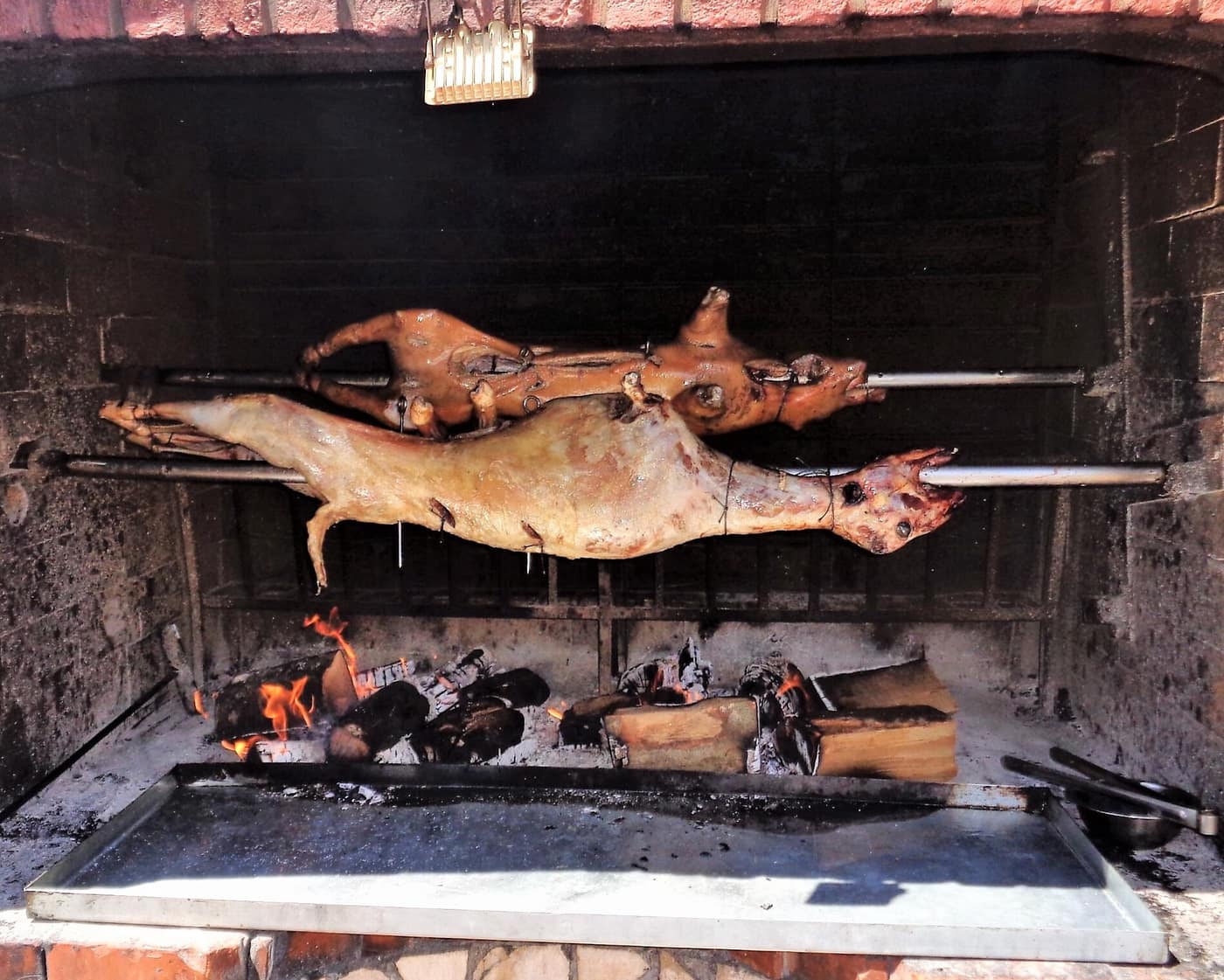
A spit braai turns a party into an event. A whole lamb or pig turning slowly over coals for an afternoon draws a crowd, feeds a lot of people with one main dish and frees you from flipping 60 chops. It also asks for planning, a big supply of coals and a good few hours of attention.
Plan on roughly 4 to 6 hours for a whole lamb, depending on its size and whether it’s deboned, and always confirm doneness with a meat thermometer rather than the clock. This guide covers sizing for your guest list, timing per kilogram, managing the fire, food safety and whether to do it yourself or hire a spit braai caterer.
Quick answer: spit braai at a glance
| Question | Short answer |
|---|---|
| How long for a whole lamb? | About 4–6 hours, plus an hour of buffer |
| How many does a lamb feed? | Roughly 2 people per kg with sides |
| Biggest sensible lamb | About 20 kg; above that, consider two |
| Done when? | A thermometer confirms it, not the clock (see the table below) |
| Fuel? | Lots. Keep a separate fire going for fresh coals |
| DIY or caterer? | DIY for experienced braaiers and family events; caterer for weddings and 50+ guests |
How a spit braai works
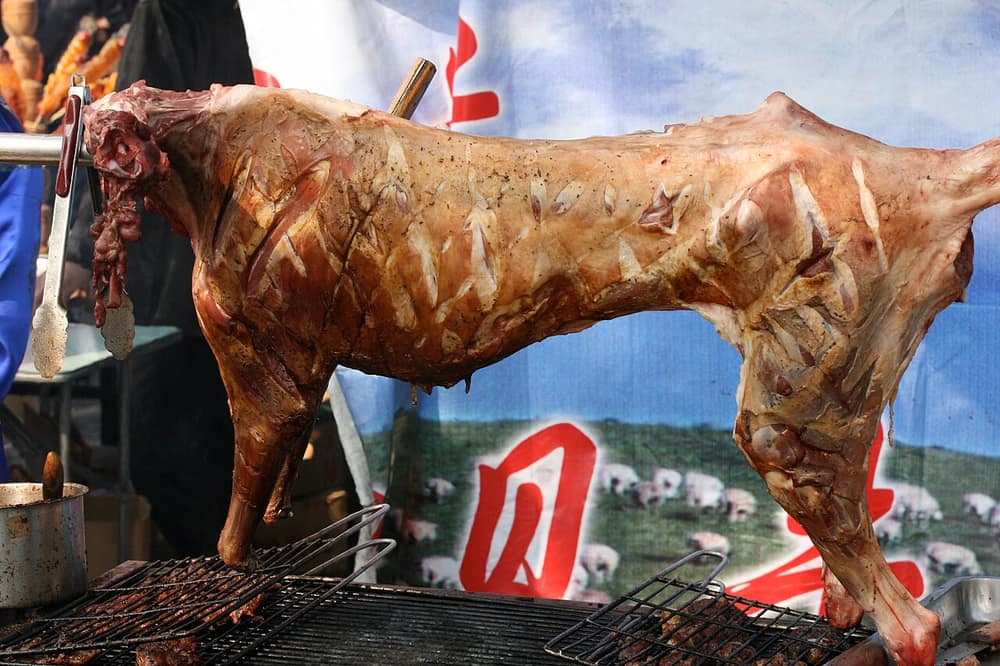
The meat is skewered on a long steel spit and secured with forks and wire so it can’t slip as it turns. A motor (or a patient helper) rotates the spit slowly above a bed of coals, so the meat cooks evenly and bastes itself in its own fat. Most spit braai machines have a firebox or tray underneath for coals, with adjustable height so you can raise or lower the meat.
Common options:
- Whole lamb (the classic South African choice)
- Whole suckling pig or a half pig
- Deboned and rolled lamb, which cooks faster and carves more easily
- Large joints such as a leg of lamb, pork shoulder or a rolled beef rib, on a smaller rotisserie
How big a lamb do you need?
A whole lamb on the spit is often quoted as feeding roughly two people per kilogram when served with sides. Treat that as a starting point and scale up if the meat is the whole meal.
| Guests (with sides) | Suggested option | Approx. carcass weight |
|---|---|---|
| 15–20 | Large joint or small lamb | 8–10 kg |
| 25–30 | Small to medium lamb | 12–15 kg |
| 35–40 | Medium to large lamb | 17–20 kg |
| 50+ | Two lambs, or lamb plus a pig | 2 × 15–20 kg |
South African spit braai advice often puts it another way: budget about 500 g of carcass weight per person, which leaves roughly 250 g of edible meat each once bone and fat are gone. When you order, ask for A2 or A3 lamb. In South African carcass classification, A means a young animal with no permanent incisors, and the number is the fat code: 2 is lean and 3 is medium. AB, B and C carcasses come from progressively older sheep.
Very large lambs aren’t always better. Over about 20 kg the animal tends to be fattier and takes much longer to cook through, so two smaller carcasses may be easier than one giant one. For smaller groups, our braai meat per person guide and braai meat calculator are a better fit.
Spit braai timing per kg
There is no single agreed rule. Published guides vary a lot, because coal heat, wind, the distance from the coals, bone-in versus deboned, and the outside temperature all change the time. The ranges below are approximate starting points from commonly cited spit-roast guidance:
| Meat | Approx. weight | Approx. time over steady coals |
|---|---|---|
| Whole lamb, bone-in | 10 kg | about 4 hours |
| Whole lamb, bone-in | 15 kg | about 4–5 hours |
| Whole lamb, bone-in | 20 kg | about 5–6 hours |
| Deboned, rolled lamb | 15–18 kg | about 3–4 hours |
| Leg of lamb or pork shoulder | 2–3 kg | about 1.5–2.5 hours |
| Whole pig | 20–30 kg | 5 hours or more |
As a rough rule, that works out to around 15–25 minutes per kilogram for a whole bone-in lamb, so build in at least an hour of buffer. It is far easier to keep cooked meat warm than to keep 40 hungry guests waiting.
A sample timeline for a 15 kg lamb, eating at 18:00
| Time | What happens |
|---|---|
| 10:30 | Light the side fire; set up the machine on level ground |
| 11:00 | Season and mount the lamb; check the balance |
| 11:30 | First coals under the shoulders and legs; lamb goes on, fairly high |
| 11:30–16:00 | Add coals every 30–45 minutes, baste every 30 minutes, lower gradually |
| 16:00–16:30 | First thermometer checks in leg and shoulder |
| 16:30–17:00 | Crisp the skin: lower the meat or add coals |
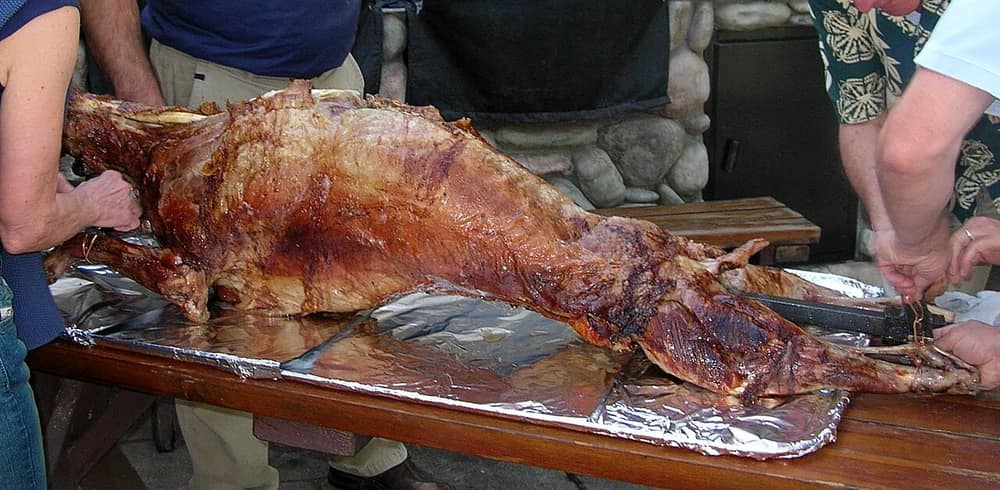
| 17:00–18:00 | Buffer, then rest 15–20 minutes and carve |
This uses the 4–5 hour estimate plus an hour of buffer. Shift everything earlier for a bigger lamb, a windy day or a cold evening.
How to spit braai a lamb, step by step
- Prepare the lamb. Pat it dry, trim loose fat, and season inside the cavity with salt, pepper, garlic and herbs (rosemary works well).
- Mount it on the spit. Push the spit through the centre along the spine. Fix the forks at both ends and tie the spine, legs and shoulders tightly to the spit with stainless steel wire, so the carcass turns with the spit rather than flopping.
- Check the balance. Turn the spit by hand. If one side drops, reposition before it goes over the fire. A balanced spit puts less strain on the motor and cooks evenly.
- Light plenty of coals. Start a separate fire or a bank of charcoal next to the machine. You will need a steady supply for hours. Some spit-roast guides suggest about a kilogram of charcoal per kilogram of meat, added in stages; our charcoal and briquettes guide helps you estimate fuel.
- Start high and gentle. Spread coals under the thicker parts (shoulders and legs) rather than the thin middle, and keep the meat fairly high at first. You want gentle heat, not flames.
- Maintain the fire. Add fresh coals from the side fire every 30–45 minutes. Lower the spit gradually as cooking progresses.
- Baste. Every 30 minutes or so, baste with a mix of oil, lemon juice, garlic and herbs, or a simple salt-water baste.
- Crisp the skin. In the final half hour, lower the meat or add coals for colour and crackling.
- Check and rest. Confirm temperatures in several places, then rest the meat for 15–20 minutes before carving.
A simple lemon, garlic and herb baste
For one whole lamb: 250 ml olive or sunflower oil, the juice of 4 lemons, 6 cloves of crushed garlic, 3 tbsp chopped fresh rosemary, 2 tsp salt and 1 tsp black pepper. Whisk together and brush on every 30 minutes with a basting brush or a bunch of rosemary sprigs tied together.
Doneness and food safety
Timing gets you close; a meat thermometer tells you when it’s safe. Check the thickest parts, such as the leg and shoulder, without touching the bone.
| Meat | Minimum internal temperature | Notes |
|---|---|---|
| Lamb, beef (whole cuts) | 63°C, then rest | Many people prefer lamb on the spit well done, 70°C+ |
| Pork | 63°C, then rest | Pulled-style pork goes higher, about 90°C |
| Rolled or stuffed meat | 71°C | Rolling can carry surface bacteria into the centre |
| Poultry | 74°C | Including any stuffing |
Also:
- Keep the carcass cold (in a cold room or with ice) until it goes on the spit.
- Wash hands and boards after handling raw meat.
- Carve and serve promptly, and refrigerate leftovers within two hours.
What a spit braai costs
Prices shift by region and season, and butchers, hire companies and caterers get busy over the festive season, so book early for December (our braai calendar lists the big dates). There is no reliable national price list, so use these as planning bands and get real quotes.
| Item | How to budget | What to ask |
|---|---|---|
| Lamb | Carcass weight × the butcher’s price per kg | Is the price per kg of dressed (carcass) weight? A2 or A3? |
| Machine hire | Usually a daily rate; gas machines tend to cost more than charcoal ones | Deposit, delivery, and is there a fee to mount the meat? |
| Charcoal | Some guides suggest roughly 1 kg per kg of meat, so about 15 kg for a 15 kg lamb | Buy extra; leftover charcoal keeps |
| Sides and bread | Your shopping list | Salads, rolls, pap and sous scale cheaply for a crowd |
| Caterer (all-in) | A price per head that covers meat, sides and staff | Are staff, tables, crockery and travel included? |
How the two compare: for DIY, the lamb is usually the biggest cost, followed by the machine hire and charcoal. A caterer charges per head, so multiply their quote by your guest count and add any extras such as tables, chairs and crockery, which can push a quote up noticeably. For a group of 30, expect the caterer’s total to come in well above the DIY bill. The gap is what you pay for not spending six hours at the fire.
DIY vs hiring a spit braai caterer
| DIY (hire or own the machine) | Spit braai caterer | |
|---|---|---|
| Cost | Lower: meat, fuel and machine hire | Higher: you pay for staff, sides and expertise |
| Effort | High: 6+ hours of fire-tending | Low: they arrive, cook and carve |
| Risk | Timing and doneness are on you | The caterer carries the risk |
| Extras | You make the sides | Usually include salads, rolls, pap and sometimes crockery |
| Best for | Experienced braaiers, family events | Weddings, corporate events, 50+ guests |
When hiring a caterer, ask:
- What’s included per head (sides, bread, cutlery, staff)?
- How long do they need on site, and what do they need from you (space, water, power)?
- Do they bring their own machine?
- What happens with leftovers?
Get at least two quotes and ask for references from recent events.
When hiring only the machine, check that it has a motor, the spit length fits your carcass, forks and wire are included, and the hire company explains setup.
The kit that saves a spit braai
The machine usually comes with the hire. What you should own is a reliable thermometer: it’s the only way to know the leg and shoulder are done before you carve for 40 people.

Megamaster
Megamaster Meat Thermometer
The cheapest insurance you can buy for a spit braai. Push the probe into the thickest part of the leg and shoulder before you call it done.
- Stainless steel probe
- Reads °C and °F
- Up to 280 °C
- Costs less than a kilo of lamb
- No batteries or app to fuss with
- Dial readings are less precise than a digital probe
- You have to check each spot by hand

Chad-O-Chef
Chad-O-Chef MeatStick X (Wireless Thermometer and Charger)
A wireless probe that stays in the meat and sends the temperature to your phone. On a five-hour spit, that means you can mingle instead of hovering.
- Wireless Bluetooth probe
- Dual temperature sensors
- Heat resistant to 300 °C
- Rechargeable, with charger
- Monitors the meat while it turns
- Alerts you when it's ready
- Pricey for occasional use
- One probe reads one spot; still check the other side by hand
Prices change often; check the retailer for the current price and stock. We may earn a commission if you buy through these links, at no extra cost to you. Star ratings are the store's own customer reviews, shown once a product has at least 3. How we choose products.
Spit braai safety
- Set up on level, non-flammable ground, away from buildings, thatch and dry grass.
- Keep children and pets clear of the machine and the coal fire.
- Check any motor power cable is outdoor-rated and kept away from heat.
- Keep a fire extinguisher or a hose nearby. See our fire extinguisher guide.
- Never leave the fire unattended, and douse coals completely when you’re finished.
For the sides, our braai salads scale up well, a potbrood or a batch of roosterkoek can bake on the side fire’s spare coals, and braai ideas has more ways to feed a crowd from the coals.
FAQ
How long does it take to spit braai a 15 kg lamb?
Plan for roughly 4–5 hours over steady coals, plus an hour of buffer. A deboned, rolled lamb is quicker. Confirm doneness with a thermometer in the leg and shoulder.
How many people does a lamb on the spit feed?
A rough guide is about two people per kilogram when served with sides, so a 20 kg lamb feeds around 40. Allow more if the meat is the only dish.
How much does a spit braai cost per person?
It depends on your region, the meat and what’s included, so get at least two quotes. A caterer charges per head, with tables, crockery and staff sometimes extra. Doing it yourself mostly costs the lamb (carcass weight × your butcher’s price per kg), a day’s machine hire and charcoal, which normally works out cheaper per person than a caterer.
Do I need a motor for a spit braai?
Not strictly, but turning a spit by hand for five hours is a lot of work. Most hire machines come with an electric motor; some have battery or solar options for venues without power.
How much charcoal do I need for a spit braai?
Some spit-roast guides suggest about a kilogram of charcoal per kilogram of meat, added in stages. Buy more than you think you need, and keep a separate fire going for fresh coals.
What should I serve with a spit braai?
Rolls, potato salad, a green salad, pap and sous, and roast vegetables. Our braai salads guide has recipes that scale for a crowd.

Johan Botha
Braai & outdoor editor
Writes our braai, fire pit and pizza oven guides. Firmly in the wood-fire camp, but owns up to a gas braai for weeknights.
More from Johan →