We're independent: products are chosen on merit and prices come from the retailers' own sites. We may earn a commission if you buy through our links. Learn more.
Key takeaways
- Snoek is braaied butterflied (vlekked), skin side down for most of the time, and basted with melted butter, apricot jam, garlic and lemon.
- Foil lets you use hotter coals and keeps the baste around the fish; a hinged grid straight over gentler coals gives crisper skin.
- A whole vlekked snoek takes roughly 15 minutes. It's done when the flesh is opaque and flakes at the thickest part (63 °C if you use a thermometer).
- Break snoek into pieces to serve instead of cutting it, so the large bones stay whole and easy to find.
- South African line-caught snoek is on the WWF-SASSI green list. Wild-caught kob is red-listed, so pick line-caught yellowtail, MSC-labelled hake or farmed fish instead.
On the West Coast, a snoek braai is as much a tradition as wors and chops are everywhere else. A butterflied snoek goes skin side down over the coals, gets basted with butter and apricot jam until the edges go sticky and dark, and is served in broken pieces with sweet potatoes on the side. It’s one of the easiest things you can put on a braai, as long as you don’t burn the skin or overcook the flesh.
This guide covers both methods, on a hinged grid and in foil, plus the classic apricot baste, coal heat, timing by thickness, the bones, the sides and which other fish are worth braaiing.
Snoek on the braai at a glance
| Cut | Whole snoek, cleaned and butterflied (vlekked), head and tail off |
| Coal heat | Medium (grid) or medium–hot (foil) |
| Skin side down | About 80% of the cooking time |
| Total time | Roughly 15 minutes for a whole vlekked snoek |
| Baste | Butter, apricot jam, garlic, lemon juice |
| Done when | Flesh is opaque and flakes at the thickest part (63 °C) |
| Serve with | Sweet potatoes, roosterkoek, a fresh salad |
Buying snoek
Snoek (Thyrsites atun) is a long, silver, bony fish caught off the Western Cape. It’s usually sold whole and already vlekked: split open and flattened so it lies in one piece, skin on. Ask the seller to clean it and take off the head and tail if that hasn’t been done.
The traditional season is winter into spring, when snoek follow the bait fish along the West Coast and into False Bay. The timing shifts from year to year, and some years are lean. Fresh snoek is sold at harbours such as Kalk Bay and Hout Bay, by hawkers and in many supermarkets when it’s running. Frozen snoek is available year-round and braais well. Thaw it overnight in the fridge on a tray, not on the counter, and braai it within a day of thawing.
How to tell if it’s fresh
Fresh fish smells of the sea, not “fishy”, with shiny skin and firm flesh that springs back when pressed. Keep it cold from the moment you buy it: a cooler box with ice for the drive home, then the fridge at 4 °C or colder until shortly before the braai. Braai fresh snoek within a day or two.
The classic apricot baste
This makes enough for one medium snoek.
Ingredients
- 100 ml butter (or half butter, half olive oil)
- 4 cloves garlic, finely chopped
- 150 ml smooth apricot jam
- Juice of 1 lemon
- Salt and black pepper
- Optional: a splash of soy sauce, a dash of chilli sauce or a splash of dry white wine
Method
- Melt the butter in a small pot on the side of the braai and fry the garlic for a minute until it smells good, without browning it.
- Stir in the apricot jam and lemon juice until smooth.
- Season, then keep it warm at the edge of the fire so it stays runny.
Coals and heat
Snoek is thin and cooks fast, so it wants medium coals, not the fierce heat you’d use for steak. Use the hand test: hold your palm at grid height and count. If you can keep it there for about five to seven seconds, it’s medium heat and right for fish on a grid. Foil protects the fish, so you can go a little hotter: around four seconds is medium-hot, which is fine for foil.
Wait until the flames have died down and the coals have a grey skin. Our guide to making a braai fire covers getting there and keeping the heat steady.
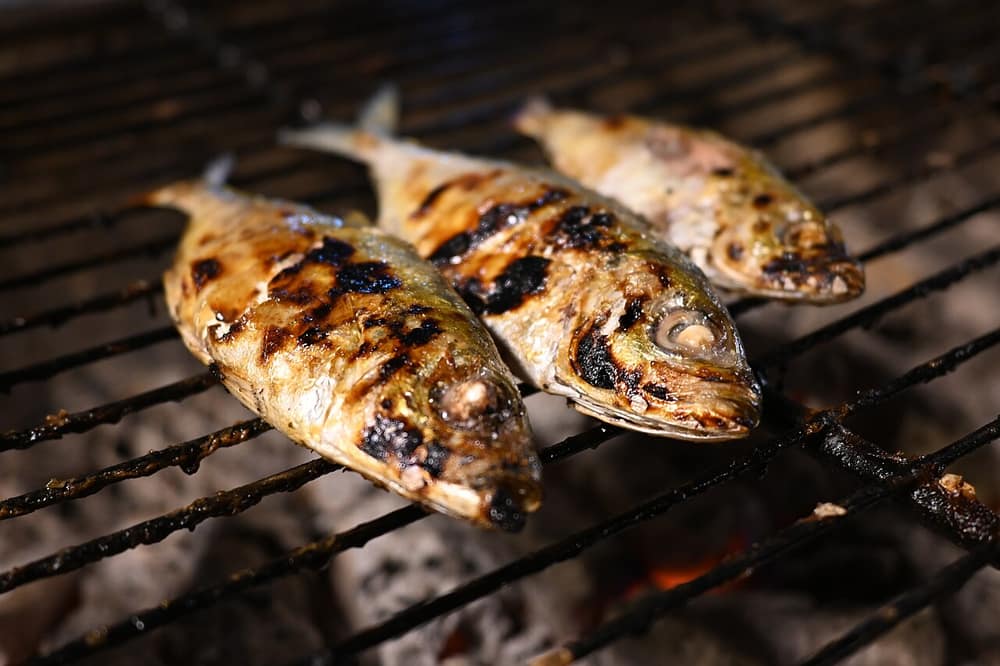
Method 1: snoek on a hinged grid
This is the traditional way, and it gives the best crisp, smoky skin.
- Dry the fish. Rinse it under cold water and pat it dry with paper towel. Some West Coast cooks salt it with coarse salt and leave it somewhere cool and breezy for a while first. If you do, shake off the loose salt and go easy on salt in the baste.
- Oil the skin and the grid. Brush the skin side with oil and wipe the grid with an oiled cloth. Snoek skin sticks to a dry grid.
- Close it in the grid, skin side down. A hinged grid (toeklap) means you can turn the whole fish without it breaking apart.
- Braai skin side down for about 12 minutes. Baste the flesh side a few times. If the skin is darkening too fast, lift the grid higher or move it to a cooler patch.
- Turn it flesh side down for about 3 minutes, just long enough for the baste to caramelise. Watch it: jam burns quickly.
- Turn back and check. Push a fork into the thickest part. If it flakes and is white all the way through, it’s done.
Gently shake the grid now and then while it cooks to stop the skin sticking. Our braai grid guide covers the different hinged grids and how to keep them clean.
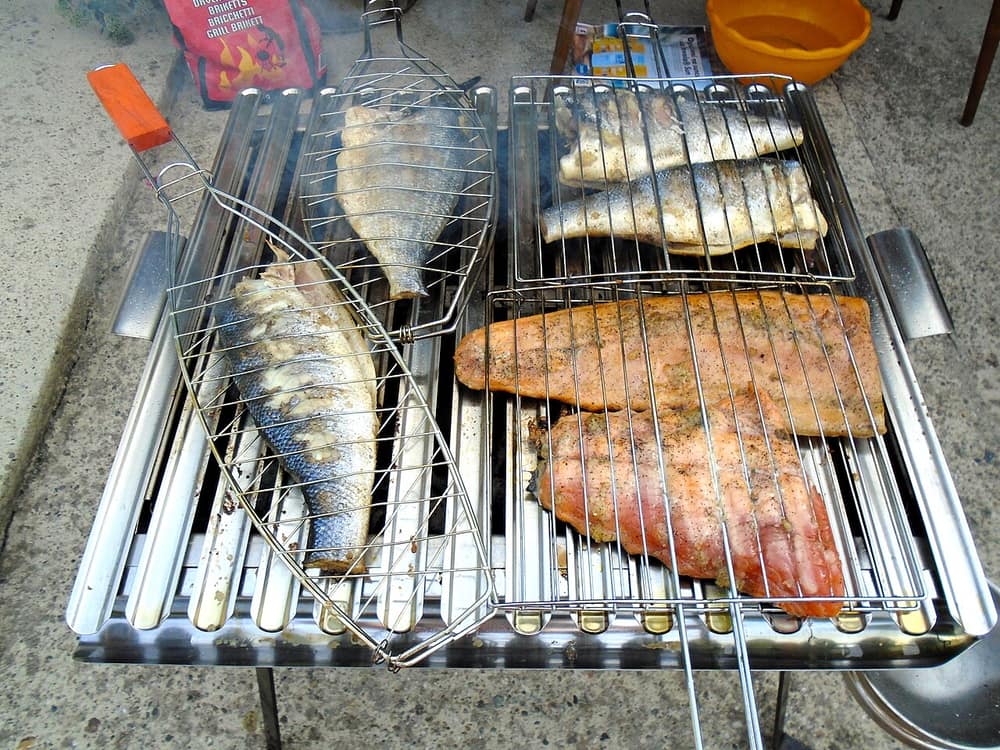
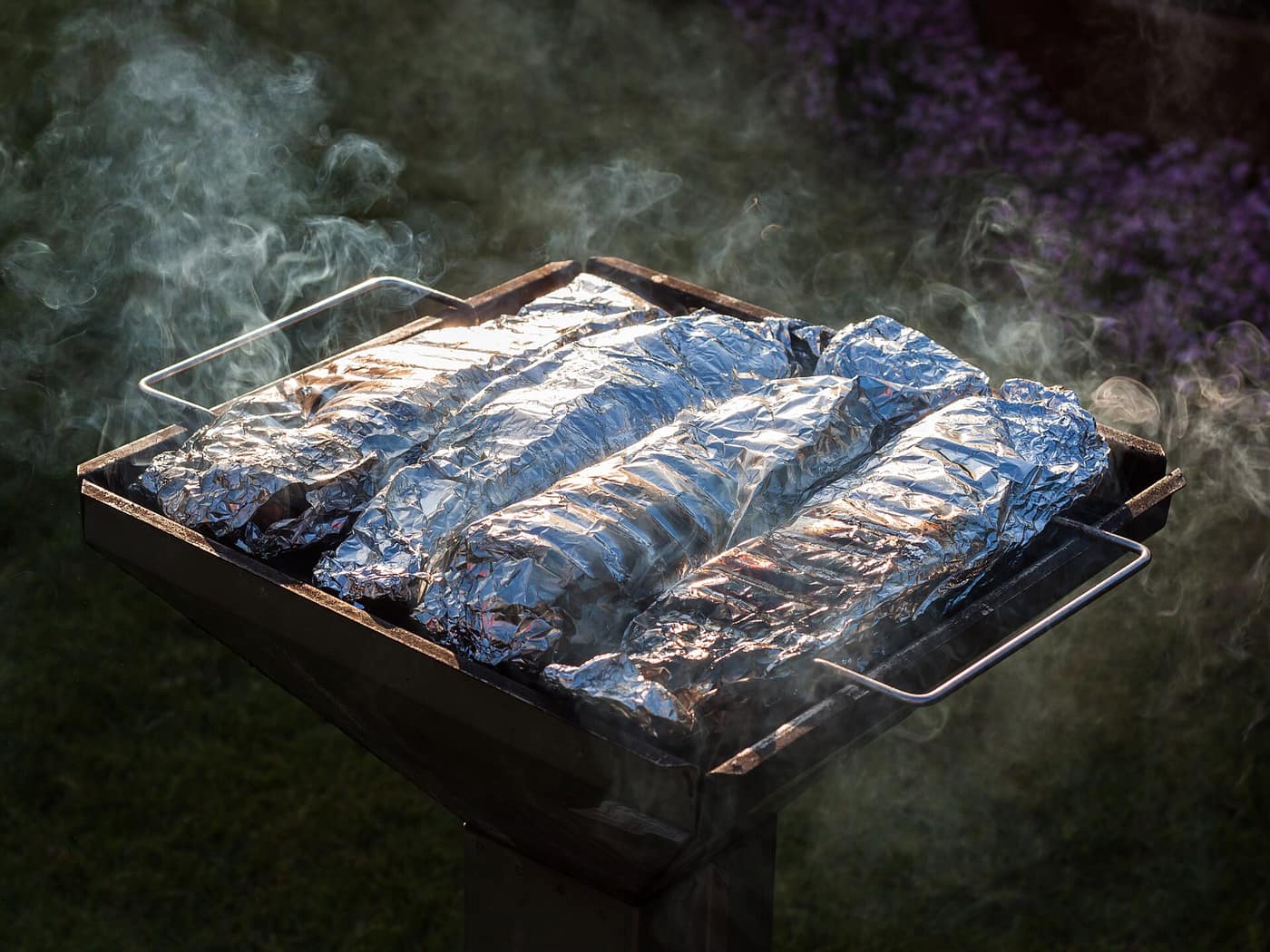
Method 2: snoek in foil
Foil is the easy, forgiving way, and it’s the one to use if your coals are hotter than you’d like or you’re nervous about the fish sticking.
- Lay a double sheet of heavy-duty foil on the grid or a tray, shiny side up, and brush it with oil.
- Put the snoek on it skin side down and fold up the edges into a rim so the baste can’t run off.
- Spoon baste over the flesh and close the hinged grid over the fish and foil. On a flat grid, leave it skin side down the whole time and don’t turn it.
- Braai foil side down for about 12 minutes, basting once or twice, until the flesh is nearly opaque.
- Spoon out the pooled baste (never tip it onto the coals, where it flares), slide the fish off the foil inside the grid, and give it about 2–3 minutes skin side down on the bare grid to crisp the skin. Add a minute flesh side down if you want caramelised edges.
- Check that it flakes at the thickest part.
The trade-off is softer skin than you get on the bare grid. For a sealed parcel, fold the foil over the top and crimp the edges. It steams in the baste and takes a few minutes longer, but you lose the caramelised edges and crisp skin.
How long to braai snoek and other fish
Use these times as a guide only: coal heat, grid height and the thickness of the fish all change them. Check the thickest part every time.
| Fish and cut | Thickness (thickest part) | Rough total time |
|---|---|---|
| Fillets or portions | 1–2 cm | 6–10 minutes |
| Small vlekked snoek or half a big one | About 2 cm | 10–15 minutes |
| Large whole vlekked snoek | 3 cm or more | 15–20 minutes |
| Yellowtail or other firm steaks | About 3 cm | 8–12 minutes, turning once |
| Whole fish, not split (e.g. trout in foil) | 4–5 cm | 15–25 minutes |
The doneness test: the flesh turns from translucent to opaque white and separates easily with a fork at the thickest part. If you have a meat thermometer, US food-safety guidance (FDA and USDA) puts fish at 63 °C in the thickest part. Take it off as soon as it gets there; fish dries out fast once it’s past done.
Serving: mind the bones
Snoek has plenty of bones, but they’re large and easy to see. Lift the whole fish onto a board or platter with a wide spatula, skin side down, and let everyone break off pieces with a fork. Don’t cut it into portions with a knife. Cutting snaps the bones into short pieces that are much harder to spot and easier to swallow.
What to serve with snoek
The classic partner is sweet potatoes (soetpatats). It’s a long-standing West Coast pairing, and the snoek and patat festival in Goedverwacht traces its tradition to farmers who carted the sweet potatoes they grew to West Coast towns to swap with fishermen for snoek.
- Sweet potatoes: boiled, or baked in foil in the coals, then finished with butter and a little sugar, honey or moskonfyt.
- Roosterkoek: warm braai bread with butter and apricot jam. Our roosterkoek recipe covers the dough and the timing on the fading coals.
- A fresh salad: something crisp and sharp cuts through the sweet baste. A tomato and onion salad or a green salad works well; see our braai salads for more.
Other fish to braai
Firm, oily fish handle the heat best; soft white fish need foil or a hinged grid.
- Yellowtail: firm and meaty, and line-caught yellowtail is on the SASSI green list. Braai it in thick steaks or butterflied, the same way as snoek.
- Hake: South African trawled hake (look for the MSC label) is green-listed, but its soft flesh falls apart on a bare grid. Cook it in foil parcels with butter, lemon and herbs.
- Trout: rainbow trout, most of it farmed here, is green-listed and works well whole, stuffed with lemon and herbs, wrapped in foil.
- Kob (kabeljou): wild-caught silver and dusky kob are on SASSI’s red list because the stocks are depleted. Farmed kob rates better, but check SASSI’s current listing and ask the seller where it came from.
Common mistakes
- Coals too hot. The skin burns before the middle cooks. Wait for grey coals or raise the grid.
- Dry grid. Unoiled skin welds itself to the bars and tears when you turn it.
- Too much time flesh side down. The flesh dries and the jam burns. Keep it skin side down for most of the cook.
- Warm fish. Fish left in the sun before the braai spoils quickly. Keep it cold until shortly before it goes on.
What to buy
You can braai snoek on foil over any grid, but a large hinged grid makes turning the fish easy (a big snoek may need cutting in half to fit), and a wide spatula and a good brush handle the rest. Megamaster’s Large Fish Grid, at around R149 at Megamaster (Nov 2026), is a cheap way to keep a grid just for fish.

Megamaster
Megamaster 500 x 400 Chrome Locking Folding Grid
At 500 × 400 mm it takes half a big vlekked snoek, a small whole one, or fillets. It stays open on its own while you lay the fish in, then locks so nothing slides out when you turn it.
- 500 × 400 mm
- Chrome plated
- Locking, stays open for loading
- Room for fillets or half a big snoek
- Turns the fish in one move
- Chrome, not stainless: wash and dry it after a salty, sticky baste

Megamaster
Megamaster Large Fish Grid
A fish-shaped hinged grid for a single whole fish or a couple of fillets. Cheap enough to keep just for fish, so your chop grid doesn't smell of snoek.
- Hinged fish shape
- Chrome plated
- Very cheap
- Holds a whole fish without it breaking up
- Fish-shaped, so it suits one whole fish or fillets rather than a wide vlekked snoek

Megamaster
Megamaster Braai Essential Set
Fish needs a wide spatula to lift it off the grid and a brush for the baste, and this set has both, plus tongs and a fork, in one case.
- Stainless steel
- Silicone basting brush
- Spatula, tongs, fork, cleaning brush, 4 skewers
- Aluminium case
- Silicone brush handles a sticky jam baste
- Spatula for lifting the fish to the platter
- More than you need if you only want a brush and spatula

ALVA
Long Handle Nylon Bristle Braai Brush With Scraper
Fish sticks to a dirty grid, and burnt jam baste sticks to everything. Nylon bristles and a metal scraper on a long handle, for cleaning the grid once it has cooled.
- 51 cm handle
- Nylon bristles
- Metal scraper
- No loose wire bristles to end up in your food
- Cheap
- For cold grids only: nylon melts on a hot grid
Prices change often; check the retailer for the current price and stock. We may earn a commission if you buy through these links, at no extra cost to you. Star ratings are the store's own customer reviews, shown once a product has at least 3. How we choose products.
Planning a full menu around the fish? Our braai ideas have more to put on the fire alongside it.
FAQ
How long does snoek take on the braai?
A whole vlekked snoek takes roughly 15 minutes over medium coals: about 12 minutes skin side down and 3 minutes flesh side down. Check that the flesh flakes at the thickest part.
How do you braai snoek in foil?
Lay it skin side down on oiled, double-layer heavy-duty foil with the edges folded into a rim, spoon the baste over the flesh and braai it for about 12–15 minutes over medium-hot coals. Then slide it off the foil onto the bare grid for a few minutes to crisp the skin. Foil is the forgiving option; the bare hinged grid gives smokier skin but needs gentler coals.
Which side of the snoek goes down first?
Skin side down, and it stays that way for most of the cooking time. Turn it flesh side down only briefly at the end to caramelise the baste.
Is snoek sustainable?
South African line-caught snoek is on the WWF-SASSI green list, which means it’s one of the better seafood choices in South Africa. Check the label on frozen snoek: some is imported.

Johan Botha
Braai & outdoor editor
Writes our braai, fire pit and pizza oven guides. Firmly in the wood-fire camp, but owns up to a gas braai for weeknights.
More from Johan →