We're independent: products are chosen on merit and prices come from the retailers' own sites. We may earn a commission if you buy through our links. Learn more.
Key takeaways
- Wipe out the fat while the pan is still warm, then let hot soapy water do the scrubbing for you. Cadac suggests boiled water with dishwashing liquid or a dishwasher tablet.
- Enamel and non-stick skottels need a soft sponge and nylon or wooden utensils. No steel wool, no scouring powder and no metal scrapers.
- A bare steel skottel is different: it rusts if you leave it wet, so dry it over the flame and wipe on a thin film of oil, like a wok.
- Check the burner jet and air inlet for spider webs before every trip. A lazy, yellow flame usually means something is blocking the air.
- Pack the pan bone dry, store the cylinder upright outdoors, and leak test with soapy water every time you reconnect the gas.
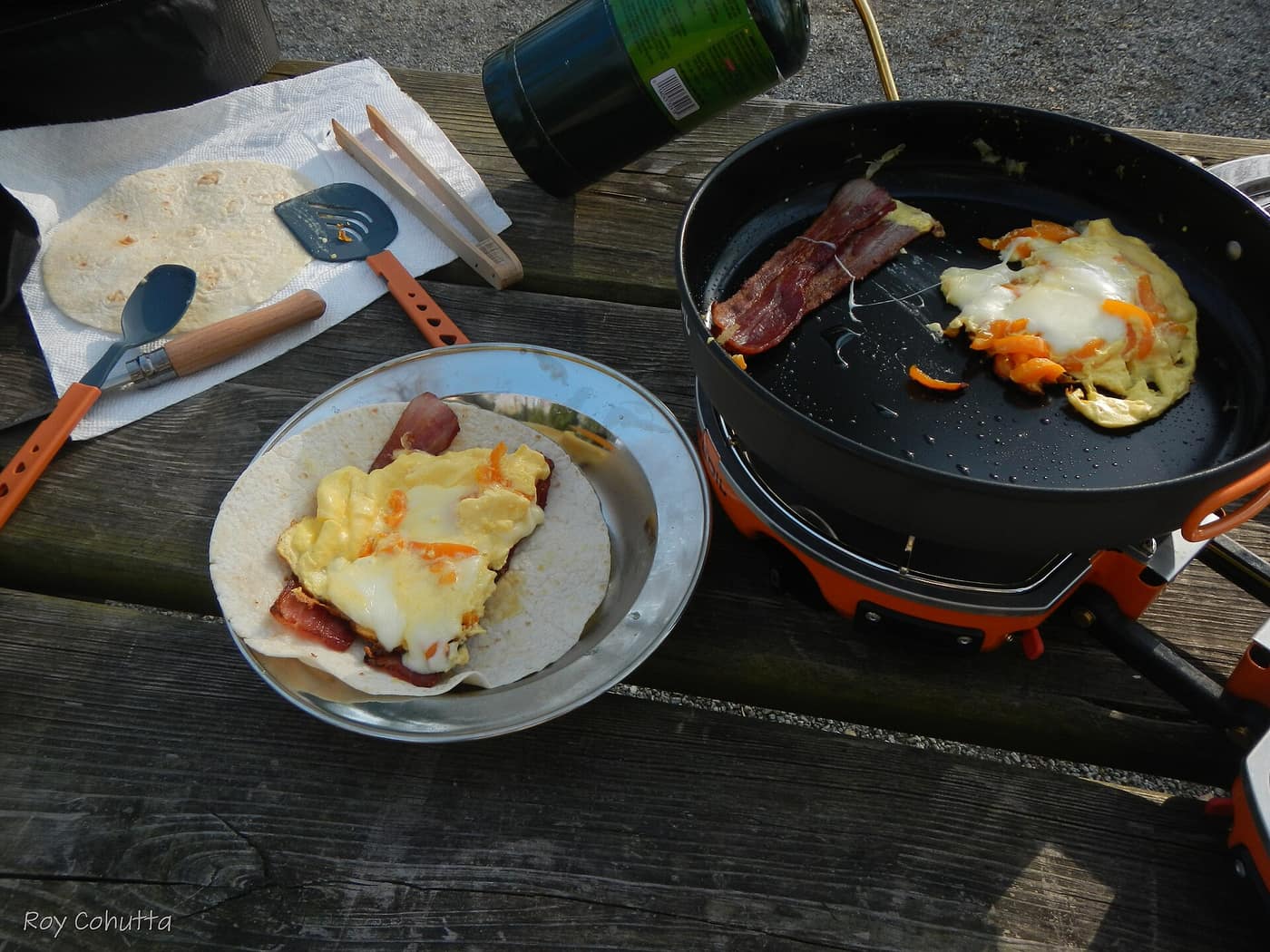
The bacon was perfect, the eggs were perfect, and now there’s a skottel full of cold fat and a burnt ring of egg in the middle. Most skottels get cleaned in a hurry at a campsite tap, packed away slightly damp and only looked at again on the next trip. That’s how pans lose their coating, steel ones rust and burners fill up with spider webs.
A skottel is one of the easiest things in the camping box to look after, as long as you know what your pan is made of. This guide covers the everyday clean, burnt-on food, seasoning a steel pan, burner and hose care, and storage between trips.
Quick answer: how to clean a skottel
| Job | When | How |
|---|---|---|
| Wipe out the fat | Every time, while warm | Paper towel, then into the bin, never down the drain or into the veld |
| Soak and wash | Every time | Hot water with dishwashing liquid in the pan, then a soft sponge |
| Burnt-on food | When needed | Boiled water and a dishwasher tablet left to soak, or simmer soapy water on low |
| Dry and oil | Every time | Dry fully; a bare steel pan gets a thin film of oil |
| Burner and jet | Before each trip | Check for webs, dust and grease; look for a steady blue flame |
| Hose and leak test | Each time you connect | Soapy water over every joint; replace a cracked or stiff hose |
First, know what your skottel is made of
How you clean a skottel depends almost entirely on the pan’s surface. Most modern ones fall into one of three groups.
- Enamel (vitreous enamel). The classic glossy, glass-like coating on many Cadac-style skottels. It’s tough and doesn’t need seasoning, but scouring powder, steel wool and metal scrapers scratch and chip it. Cadac’s own manual for an enamel skottel says not to use sharp metal objects or abrasive cleaners on the enamel.
- Non-stick. A dark, slightly matt coating. Easy to clean, but easily scratched, so wooden, silicone or nylon utensils only.
- Bare steel. Older and cheaper unbranded skottels are often plain pressed steel. These behave like a wok: they need seasoning, they rust if left wet, and they get better the more you use them.
If you’re not sure, check the manual or the box. A pan that’s grey, dull and starts showing orange spots after a wet weekend is bare steel.
The everyday clean, step by step
This takes about five minutes and works for every type of pan.
- Turn off the gas. Close the burner tap and the cylinder valve before you start cleaning.
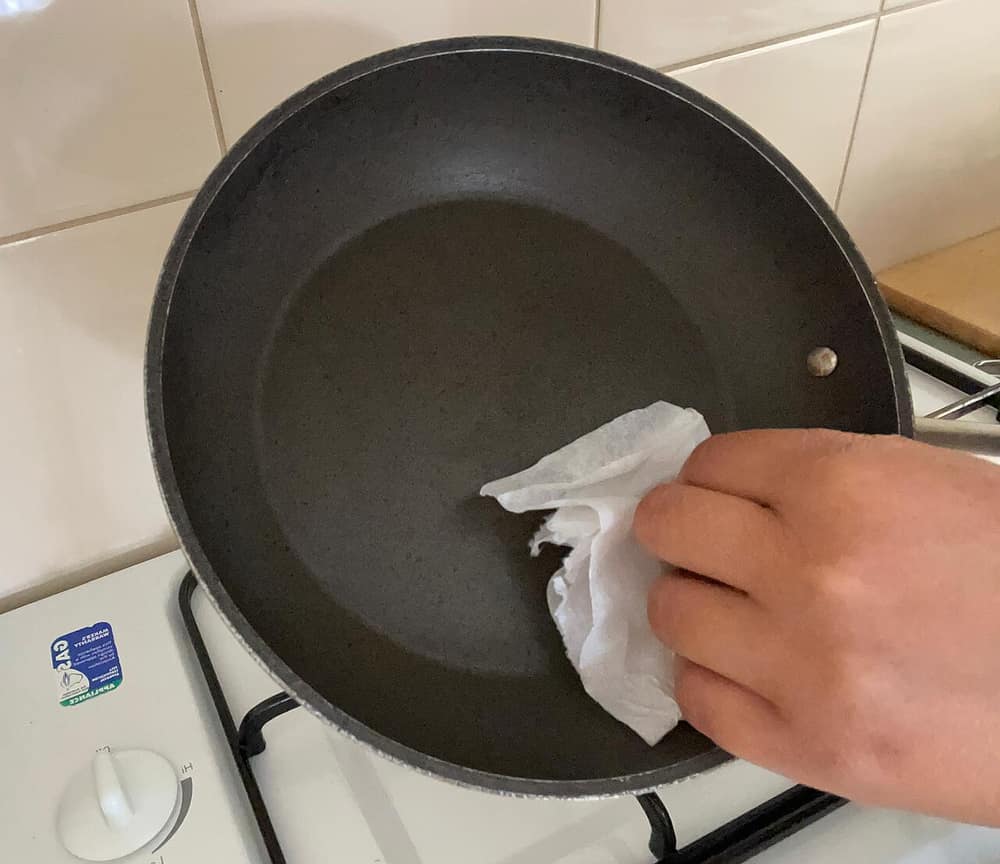
- Wipe out the fat while it’s warm. Warm fat wipes out easily; cold fat sets in a white layer. Use paper towel and put the greasy paper in the bin. Don’t tip fat onto the ground at a campsite or down a drain.
- Let it cool a little. Don’t pour cold water into a hot pan. A sudden temperature change can damage coatings and warp thin steel.
- Soak with hot soapy water. Cadac’s own advice is to pour a layer of boiled water into the skottel with a dishwasher tablet or some dishwashing liquid, then clean it with a sponge. Give it a few minutes and most of the stuck-on food lifts off by itself.
- Wash with a soft sponge. Use the soft side for enamel and non-stick. On bare steel, a brush or the rough side of a sponge is fine.
- Rinse and dry completely. Dry it with a cloth, then put it back on a low flame for a minute to drive off the last moisture, especially for bare steel.
Stubborn, burnt-on food
Burnt egg, caramelised onions and the black ring that forms where the flame hits hardest are the usual problems. Before you reach for anything abrasive, let heat and water do the work.
Soak it longer
Fill the centre with boiled water and a dishwasher tablet, leave it for 20 to 30 minutes, then wipe. Dishwasher tablets are made to break down baked-on food, which is exactly what you’re dealing with.
Simmer soapy water on low
Cadac’s manual for an enamel skottel suggests leaving the burner on low with soapy water in the dish after cooking, to soften the residue before washing. If you do this:
- keep the flame low and stay with it;
- don’t let it boil dry;
- turn off the burner and the cylinder valve before you start scrubbing.
Once the food has softened, a wooden spatula or plastic scraper lifts most of what’s left.
Seasoning a bare steel skottel
Seasoning means baking thin layers of oil onto the steel until they form a dark, slippery coating. It protects against rust and makes the pan more non-stick over time. You only need to do this for bare steel pans; don’t season enamel or non-stick.
- Wash off any factory coating. New steel pans are sometimes oiled or lacquered against rust. Scrub with hot soapy water and dry it.
- Heat it dry on the burner until all moisture is gone. Do this outdoors.
- Wipe on a very thin layer of oil. Sunflower or canola oil is fine. Use paper towel held in tongs, and wipe off as much as you can. It should look almost dry.
- Heat until it smokes and darkens. Keep the flame on medium and move the heat around so the rim seasons too.
- Let it cool, then repeat two or three times. Each layer builds on the last.
After that, everyday cooking keeps the seasoning going. Use soap sparingly, dry it over the flame after every wash, and finish with a light wipe of oil before you pack it.
Getting rid of rust on a steel skottel
Light surface rust is common after a wet trip, and it’s easy to fix:
- Scrub the rusty patch with steel wool and hot soapy water until you’re back to bare metal. (Steel wool is fine here, but only on a bare steel pan.)
- Rinse and dry it over the burner straight away.
- Oil it thinly and season it again.
The same rust-and-reseason method works for potjies and skillets; our cast iron cooking guide covers those in more detail.
The burner, jet and air inlet
Skottel burners sit close to the ground and spend weeks in storage, so spiders, dust and fat all end up inside.

What to check before each trip
- The flame. Light it before you pack. A steady, mostly blue flame is what you want. Yellow, sooty, lifting or uneven flames mean something isn’t right.
- The air inlet. Look into the burner tube where air mixes with the gas. Webs and nests here are a common cause of a weak or yellow flame. Shine a torch in.
- The burner head. Wipe off fat and food that dripped down, and make sure the burner sits correctly in its mount.
How to clear it
- Close the cylinder valve, disconnect the cooker and let it cool.
- Brush dust and webs out of the air inlet with a small soft brush or pipe cleaner.
- Wipe grease off the burner with warm soapy water, rinse and dry completely before reconnecting.
- If the jet itself is blocked, follow your manual. Gas makers warn against poking the tiny jet hole with anything that could enlarge or damage it, so don’t drill it out with a nail or a toothpick that can snap off inside.
- Reconnect, leak test (below) and light it. If the flame stays yellow, have the cooker serviced or replace the burner.
The how to clean a gas braai guide covers the same spider problem on bigger braais, with more on burner tubes.
Hose, regulator and the leak test
If your skottel stands on legs with a hose to the cylinder, the hose and regulator need checking too.
- Bend the hose gently. Replace it if it’s cracked, stiff, kinked, swollen, scorched or past its printed date. Use LPG hose with a clamp at each end.
- Check the regulator’s washer isn’t cracked or missing. Never adjust or open up a regulator.
- Leak test every time you connect: burner tap off, cylinder valve open, then brush soapy water over the valve, regulator and both hose ends. Growing bubbles mean a leak: close the cylinder, fix the part and test again. Never test with a flame.
Our gas cylinder safety guide covers changing cylinders, transporting them and what to do if you smell gas.
Packing up and storing your skottel
How you pack the skottel decides what you find when you open the box next time.
- Pack the pan bone dry. Even a coated pan can rust where steel shows at the rim or underneath. Bare steel gets a thin wipe of oil first.
- Protect the coating. A cloth between the pan and the burner or legs stops scratches in transit.
- Bag the burner. A tied plastic bag over the burner keeps insects out during the off-season. Take it off before you use it.
- Close the cylinder valve and disconnect it. Store cylinders upright, outdoors or in a well-ventilated spot, out of the sun and away from drains, and never in the car boot between trips.
- Check the gas level before the next trip; the gas cylinder calculator shows how long a cylinder lasts.
Planning the next trip? Our camping braai guide covers what else goes in the box.
Skottel care kit
The cleaning kit comes from your kitchen: dishwashing liquid, a soft sponge, paper towel and a wooden spatula. Worth adding: a new regulator and hose when yours has perished, a level indicator, and a fire blanket.

ALVA
L-Shape Gas Regulator & 1.2m Hose Kit
If your skottel on legs has a hose that's gone stiff or cracked, this is the low-pressure regulator, hose and clamps in one pack for a 3kg or 5kg cylinder. Check it matches your cooker's fitting before you buy.
- For 3kg and 5kg cylinders
- 1.2m hose with 2 clamps
- Low pressure, 2.8kPa outlet
- SANS 1237 and SANS 1156 approved
- Regulator and hose replaced in one go
- Made to the local gas standards
- Not for 9kg bullnose cylinders
- Doesn't suit cylinder-top skottels, which have no hose

Alva
Gas Cylinder Level Indicator - Magnetic
When you pack the skottel away after a trip, this tells you roughly how much gas is left, so the next breakfast doesn't start with a trip to the garage.
- Magnetic
- Clips onto the cylinder
- Cheap
- Takes seconds to read
- An indication, not an exact reading

Arbor Safety Co
Glass Fibre Fire Blanket
A skottel full of old bacon fat is the fire you're most likely to have at a campsite. A fire blanket smothers it; water makes it worse.
- 2m × 2m
- Glass fibre
- EN 1869:1997
- Red quick-pull bag
- Smothers a fat fire cleanly
- Light enough for the camping crate
- Single use: replace it after a fire
Prices change often; check the retailer for the current price and stock. We may earn a commission if you buy through these links, at no extra cost to you. Star ratings are the store's own customer reviews, shown once a product has at least 3. How we choose products.
FAQ
How do you clean a burnt skottel?
Wipe out any fat, then pour a layer of boiled water into the pan with a dishwasher tablet or dishwashing liquid and leave it to soak. Once the burnt food softens, lift it with a wooden or plastic scraper and wash with a soft sponge.
Can I put a skottel pan in the dishwasher?
Check your manual first. Cadac says its non-stick skottel liners can go in the dishwasher, but don’t assume the same for the pan itself, and never put a bare steel skottel in one, because it will rust.
Can I use steel wool on a skottel?
Only on a bare steel pan, for example to remove rust before re-seasoning it. Never use steel wool, scouring powder or metal scrapers on enamel or non-stick skottels, because they scratch and chip the coating.
How do I season a new skottel?
Only bare steel skottels need seasoning. Wash off the factory coating, dry it over the flame, wipe on a very thin layer of oil and heat it until it smokes, then repeat two or three times. Enamel and non-stick pans don’t need it.
Why is my skottel flame yellow?
Usually because air isn’t mixing properly with the gas, often from spider webs or dust in the burner’s air inlet, or a burner that isn’t seated properly. Turn it off, close the cylinder, clean the inlet and burner, and have it serviced if the flame stays yellow. Our skottel braai guide has a full troubleshooting table.

Johan Botha
Braai & outdoor editor
Writes our braai, fire pit and pizza oven guides. Firmly in the wood-fire camp, but owns up to a gas braai for weeknights.
More from Johan →